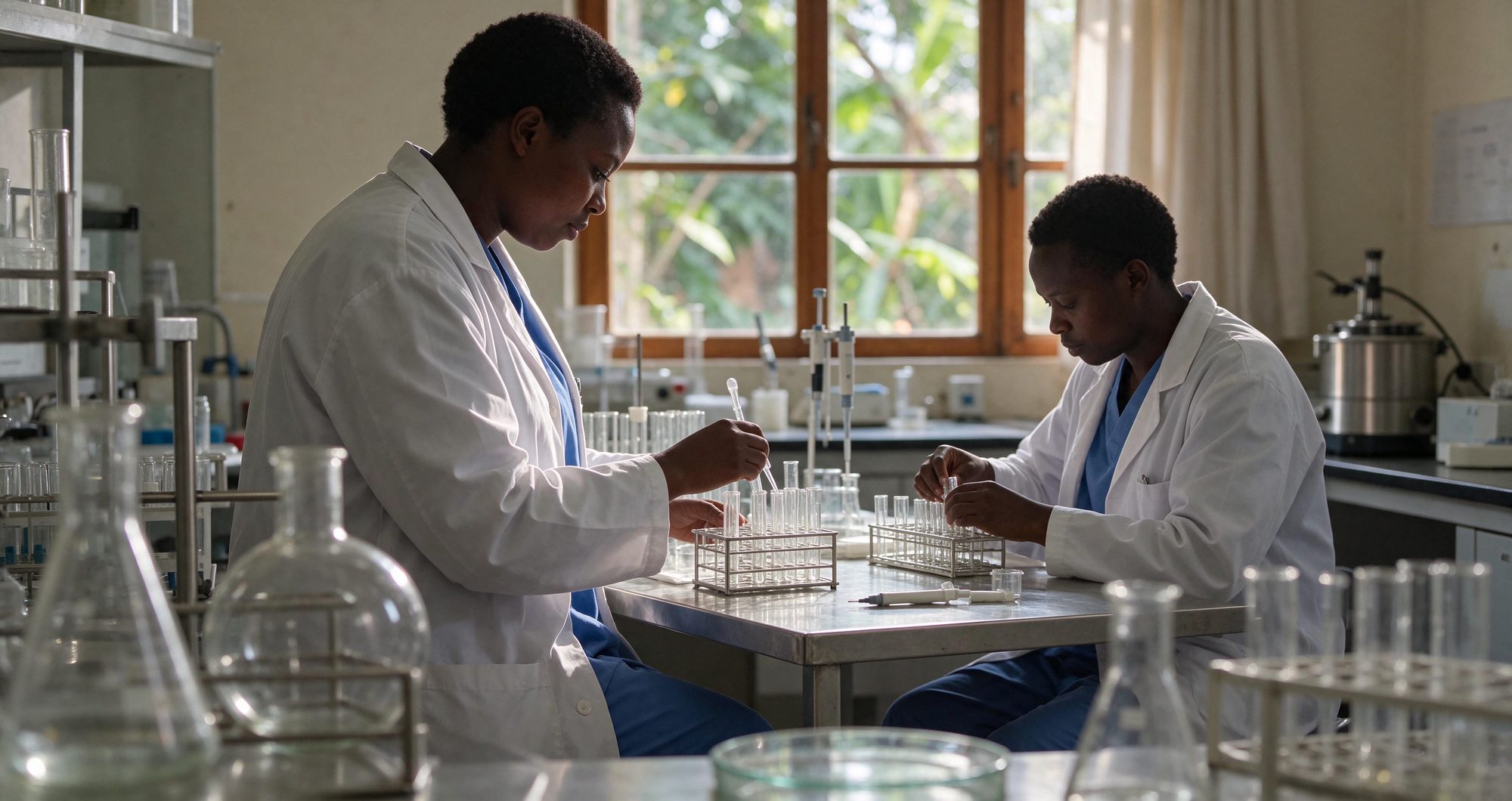

Uganda has begun an early-stage clinical trial of an experimental mRNA vaccine against Bundibugyo Ebola, with approximately 224 healthy volunteers expected to take part. The study includes children from one year of age and adults up to 65, extending research on the candidate beyond an ongoing adult trial in Canada.
Screening and enrolment are now under way following review and approval by Uganda’s regulatory authorities. The trial, launched on 27 November, will assess the vaccine’s safety and its ability to generate an immune response. It is not a vaccination campaign or an announcement that the candidate has been proven to prevent Ebola.
The investigational vaccine, developed by Moderna, is being evaluated in collaboration with Uganda’s national virus research institute. Participants will be followed for approximately one year after their study injection. The planned enrolment figure is a target, not confirmation that all 224 volunteers have already joined or received a dose.
Extending the research to children
The Ugandan study is a Phase I trial, an early stage of clinical testing. Its inclusion of children is a new step for this vaccine candidate: the first human study began enrolling healthy adults aged 18 to 65 in Canada in August and remains in progress.
Researchers will assess safety and immunogenicity, the term for a vaccine’s ability to trigger an immune response. These are different questions from whether vaccination reduces infections during an outbreak. An immune response can help inform further development, but it does not by itself establish protection against the disease.
Collecting evidence in children is intended to support decisions about the candidate’s potential wider use. That possibility remains conditional on further studies showing that the vaccine works. Neither the launch of the Ugandan trial nor permission to conduct it amounts to approval for general vaccination of children or adults.
A separate test during the outbreak
Bundibugyo virus is responsible for the ongoing Ebola outbreak in the neighbouring Democratic Republic of the Congo. There is currently no approved vaccine against this form of Ebola. Vaccines licensed for another Ebola virus, known as Zaire, cannot simply be assumed to provide protection against Bundibugyo.
Interim findings from the Canadian study contributed to a recommendation that Moderna’s candidate should also be evaluated in the Phase II/III Tumaini study in the Democratic Republic of the Congo. That research is separate from the Ugandan safety study and uses a ring-vaccination approach, enrolling contacts of people with confirmed Bundibugyo disease.
Testing of Moderna’s candidate and a second experimental vaccine is scheduled to begin in eastern Congo on 30 November. The second candidate uses the ChAdOx1 viral-vector platform and was developed by the University of Oxford with the Serum Institute of India. The scheduled start is not a completed trial or an efficacy result.
Several candidates under investigation
The Oxford candidate has already entered early-stage studies in the United Kingdom and Uganda, which began in July and October respectively. An existing vaccine against Zaire Ebola, Ervebo, is also being evaluated in the Congolese programme to determine whether it offers cross-protection against Bundibugyo. That protection remains under investigation.
Moderna’s vaccine uses the same underlying mRNA platform as its COVID-19 vaccine. Its Bundibugyo development programme is supported by funding of up to US$58.5 million from an international epidemic-preparedness coalition. The commitment concerns the wider programme; it is not identified as the cost of the Ugandan study alone.
The immediate development in Uganda is therefore the opening of a new trial and the start of volunteer screening and enrolment. The year-long follow-up will add safety and immune-response evidence across a wider age range, while separate outbreak studies address whether the experimental vaccines can protect people against Bundibugyo Ebola.