
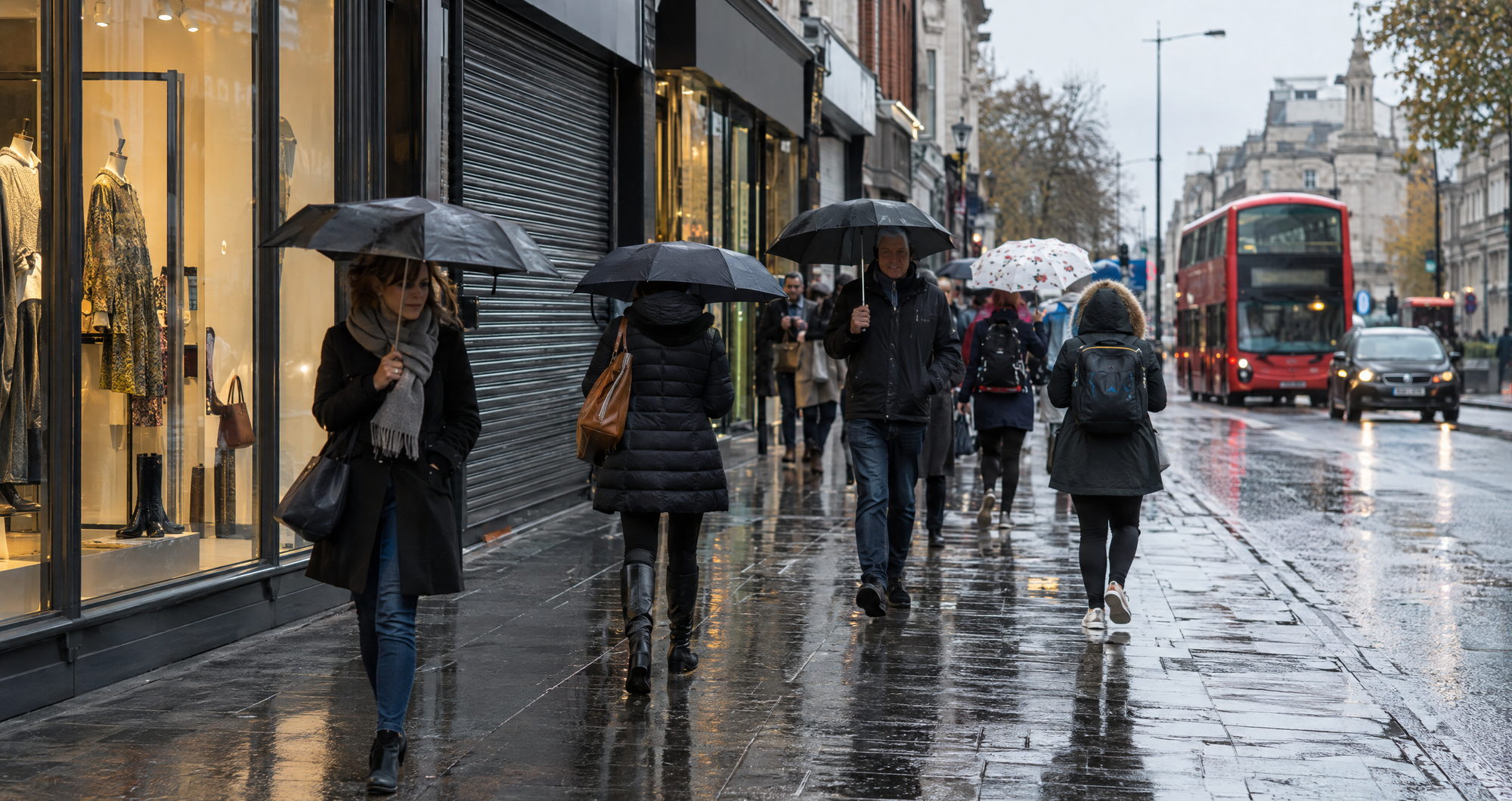

Footfall across UK retail destinations fell 4.7 per cent year on year in October, a sharp deterioration from the 2.9 per cent decline recorded in September, with high streets suffering the largest drop.
The figures, published by the British Retail Consortium and Sensormatic on 6 November, come as retailers enter the most important six weeks of the trading year.
Where the decline was sharpest
High street footfall fell 5.2 per cent, compared with 3.0 per cent in September. Retail parks were down 3.6 per cent and shopping centres 4.1 per cent.
By nation, footfall fell 3.1 per cent in Northern Ireland, 4.3 per cent in Scotland, 4.6 per cent in England and 6.3 per cent in Wales. The Welsh decline was the steepest of any part of the UK and follows a period of weaker consumer spending in the region.
The consortium’s chief executive, Helen Dickinson, said low consumer confidence was likely a key factor, with households facing rising inflation and high energy costs. She also blamed stormy weather for the especially weak high streets, where shoppers walk between stores rather than driving to a single destination.
What it means for retailers
Footfall is not the same as spending, but the two are closely related in physical retail. Fewer visits mean fewer opportunities to sell, and the cost of staffing and lighting a store is fixed whether customers arrive or not.
The decline also affects the rental values that underpin shopping centre and high street investment. Landlords set service charges and rents on expectations of footfall, and a sustained fall feeds through into vacancy rates and the viability of town centre regeneration schemes.
Retail parks have held up better than high streets because they combine several destinations in one trip and are easier to reach by car. Shopping centres sit between the two, offering weather protection but often requiring a dedicated journey.
The policy ask
Dickinson used the release to press the government to commence measures in the Crime and Policing Act that would scrap the £200 threshold for low-level theft. Retailers have argued that the threshold, which means shoplifting below that value is treated as a summary offence, has encouraged organised theft from stores.
The industry also wants action on business rates and on the cost of packaging taxes, both of which it says fall disproportionately on physical retail at a time when online competitors operate with lower property costs.
The Black Friday test
Sensormatic’s Andy Sumpter said Halloween gave only a brief seasonal uplift and that attention now turns to Black Friday as a critical opportunity for the golden quarter.
The discounting period has become a double-edged event for retailers. It drives volume, but it pulls spending forward from December and compresses margins at exactly the point when profitability is determined.
This year, with consumer confidence weak and cost inflation still positive, the risk is that shoppers wait for discounts rather than buying at full price. That behaviour would confirm the pattern of the past two years, in which total spending has held up in cash terms while volumes have fallen.
The next set of figures, covering November, will show whether Black Friday reversed the trend or simply moved it. Retailers will be watching the conversion rate as closely as the footfall number, because a busy store that does not sell is no better than an empty one.







