
Finding a premier alpine real estate investment that offers both pristine wilderness and world-class luxury has become increasingly difficult in Europe’s saturated property market. Buyers are constantly searching for destinations that provide genuine year-round appeal, seamless accessibility, and strong investment potential without the exorbitant price tags and overcrowding found in traditional Western European ski resorts. There is a growing demand for fresh, turnkey lifestyle investments in emerging markets that boast stable legal frameworks and strong growth trajectories.
Enter Kolašin Valleys, the largest all-season mountain resort in the Balkans, located in the breathtaking mountains of northern Montenegro. Designed by the renowned Canadian firm Ecosign, this master-planned development spans two elevations and brings a new level of luxury to the region with 23 premium hotels, 73 bespoke chalets, and seamless ski-in/ski-out access. We sat down with Nataliya Leonova, Marketing Manager at Kolašin Valleys, to discuss how this ambitious project is redefining the European alpine experience and why it presents such a unique opportunity for global investors.
Q: Kolašin Valleys is being described as something Europe has not seen before. What makes this resort fundamentally different from traditional alpine destinations?
Nataliya Leonova:
The honest answer is scale and intention. Most mountain resorts in Europe grew organically over decades — a village expanded, a lift was added, another hotel appeared. Kolašin Valleys was designed in reverse: Ecosign defined the full mountain first — 150 kilometres of ski slopes across two elevations, the lift network, the carrying capacity of the entire resort — and everything else was built around that framework.
That approach is rare, and it matters more than it sounds. It means the resort functions as a system. There are no bottlenecks, no corners where the planning ran out of logic. And it means every property — including the private chalets — has genuine ski-in/ski-out access, not as a marketing phrase, but as an architectural fact built into the masterplan before construction began. In the established Alps, that kind of access is increasingly difficult to find even at very high price points.
Q: The private chalets are a major highlight of the resort. Could you elaborate on the level of customisation and the luxury amenities available to buyers?
Nataliya Leonova:
The 73 chalets occupy their own zone within the resort — separate from the hotel buildings, with a level of privacy that a mixed-use development doesn’t usually offer, but with full access to every facility on the property. In terms of scale, they go up to 1,200 square metres. In terms of price, from approximately €3.4 million to €5.8 million, fully furnished and turnkey.
What sets these chalets apart goes beyond scale. Each one is built to the standard of a world-class private residence: private swimming pools, spa and wellness facilities, premium finishes throughout, and an architectural language that reflects where contemporary mountain design has arrived — forward-looking, clean, and nothing like the traditional chalet aesthetic that defines most European ski resorts. These are genuinely new buildings, designed for how people want to live now.
The service layer is equally considered. Owners have access to the full resort hospitality infrastructure — concierge, in-chalet catering, housekeeping, ski butler, private transfers — without managing any of it themselves. You arrive, and everything is already in place. That kind of hotel-grade service within a privately owned residence is still relatively rare in mountain real estate, even at the very top end of the market.
On customisation — it depends on where a buyer enters in the construction timeline. Buyers who come in early have real scope to work with the interior design team on finishes, materials, kitchen specification, and layout details. What doesn’t change regardless of when you purchase is the structural quality and the ski-in/ski-out access. Those are fixed at the masterplan level. But within that, there is meaningful room to make a chalet genuinely your own rather than a product off a shelf.
Q: For investors looking for a hands-off approach, you offer branded residences and apartments. How does the rental pool work, and what are the benefits for international owners?
Nataliya Leonova:
The model is straightforward: each property is managed by a professional hotel management company, operating to the standards of the world-class premium hotel brands and branded residences that will be present across the resort. An owner receives their income in euros and doesn’t manage anything. The operator handles bookings, maintenance, housekeeping, guest relations — all of it.
What makes the numbers genuinely interesting, compared to most resort investment products, is the dual season. Winter generates occupancy from skiers. Summer generates occupancy from a Completely different audience — guests from the Gulf, from Southern Europe, from anywhere that gets genuinely hot — who come specifically for the cool temperatures and the mountain environment. At 1,450 to 1,600 metres, we sit between 18 and 24 degrees in July and August. A property earning rental income across two distinct high-demand seasons is a materially different asset from one that is dormant for six months of the year.
Q: Many ski resorts struggle with off-season appeal. How is Kolašin Valleys ensuring a vibrant, fully operational community 365 days a year?
Nataliya Leonova:
I’d push back slightly on the framing. We’re not manufacturing off-season appeal — the mountain itself is the attraction in every season. The resort sits within a protected nature reserve. The air quality, the forest density, the landscape — these exist independent of whether there’s snow on the ground. What we’ve built is infrastructure that lets people actually use that environment: 30-plus restaurants and lounges, spa facilities, hiking trails and summer routes that are maintained year-round.
The guests who come in summer aren’t a compensatory audience. They’re often the same people who visit in winter — returning for a different season of the same place. And increasingly, for buyers from the Gulf, the summer season is the primary reason they’re interested. When you’re used to 45-degree summers in Dubai, a mountain resort at 18 degrees isn’t an alternative to a beach holiday. It’s a completely different category of experience.
Q: Montenegro is currently an EU candidate country. How do the region’s infrastructure developments, such as the new high-speed motorway and upcoming airports, enhance the investment case for Kolašin Valleys?
Nataliya Leonova:
Two things are happening simultaneously, and they reinforce each other. The infrastructure is already built. The Bar-Boljare motorway connects Podgorica International Airport directly to Kolašin — 45 minutes. That wasn’t the case five years ago, and it changes the resort’s catchment area fundamentally.
Podgorica now operates direct flights from London, Paris, Rome, Barcelona, Hamburg, Cologne, Vienna, Warsaw, Istanbul and Belgrade — with Wizz Air opening a dedicated base in 2026, adding over one million seats annually. Tivat Airport, 90 minutes away on the coast, extends the catchment further with direct connections from Frankfurt, Munich, Dubai, Amsterdam, Stockholm, Geneva, Tel Aviv and additional UK and German cities.
Together, the two airports place Kolašin within direct reach of most major European markets — and increasingly, the Middle East.
The EU accession story is the longer-term factor, and it matters for a specific reason. Montenegro already uses the Euro as its official currency — not a peg, actual euros, since 2002. So for a European buyer, there’s no currency risk from day one. What EU membership adds, when it comes, is the legal and institutional framework that gives investors in emerging markets genuine long-term confidence. A property purchased in a future EU member state, at today’s prices, is a structurally different investment from one with no such trajectory.
We’re seeing that distinction increasingly drive conversations — particularly with buyers from Germany, Austria, and Switzerland. These are markets where people understand precisely what EU accession means for asset values over time. They’ve watched it happen before, in other countries. They’re not speculating on the concept. They’re applying a framework they already know.
Kolašin Valleys represent a rare convergence of unspoiled natural beauty, cutting-edge luxury, and strategic investment appeal. By offering completely bespoke private chalets alongside internationally managed, income-generating branded residences, the development caters to both lifestyle seekers and pragmatic investors. The project’s massive scale, paired with its direct ski-in/ski-out access and year-round operational model, sets a new benchmark for mountain resorts in Europe.
As Montenegro moves closer to EU membership and infrastructure continues to expand, early investors in the Kolašin Valleys are positioned to benefit from significant capital appreciation. This resort is more than just a holiday destination; it is a meticulously planned community that bridges the gap between the majestic northern mountains and the Adria, Adriatic coast. For those looking to secure a foothold in Europe’s next great luxury frontier, Kolašin Valleys is leading the charge.
To learn more visit https://www.kolasinvalleys.com/en/
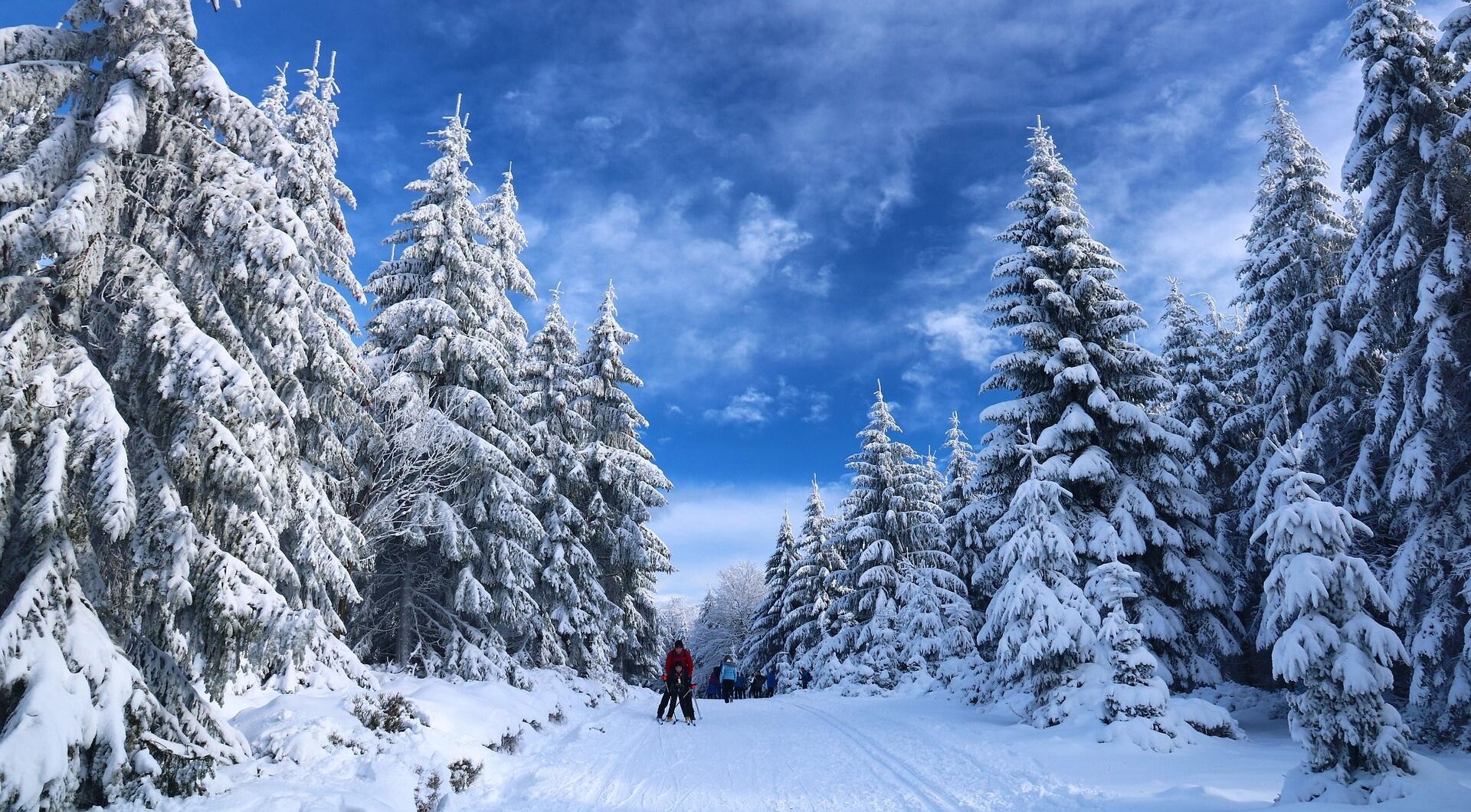
Feature Image by katerinavulcova from Pixabay