
A driveway is the biggest hard surface most homeowners ever buy, and the one they research least. People spend months choosing kitchen worktops and then pick a drive from the first brochure that lands on the mat. The three surfaces that dominate the market suit different houses, budgets and temperaments, and the wrong choice is one you look at every day for twenty years.
Block paving
Block paving is the traditional choice on the estates around Nottingham, and it is still the most versatile. The blocks come in concrete or clay, in dozens of colours and sizes, and they can be laid in patterns that suit anything from a 1930s semi to a new build. It handles weight well, it can be lifted and relaid if a service pipe needs digging up, and a single damaged block is replaced in minutes.
Its weaknesses are maintenance and installation quality. The joints grow weeds unless they are sealed or kept topped up with kiln-dried sand, and a block drive laid on a thin sub-base will rut under a car within a couple of years. Concrete blocks also fade; clay blocks do not, which is partly why they cost more.
Expect to pay somewhere in the middle of the three options, with the final figure depending heavily on the pattern and the amount of cutting.
Resin bound
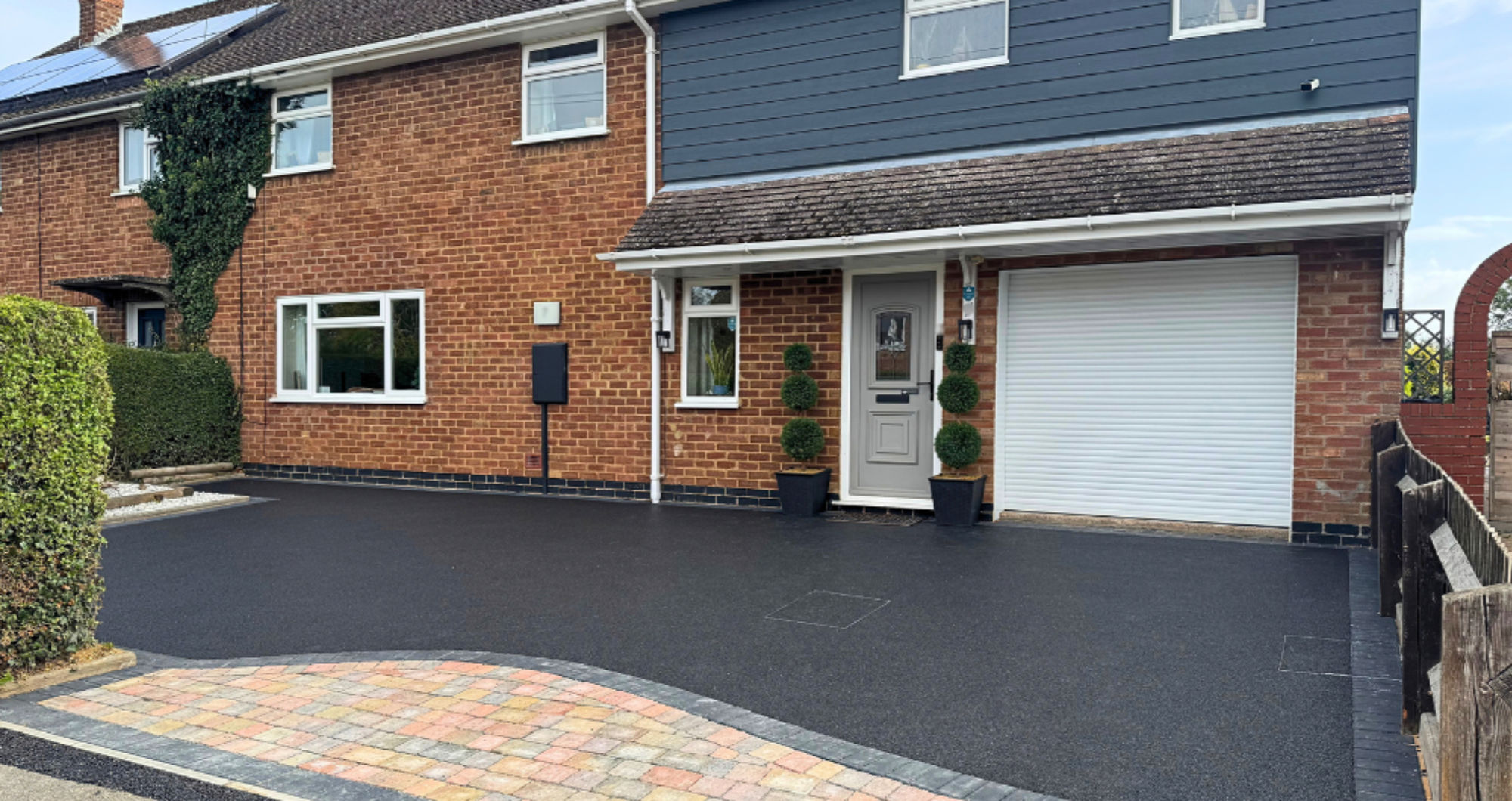
Resin bound surfacing has gone from novelty to mainstream in a decade. Natural aggregate is mixed with a clear resin and trowelled onto a solid base, usually tarmac or concrete, to a depth of around 15 to 18mm. The result is smooth, free of joints and permeable, which means rainwater soaks through rather than running off.
That permeability matters more than it sounds. Since 2008, a new front garden surface in England that drains onto the road needs planning permission unless it is permeable or drains to a soakaway. Resin bound passes that test on its own, so there is no application to make and no channel drain to install.
It also has no joints, so no weeds, and it is laid in a day over an existing sound surface, which keeps the disruption short. The limits are real, though. It needs a proper base; resin laid over a cracked drive will show every crack within a year. It can be marked by tyres turning sharply on hot days, and UV-stable resin costs more than the standard kind but is the only sort worth having, because the cheaper resin yellows.
Homeowners comparing resin driveways in Nottingham should ask two questions before anything else: what base will it be laid on, and is the resin UV stable? The answers decide whether the surface lasts twenty-five years or five.
Tarmac
Tarmac is the cheapest of the three per square metre and the quickest to lay. On a long drive, or one that takes vans and trailers, it is often the sensible answer. A well-laid tarmac drive with proper edging and a decent base will last twenty years with almost no attention.
It is also the surface most often done badly. Thin tarmac rolled onto an unprepared base will crack, sink at the edges and grow soft in a heatwave. Red tarmac fades to pink. And it is the least forgiving of repairs, because a patch never quite matches.
Tarmac is not permeable, so a new tarmac drive at the front of a house needs a drainage solution or a planning application. Most installers handle this with a linear drain at the threshold connected to a soakaway, but ask, because some do not.
What suits what
A period house with brick detailing generally looks right with clay block paving or a muted resin in a stone colour. A modern house with large windows and clean lines suits resin or a plain grey block. A long rural drive wants tarmac with a block or granite edge to stop it spreading. A sloping drive is better in block or resin than tarmac, because tarmac creeps downhill over the years.
Budget is the other half of the decision. Tarmac is cheapest, block paving sits in the middle, and resin bound costs most, though its lack of maintenance narrows the gap over time.
The part that is the same for all three
Whatever goes on top, the base underneath decides how long it lasts. A domestic drive needs the old surface removed or properly assessed, a compacted sub-base of at least 150mm, proper edge restraints and a fall that takes water somewhere sensible. Every quote should state those things in writing. A surface is only ever as good as what it is sitting on, and that is the part you will never see again once the job is done.