
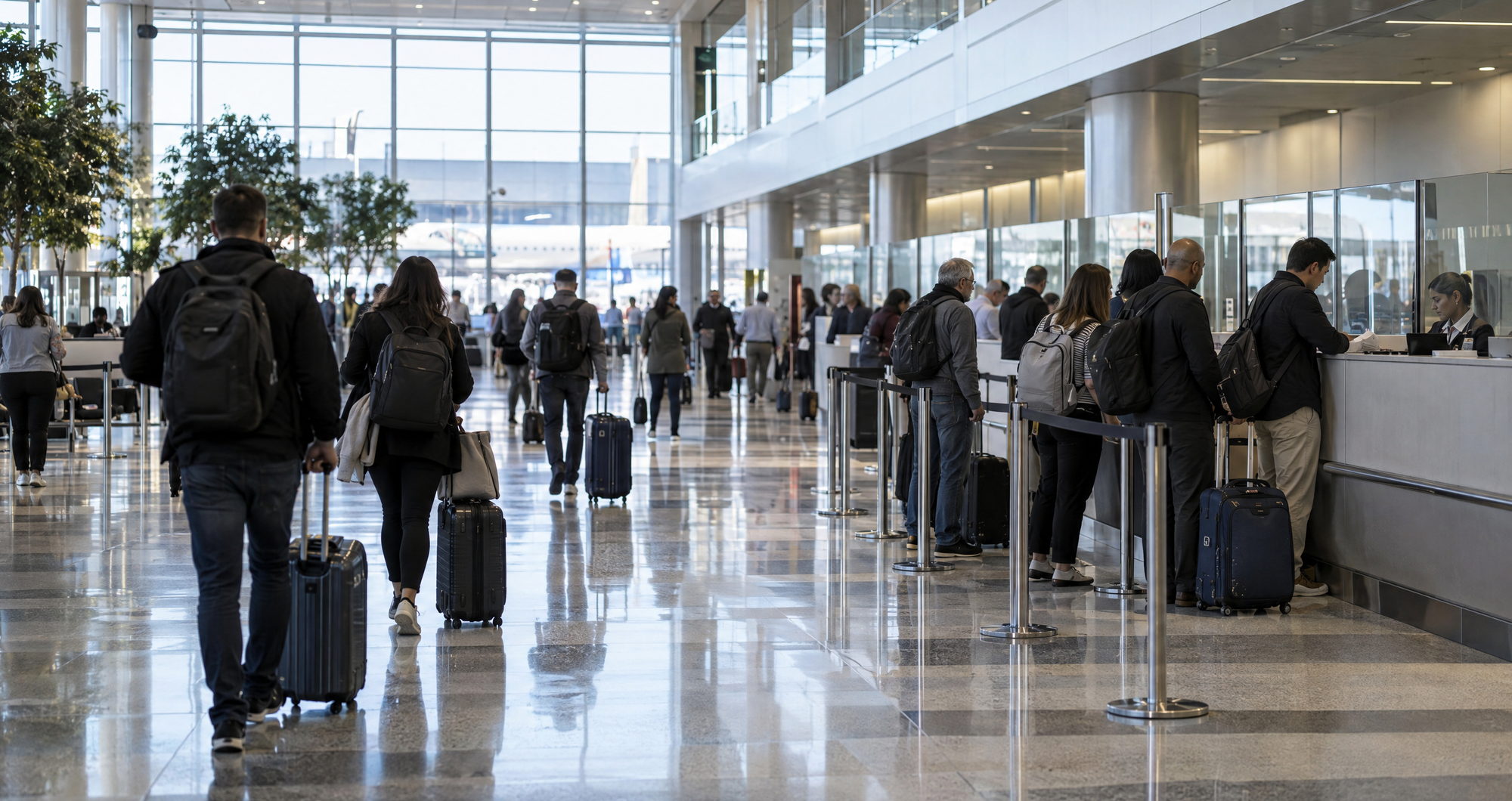

Spending by international visitors to the United States is forecast to fall by nearly $11bn in 2026, a 6.3 per cent decline to $163bn in inflation-adjusted terms, even as domestic trips reach a record high.
The forecast, published by the U.S. Travel Association on 5 November, projects that total travel spending will slip 0.7 per cent to $1.35tn, with domestic trips rising to a record 2.44 billion.
The share of global travel is shrinking
The more revealing figure is the country’s share of long-haul arrivals, which has fallen from 10.3 per cent in 2019 to 7.7 per cent this year and is projected to reach 7.1 per cent by 2030. In other words, the world’s largest travel market is growing more slowly than the rest of the world, and losing ground in the segment that spends the most.
Arrivals are not expected to return to 2019 levels until 2030, a decade lost relative to the pre-pandemic trajectory. The association attributes the weakness to a combination of cost, perception and access, including visa waiting times, the strength of the dollar and the experience of arriving at US borders.
Travel prices are forecast to rise 7.2 per cent this year, more than twice the 3.4 per cent general inflation rate assumed in the forecast. Higher prices reduce the volume of visitors a destination can attract, particularly from markets where the currency has weakened against the dollar.
What the industry is asking for
The association’s president and chief executive, Geoff Freeman, said Congress has a December deadline to protect holiday travel and called for action to reverse the loss of international visitors. The industry has proposed a national goal, raised with President Trump at the White House in September, of welcoming 100 million international visitors a year by 2030.
That target, if met, would add $68bn in annual spending and more than 350,000 jobs, according to the association’s estimates. It would require growth of roughly a third on current volumes, at a time when every major competitor is also investing in marketing and visa processing.
Travel supports more than 15 million American jobs and generates $92bn in state and local taxes. In New York City, international visitors accounted for roughly half of tourism spending in 2025, with all tourism supporting 397,000 jobs and $7.5bn in tax revenue.
Why it matters outside the United States
Long-haul travel is a competitive market with a fixed number of trips. When the United States loses share, other destinations gain it, and European capitals have been actively courting the same visitors with marketing campaigns and simplified entry rules.
London’s position is closely tied to transatlantic traffic. A weaker US outbound market would reduce demand on the highest-value routes into Heathrow and Gatwick, while a stronger one would support the airport expansion case and the visitor economy in the West End.
The forecast also has implications for airlines. Carriers plan capacity months in advance, and a sustained decline in inbound demand changes the economics of routes that depend on premium traffic. Several European airlines have already shifted capacity towards Asia and the Middle East as transatlantic growth has slowed.
The policy debate
The association’s proposals focus on the things government controls: visa processing capacity, customs staffing, marketing spend and the tone of the welcome that visitors receive. Its argument is that the United States has underinvested in the infrastructure of arrival while competitors have improved theirs.
Critics of that view point out that the dollar’s strength and the relative health of the US economy are the main drivers, and that neither is a policy variable the travel industry can influence. On that reading, the decline is a price adjustment rather than a failure of welcome.
The data will not settle the argument quickly. What it does show is that the world’s largest travel market is no longer growing in line with global demand, and that the gap is widening rather than closing.







