
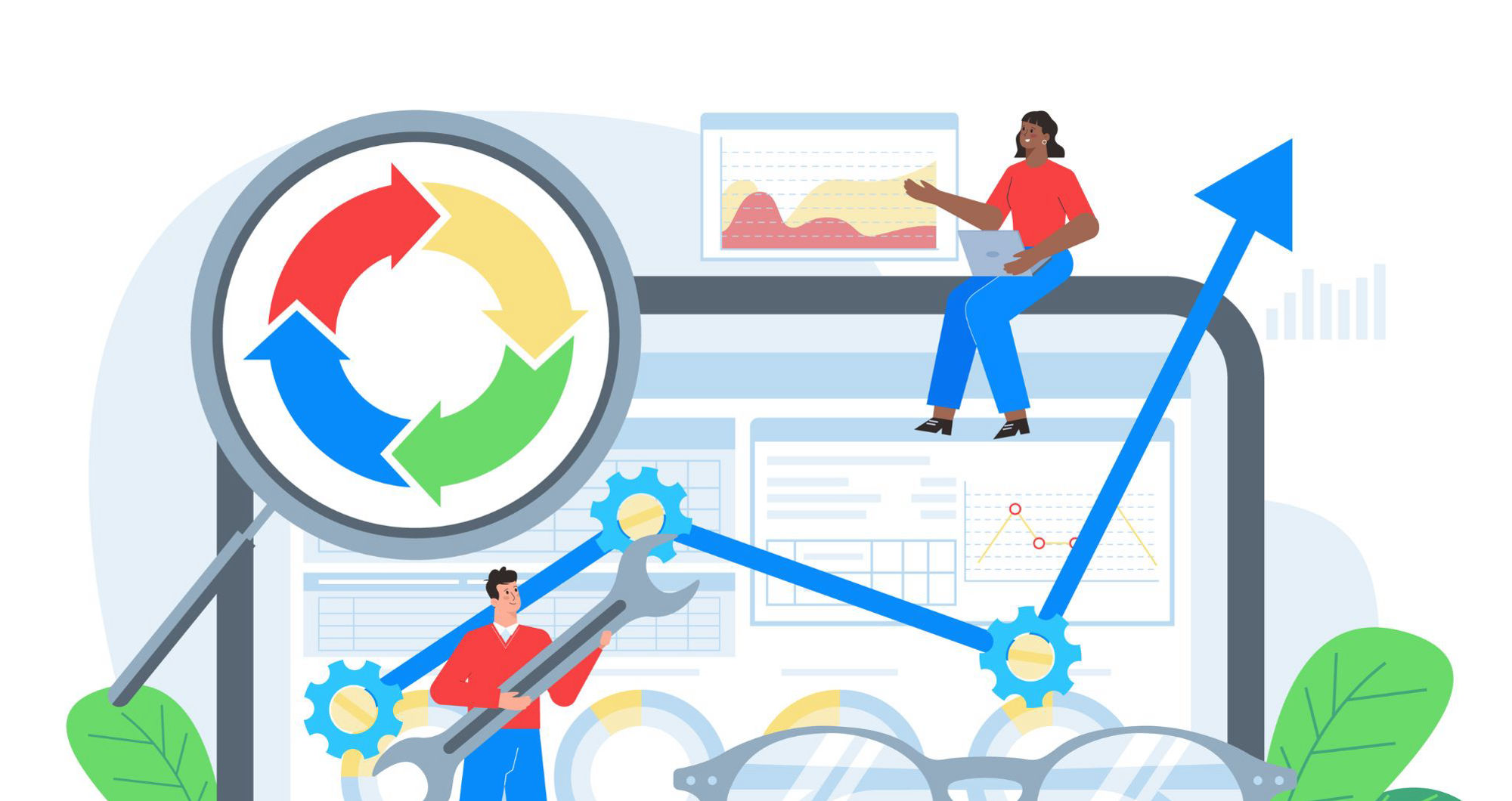

Have you ever noticed how some companies seem to grow without panic?
Not the ones sprinting in circles, adding dashboards every quarter, or chasing whatever tool is “hot right now.” I’m talking about the kind you watch quietly, almost too calmly, as their revenue climbs, teams breathe easier, and decisions land with confidence.
What’s going on there isn’t luck. It’s something under the surface — almost invisible until it fails.
Today, let’s pull back the curtain on the machinery that actually builds growth that lasts.
The Diagnosis Almost Everyone Starts With — and Where It Falls Short
When you ask most teams why growth is stalling, you’ll hear variations of the same answer:
“We need to optimise more.”
Optimising sounds disciplined. And sure, tweaking conversion rates or slashing bounce percentages has its place. But if that’s the only frame you’re using, you might be missing the real issue.
Optimisation fixes symptoms. It doesn’t teach a system to get better on its own.
That’s why many growth plans feel like a treadmill: fast and noisy, but no forward motion that sticks.
What people really need isn’t more dashboards. It’s a way for their data to talk back — to inform action rather than just report what already happened.
Why Growth Engines Depend on Feedback — Not Just Funnels
Here’s a subtle but powerful shift: growth isn’t a path you push someone through. It’s a system you let learn.
Funnels are great at describing a journey: awareness → interest → conversion. They tell you where people drop off and where you leak revenue. But funnels? They reset after every cycle.
Loops don’t.
In a strong growth engine framework, each output becomes an input:
- User actions feed product decisions
- Product behaviour reshapes onboarding
- Onboarding results influence acquisition spend
- Acquisition outcomes inform pricing strategy
Suddenly, your system isn’t reacting. It’s adapting.
This is more than semantics. It’s the difference between activity and intelligence.
And yes — systems that learn adapt faster than systems that merely measure.
When Data Stops Reporting and Starts Responding
At its core, a growth loop isn’t a “cool tactic.” It’s a behavioural compass. It listens to how customers behave and adjusts accordingly.
Imagine you tweak your pricing. A dashboard shows you revenue ticked up a bit over the next week. But then what? If that’s where the story ends, you’ve lost the next chapter.
Now imagine this instead:
- Pricing change affects trial completions
- Trial data shows hesitation at a specific step in onboarding
- Product tweaks remove that friction point
- User satisfaction climbs
- Referral signals pick up
- Organic growth strengthens
That isn’t marketing poetry — this is how customer data feedback loops fundamentally improve outcomes.
And it’s not theory. Harvard Business Review highlights just how powerful this becomes in practice: improving customer retention by a small percentage can dramatically increase profitability — far more than most acquisition upgrades ever will (Reichheld & Sasser, Harvard Business Review).
Ask yourself: are you using data to react, or to learn?
So What’s Missing in Traditional Growth Models?
People often think they’re building smart systems. But here’s where things quietly go wrong:
- Data is collected — not connected.
Analytics gets stored. It doesn’t influence decisions. - Automation runs old logic at scale.
Sending thousands of emails with the same message isn’t adaptation. - Ownership remains siloed.
Growth lives in marketing, product owns usage, finance watches revenue — nobody sees the full feedback picture.
The result? Automation that feels loud but isn’t actually smart.
The difference between a static system and a learning one is the same as the difference between having data and using it.
From Gut Instincts to Predictive Systems
At first, most of us trust our instincts.
They serve us well in early stages: quick decisions, obvious fixes, fast wins.
Then we graduate to rules and dashboards.
This feels serious. But dashboards are still rear-view mirrors.
The leap to predictive growth happens when feedback becomes proactive — when your data starts nudging strategy, not just logging outcomes.
Companies that integrate predictive analytics — where models hint at what will happen next, not just what happened before — gain a real advantage. That’s where AI actually starts helping: not by automating tasks, but by improving timing (McKinsey Global Institute).
When your system sees around corners instead of just illuminating what’s behind you, you’re no longer managing growth day by day. You’re guiding it.
When Loops Actually Sustaining Growth
Okay, so feedback is great. But how do you know when you’ve crossed over from manual effort to engine?
A few signs:
- Decisions feel calmer, not reactionary
- Teams talk less about “fixing the funnel” and more about interpreting signals
- Cross-functional alignment becomes easier
- Retention moves from a metric to a driver
That’s the difference between operating campaigns and building sustaining growth engines — systems designed to learn, adapt, and compound without constant manual intervention.
At this stage, growth becomes less dramatic and more dependable. Retention acts as a stabiliser. Acquisition becomes easier to forecast. Strategy starts responding to behaviour instead of chasing trends.
This is what self-sustaining growth engines look like in practice.
Why Constraints Aren’t Obstacles — They’re a Framework
It’s tempting to think privacy laws, algorithm shifts, or stricter data policies are obstacles.
Truth is: constraints force better design.
The UK’s Department for Digital, Culture, Media & Sport emphasises ethical data use as a cornerstone of long-term trust and growth, not a hindrance.
Responsible systems protect the customer and the business. That’s not just compliance — it’s credibility.
And credibility compounds over time.
How This Shows Up in Your Daily Decisions
You don’t need a degree in data science to see this in action.
You start by asking different questions:
- Why did we win this segment — and what’s the smallest behaviour that caused it?
- What changed when retention improved last quarter — and how do we reinforce that?
- What signal today predicts success next month?
Questions like these shift your role from executor to architect.
You’re no longer reacting to changes. You’re designing loops that make your system better at responding.
That’s where real growth lives.
When Momentum Feels Quiet — That’s When It’s Working
There’s a sweet rhythm to self-sustaining growth:
Attentive data feeds insight.
Insight reshapes actions.
Actions reinforce signals.
And the loop continues.
It feels calmer because it is calmer. You’re not constantly chasing the next tactic — you’re stewarding a system that learns.
So the real question isn’t:
How fast can you grow?
It’s:
Can your system learn faster than your competitors?
When it can, everything else — revenue, retention, scale — follows.
When Momentum Feels Quiet, You’re Doing It Right
Growth shouldn’t feel like a rat race. It should feel like a cadence — steady, informed, and quietly powerful.
As you rethink your strategy, remember:
Sustainable growth isn’t just about what you measure — it’s about what you learn from it and what you do next.
That’s the quiet engine most teams never build — but the ones who do end up sitting in a very different place a year from now.
If you’re serious about growth that keeps going, start with your loops. They may be the most profitable thing in your strategy you haven’t fully used yet.







