
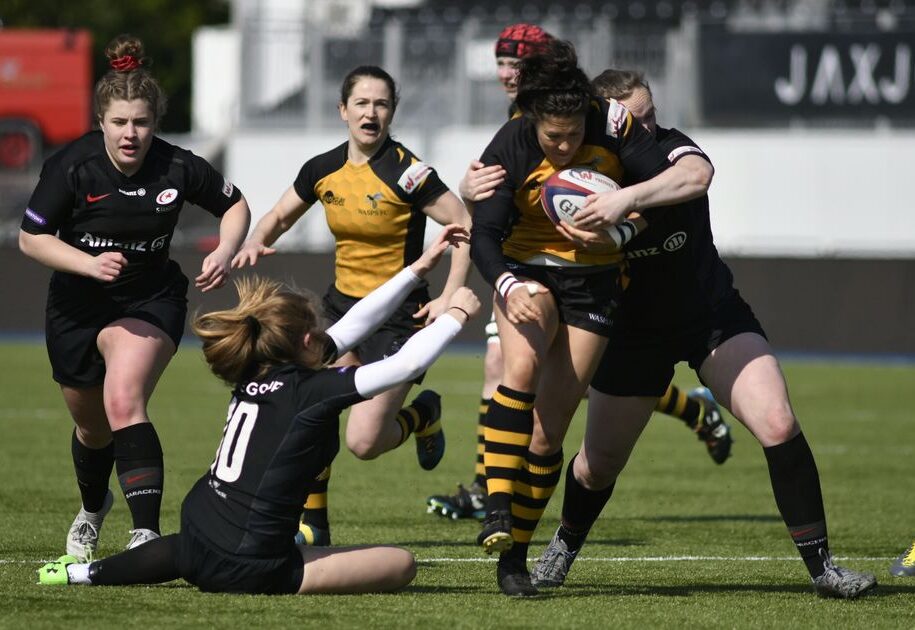

Rugby World Cup winner Giselle Mather, now West London’s very own Wasps Women’s Director of Rugby since 2016 alongside her duties as a club coach, has voiced her passion on building a more diverse workforce and wants to continue playing her role in championing gender equality in coaching.
Mather has been a trailblazer in the truest sense. She became the first-ever female rugby union coach to earn a Level 4 coaching badge, and the first woman to hold a full-time coaching position at a Premiership club men’s side, as London Irish AASE Manager.
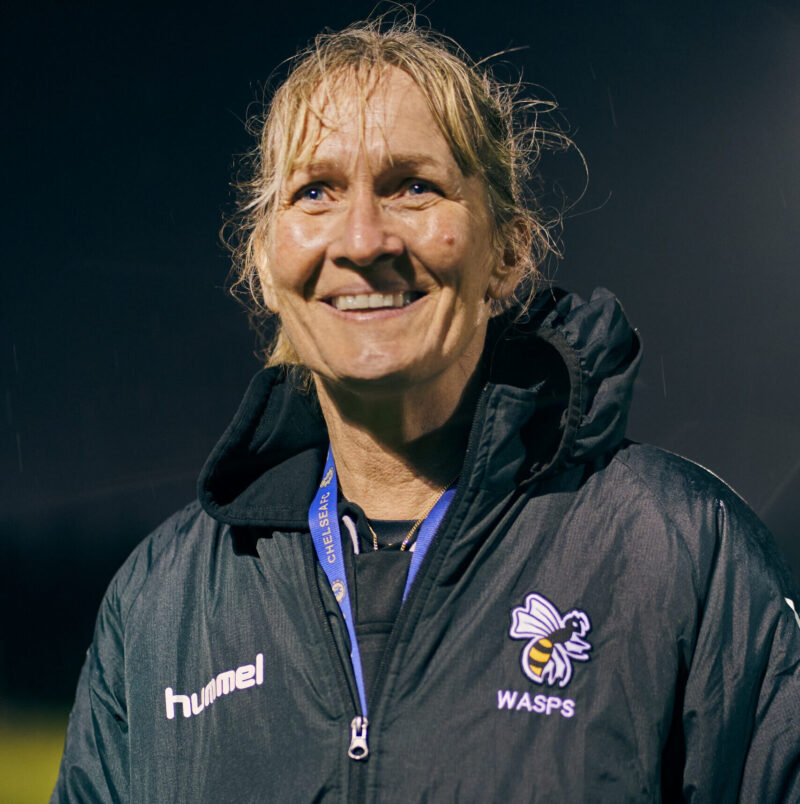
Thinking back to those training days, she recalls how she left RFU executives dumbfounded by asking if she could bring her six-week-old daughter to a Level 3 coaching course – and being the only woman in a room of 100 male coaches.
Reflecting on her determination to progress, Mather said:
“Six weeks previously I had given birth to my second child, Roxy, who I brought with me on the course. I contacted the RFU out of courtesy to say that I would need to bring my daughter because I was feeding her.
“They were somewhat aghast, and you could hear the coughing and spluttering on the other end of the phone. They said, ‘we’ll get back to you’. They’d never had that request at the time, and I’m not sure if they’ve had it since.
“I got a reply back saying, ‘as long as you’re discreet’. Well, I was thinking, ‘I’m hardly likely to be indiscreet in front of a hundred guys!’ I said, ‘look, if she screams and I have to take her out and I fail because of that, then so be it, but I’m ready to take the course, so let’s get on with it’.”
This powerful moment is just an insight into Mather’s never-quit attitude that has successfully resulted in merging coaching with pregnancy, childbirth and being a mother. Her determination to overcome bias and adversity in a male-dominated environment, has rightfully returned respect and admiration from both her male and female counterparts. The result being she was given the opportunity to become a coach in an offer she couldn’t refuse.
Speaking about her career in rugby, Mather highlights those who do cultivate a diverse workforce as fully appreciative of the strength it gives organisations – and urged for more opportunity to be given:
“Female coaches can bring something different and that should be seen positively. People need to understand the strength of a diverse coaching staff and employ people based solely on their skills and experience. By doing that, we can create more opportunities for women and girls to get into coaching and the cycle will continue.
“For me, coaching is about the people who are in front of you at any given moment. It is about investing in those people, finding out what their driving force and motivation is, and then giving them what they want and what they need.
“I’ve got to prove that my gender is irrelevant. If I didn’t succeed it would bother me that people might then say, ‘we wouldn’t employ another woman because she wouldn’t cope in this environment’. If I can break down the glass ceilings that still exist then I will do, but if I can’t do that then I will do my level best to prepare the path for the next person, so they can.”
Speaking about recent studies to why men get opportunities over women, Mather’s said:
“I’ll tell you now, there are hundreds of men who have taken jobs before they are really ready, and they have had to learn on the job. Well, women need to do that too.
“That other thing we always do as females: a job advert goes out and women think to themselves, ‘I can only do six out of the 10 essential requirements; I need to be able to tick eight or nine to apply’. Whereas our male counterparts have no qualms whatsoever putting themselves in the shop window.
“Yes, we need to get better at that, but equally, if a woman hasn’t yet worked in that environment, expose them to it. Support them to start with and then watch them fly and get on with it.”
Going forward, Mather hopes to keep working at her best and inspire as many women and girls as possible into the coaching workforce – she knows better than anyone the value they can bring.
To find out more on how to get into coaching, increase your skills, or advance in your coaching role, visit the FREE #WomenWhoCoach digital toolkit www.ukcoaching.org/Women-Who-Coach-Toolkit.







