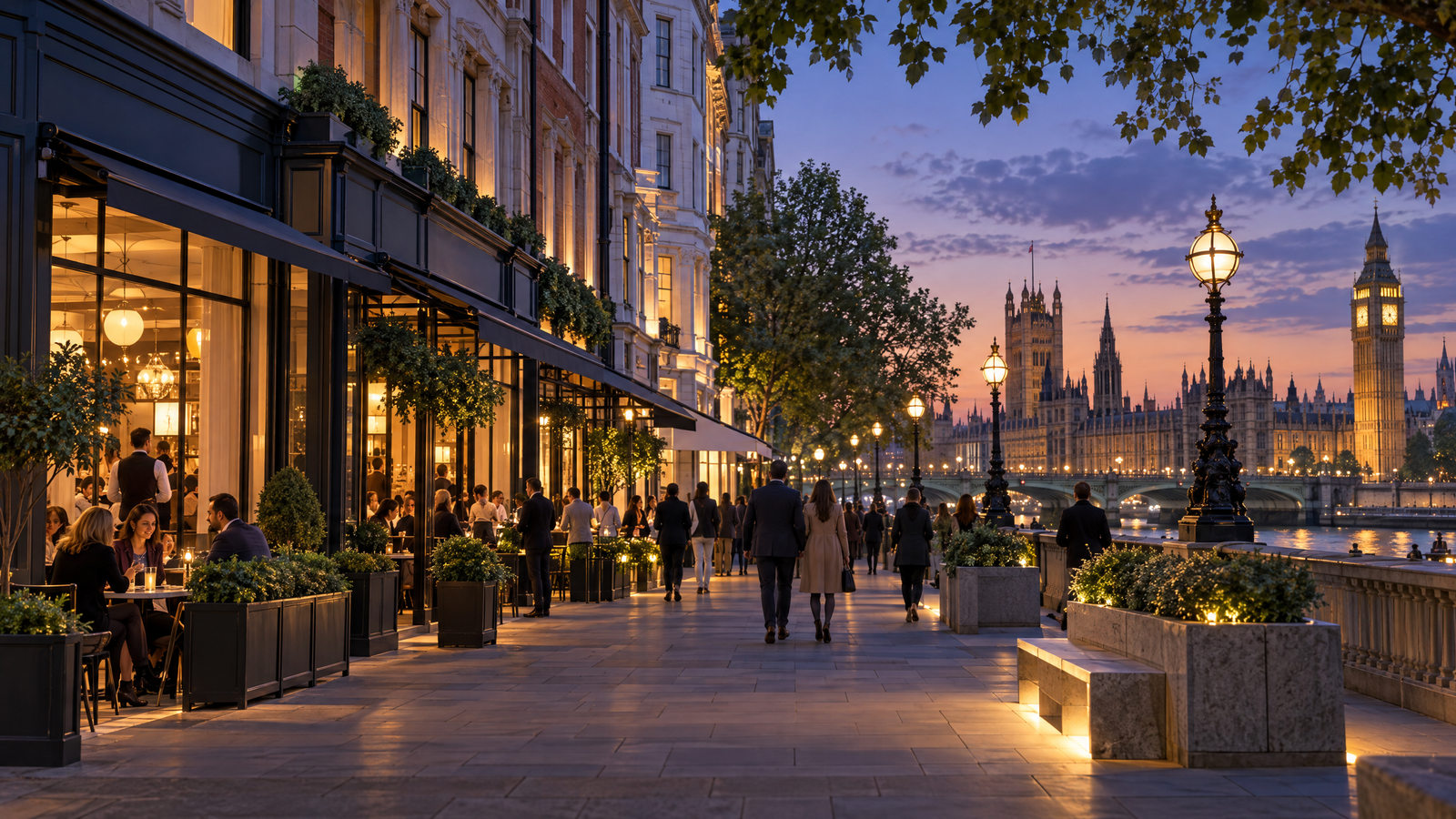

Westminster’s new framework for alcohol, entertainment and late-night licensing took effect on 1 October, after Full Council adopted the Statement of Licensing Policy 2026 on 16 September. The change matters because the statement is now the framework used by councillors and officers when considering licensing applications across the city.
The policy applies in a borough that contains some of the country’s busiest evening and night-time areas, including the West End. It also affects how decision-makers approach the West End cumulative-impact zone and the role of core hours, two issues that are often central to licensing applications in areas with a high concentration of licensed premises.
Adoption by Full Council
At the 16 September meeting, the Lord Mayor put the recommendation to a show-of-hands vote and councillors resolved to adopt the Statement of Licensing Policy 2026. The official decision record states that adoption of the statement is a Full Council responsibility under Westminster’s Policy Framework.
The new statement follows the previous policy, which took effect on 1 October 2021. Its commencement on 1 October 2026 marks the practical point at which the updated framework applies to the city’s licensing decision-making.
The September minutes also record a procedural interest declaration. Councillor Elliot Keck declared a pecuniary interest because his wife was employed by the British Beer and Pub Association. He left for the licensing policy item and did not take part in the debate or vote. The record gives this as a participation and governance matter, not as a finding of wrongdoing.
West End cumulative-impact zone changes
Specialist licensing-law analysis of the adopted policy reports that the West End cumulative-impact zone has been reduced on its western, eastern and northern edges. The reported effect is to remove significant parts of Covent Garden, Mayfair and the area north of Oxford Street from the zone.
The zone has not disappeared. Applications within the remaining cumulative-impact area still require assessment on their individual merits. That distinction is important: the updated policy should not be read as creating an automatic refusal rule for applications inside the zone, nor as an automatic route to approval for applications outside it.
For applicants, residents and existing operators, the revised boundary is likely to be one of the most closely watched parts of the 2026 statement. It changes the policy context in which some applications are considered, while preserving the need for case-by-case assessment by licensing decision-makers.
Core hours and updated policy themes
The adopted 2026 policy also clarifies the status of core hours. Specialist analysis states that core hours are treated as reference points rather than fixed limits. In practical terms, they provide a policy benchmark, but they do not by themselves determine whether an application should be granted or refused.
That clarification cuts both ways. Applicants seeking hours beyond the reference points cannot assume approval simply because the hours are not fixed limits. Equally, applications that differ from the reference points still have to be considered through the proper licensing process and on their own facts.
The same analysis reports that the adopted statement adds or updates material on violence against women and girls, Martyn’s Law, enforcement partnership working, vertical drinking and Good Operator Guidance. Those topics now form part of the updated policy framework used in Westminster licensing matters from 1 October.
Practical effect from 1 October
The immediate development is a change in the framework, not a blanket clampdown or a general relaxation. Westminster’s licensing decisions remain individual decisions, made in the context of the adopted statement and the circumstances of each application.
For the West End and surrounding areas, the two most notable operational points are the redrawn cumulative-impact zone and the clarified treatment of core hours. Together with the updated policy material on safety, enforcement, vertical drinking and good-operator expectations, they set the context for licensing applications considered under the 2026 statement from its 1 October start date.