
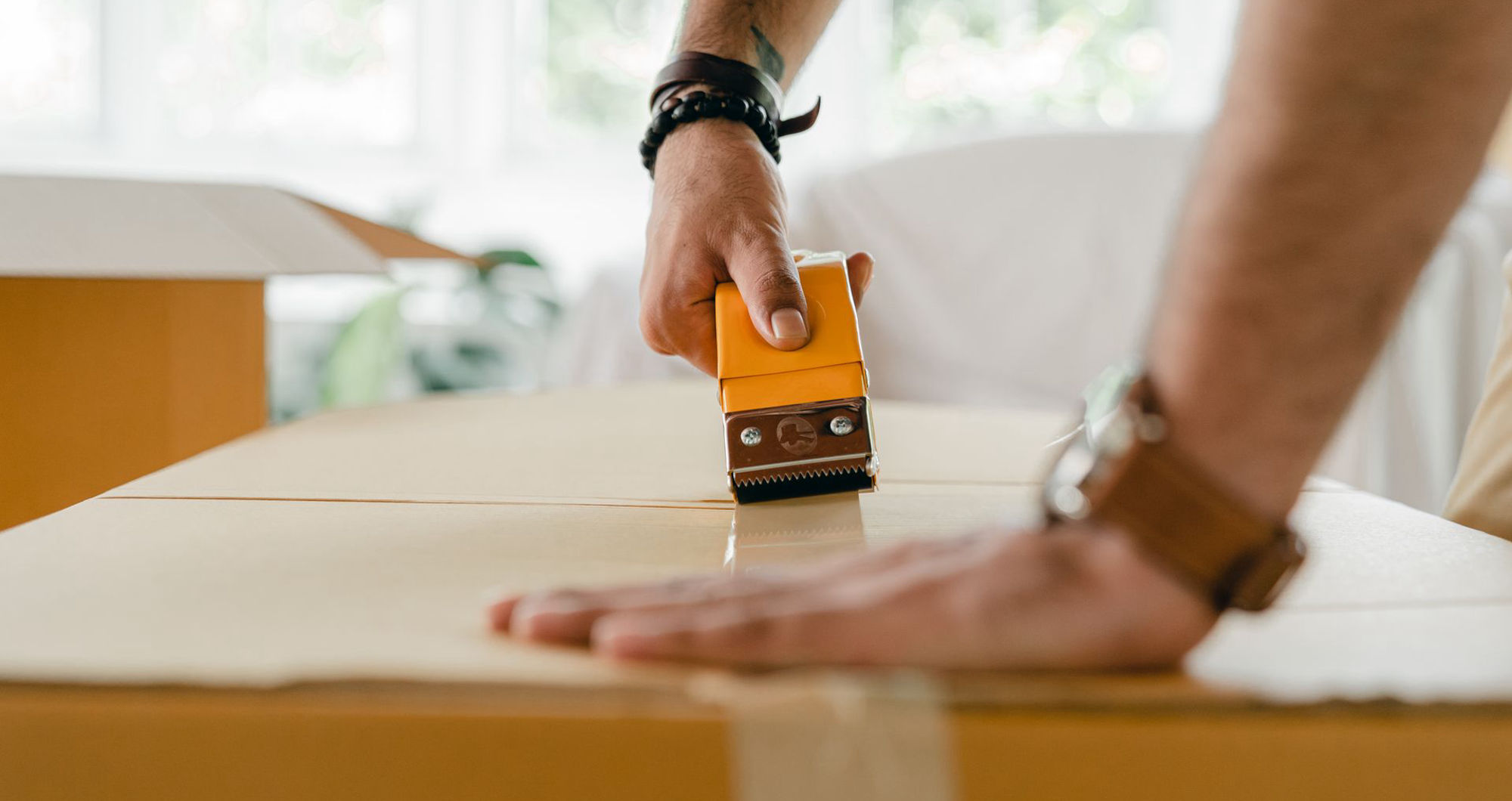

Packing is the part of moving house that everyone underestimates. A three-bedroom home takes a family the best part of a week to box up, done in evenings and weekends, with the kitchen left until last because nobody can face it. The same house takes a two-person professional crew a day. The difference is not that they work faster. It is that they have done it several hundred times and have stopped making the mistakes that take the time.
They start with the right boxes
Supermarket boxes are free and they are the first mistake. They are the wrong sizes, they are weak at the corners, and they were designed to hold crisps. Professional crews use double-walled cartons in three or four standard sizes: small for books and bottles, medium for most things, large for bedding and lampshades, and wardrobe cartons with a hanging rail for clothes that go from one wardrobe to the next without being folded.
Standard sizes stack. A van loaded with uniform cartons uses its height; a van loaded with a jumble of fruit boxes and holdalls uses half of it and the load shifts on the first roundabout.
They pack heavy small and light large
The rule every crew follows, and most households break: heavy things go in small boxes, light things go in large ones. A large carton full of books weighs more than a person can lift safely and will split its base on the stairs. A small carton of cushions is a waste of a box. It sounds obvious. Walk round any self-packed move and count the large boxes labelled “books”.
They label as they mean it
A professional carton is labelled on two sides, not the top, because the top is not visible once it is stacked. The label says which room it is going to in the new house, not which room it came from, and a short summary of the contents. Crews working a big move will number every box and keep a running list, so that at the other end the family can find the kettle without opening thirty cartons.
Colour coding by room, with a matching sheet of paper on each door at the new address, means the crew unloading does not need to ask a question all day.
They treat fragile items as a separate job
Glassware, china, pictures and mirrors are where self-packed moves lose money. Professionals wrap each glass individually in paper, pack them upright in a cell-divided carton, and fill every void so that nothing can move. Plates go on their edges, never flat. Pictures and mirrors go in flat cartons or are wrapped in blankets and strapped to the van wall. Televisions go back in their original boxes if they exist, and in a purpose-made carton if they do not.
The reason this matters beyond the obvious is insurance. A removal company’s goods-in-transit cover generally only applies in full to items it packed itself. Owner-packed boxes are usually covered for loss but not for breakage, because the insurer cannot know how they were packed. On a move with a dinner service and a set of wine glasses in it, that distinction is worth the packing fee on its own.
They pack in the right order
A crew will pack the rooms that are least used first, the day before the move: spare bedroom, dining room, garage, loft. Living rooms and kitchens are packed on the morning of the move, which means the family lives normally until the last possible hour. The box of essentials, with the kettle, mugs, toilet roll, phone chargers, a change of clothes and the children’s bedtime things, is packed last and loaded last so that it comes off first.
Households that book packing services in London usually do so for the fragile items and the kitchen first, and discover that having the whole house done is the difference between a move that is tiring and one that is actually stressful.
What it costs and what it saves
A full packing service on a typical London flat or terrace adds a day’s labour for a two-person crew plus materials. Against that, set the week of evenings, the broken glassware that is not insured, the boxes that split on the stairs, the van that needs a second trip because it was badly loaded, and the first night in the new house spent looking for the bedding.
The crews themselves put it more simply. They say the packing is the move; the van is just the bit in the middle.
And the unpacking
Most people do not know that the same crews will unpack. Cartons emptied, contents placed in cupboards, packing materials taken away the same day. For anyone moving with young children, elderly relatives, or a job that starts on Monday, it turns the move from a fortnight of boxes into a weekend.
Feature image by Pexels







