
Ask ten London renters who should fix a broken boiler and most will say the landlord. Ask who should fix a mouldy bathroom ceiling, a sticking window or a leaking washing machine, and the answers get less certain. The question of what repairs a landlord is responsible for has always caused arguments. In 2026 it matters more than ever.
Since 1 May, the Renters’ Rights Act has changed private renting in England. Section 21 “no-fault” evictions have gone, fixed-term tenancies have been replaced by rolling ones, and a new Decent Homes Standard is on the way for private rentals. With winter coming, the busiest season for repair requests, here’s where the line between landlord and tenant now sits.
What repairs is a landlord responsible for?
The basic rules haven’t changed. Under the Landlord and Tenant Act 1985 and the Homes (Fitness for Human Habitation) Act 2018, a landlord in England must keep these in repair and working order:
- the structure and exterior, including the roof, walls, windows, external doors, gutters and drains
- basins, sinks, baths, toilets and the pipes and drains connected to them
- heating and hot water
- gas appliances, flues and ventilation
- electrical wiring
- anything the landlord damages while carrying out repairs
On top of that, the home must be fit to live in. That means free from serious hazards such as severe damp and mould, broken heating in winter, unsafe electrics or a leaking roof. The government’s guidance on private renting repairs sets the list out in plain terms.
Landlords also have specific safety duties. Gas appliances need a check by a Gas Safe registered engineer every 12 months. The electrics need an inspection at least every five years, and councils can fine landlords up to £30,000 for missing it. CityPrime has a practical guide to EICR for landlords covering the codes and deadlines. Smoke alarms are required on every storey, and carbon monoxide alarms in rooms with a fixed combustion appliance such as a gas boiler.
What tenants are responsible for
Tenants aren’t off the hook. They’re expected to use the property in a “tenant-like manner”, which in practice means:
- reporting repairs promptly, ideally in writing
- fixing damage they or their guests cause
- small jobs such as changing light bulbs and smoke alarm batteries
- keeping the home reasonably clean and ventilated
- allowing access for repairs, with at least 24 hours’ written notice
Condensation is the classic grey area. Mould caused by a broken extractor fan, a leak or rising damp is the landlord’s job. Mould caused by drying washing on radiators with the windows shut is harder to pin on anyone.
“Most of the damp jobs we’re called to in rented flats turn out to have more than one cause,” says the team at CityPrime, a London property maintenance company that works with landlords and letting agents across the capital. “There’s usually a fan that’s stopped working or a gutter that’s overflowing, and the tenant’s habits make it worse. Fix the building first, then talk about ventilation.”

How quickly does a landlord have to carry out repairs?
For private rentals, the law says “within a reasonable time” of the landlord being told. What counts as reasonable depends on how serious the problem is. A sensible guide:
- Emergencies (no heating or hot water in winter, a major leak, a gas smell, dangerous electrics): within 24 hours
- Urgent repairs (a leaking roof, a broken boiler part, the only toilet not working): within a few days
- Routine repairs (a dripping tap, a sticking door, a broken kitchen cupboard): within a couple of weeks
Awaab’s Law, which sets strict legal deadlines for fixing damp, mould and other serious hazards, has applied to social housing since October 2025. The Renters’ Rights Act allows the government to extend it to private rentals, but no date has been confirmed yet.
What’s changed for landlords in 2026
The Renters’ Rights Act didn’t rewrite the list of repairs. It did shift the balance in ways that make repairs harder to ignore.
Tenants are more likely to complain. With section 21 gone, a tenant can’t be asked to leave just for raising a problem. Many letting agents expect repair requests to rise this winter as a result.
Good tenants can leave more easily. All tenancies are now periodic, and tenants can give two months’ notice at almost any time. A flat with a long list of unfixed faults is easier to walk away from.
More oversight is coming. A national landlord register, the Private Rented Sector Database, starts a phased rollout from late 2026, and a landlord ombudsman will follow. The new Decent Homes Standard, expected to be enforced in private rentals from 2035, will require homes to be in good repair, warm, and free from damp and mould. Separately, private rented homes will need an EPC rating of C by 1 October 2030.
“Landlords who keep records of every repair and check are in a much stronger position,” CityPrime’s team adds. “When a council or an ombudsman asks what’s been done, a folder of invoices and certificates answers the question in a minute.”
A pre-winter checklist for London landlords
October and November are when the calls start: cold radiators, boilers losing pressure, damp patches after heavy rain. A few checks now save most of them:
- gas safety check booked and the record shared with tenants
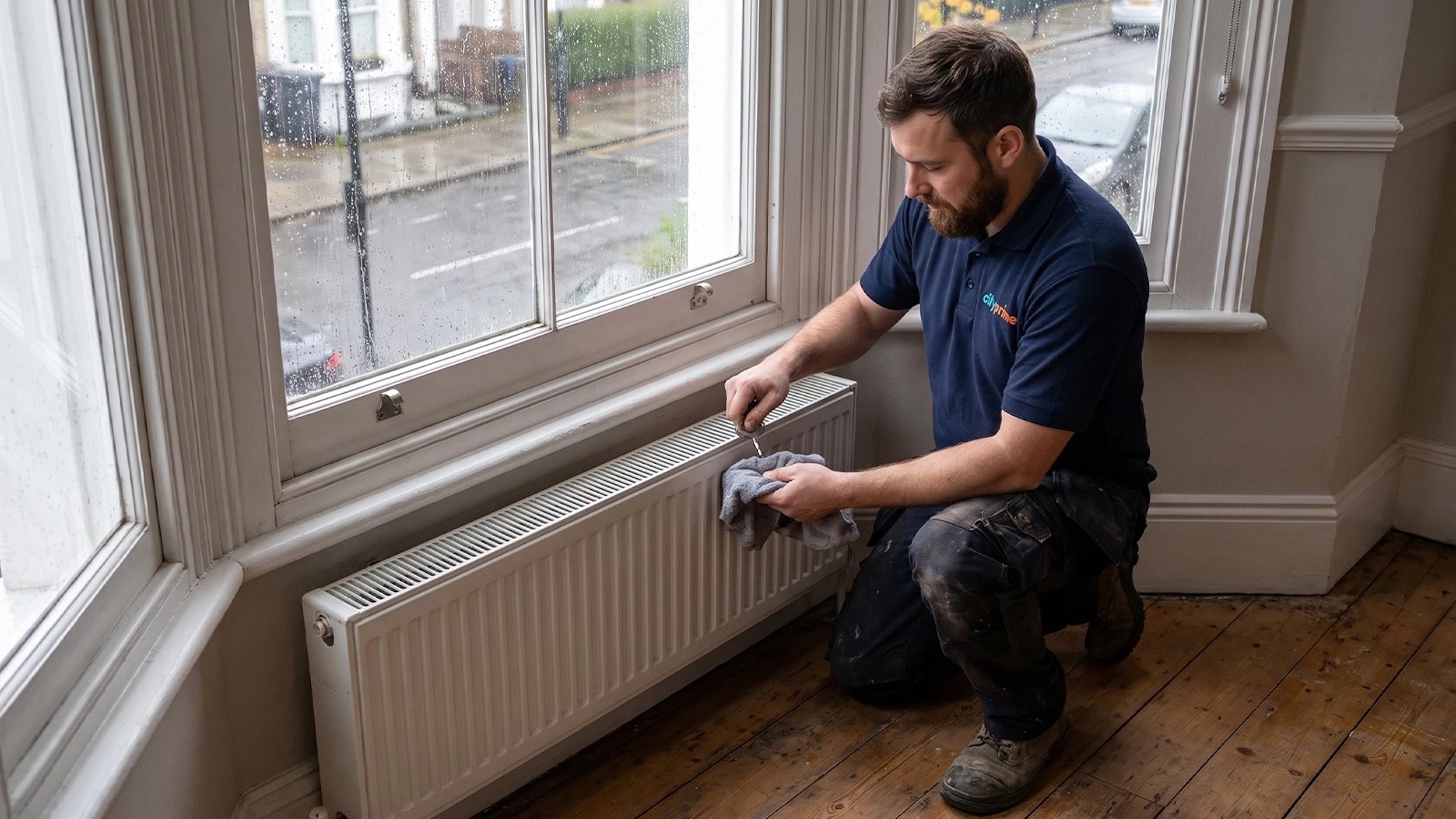
- radiators bled and boiler pressure steady
- gutters and downpipes cleared, roof tiles and flashing checked
- windows and doors closing properly, with no gaps or failed seals
- bathroom and kitchen extractor fans working
- smoke and carbon monoxide alarms tested
- EICR in date
- tenants told where the stopcock is and who to call out of hours
For a closer look at the legal side, CityPrime has published a guide to landlord repair obligations in 2026, covering timescales, Awaab’s Law and the Decent Homes Standard in more detail.
Common questions
Is a landlord responsible for mould?
Yes, if it’s caused by a problem with the building, such as a leak, rising damp, broken ventilation or poor insulation. Mould caused only by how the home is used, such as drying clothes indoors without ventilation, may be the tenant’s responsibility.
Who pays if a tenant breaks something?
The tenant. Damage caused by a tenant or their guests, beyond normal wear and tear, is their responsibility to repair or pay for.
Can a tenant withhold rent if repairs aren’t done?
Not safely. Withholding rent can put the tenancy at risk. Tenants should report the problem in writing and, if nothing happens, contact the council’s private housing team.
Does the Renters’ Rights Act change who pays for repairs?
No. The list of landlord and tenant responsibilities is the same. What’s changed is how tenancies end, how much oversight landlords face, and how easily tenants can raise problems without fear of eviction.