
A quiet question at the centre of the show
In May 2026, A Space Gallery in Brooklyn opened Not for Sale, a group exhibition co‑curated by Jingyi Yu and Qi Ling that asked a deceptively simple question: what happens when creative work is no longer expected to justify itself? The show gathered artists working across painting, sculpture, installation, animation, text, photography, and design to consider making as an end in itself — an activity born of curiosity, habit, or necessity rather than an immediate demand for visibility, market value, or career advancement.
Although staged in Brooklyn, Not for Sale enters a conversation that extends well beyond New York. Across London and the UK’s contemporary art landscape, artists and independent spaces continue to negotiate increasing pressure to articulate outcomes, visibility, and institutional value. Against that backdrop, the exhibition’s interest in process, ambiguity, and making without prescribed purpose speaks to broader questions shaping contemporary creative practice internationally.
Curating as a continuation of artistic inquiry
The exhibition grew from a commonplace observation: artists are often asked to explain why a work exists and what it is meant to achieve. Rather than supplying tidy answers, Not for Sale foregrounded practices that resist that expectation. For curators Jingyi Yu and Qi Ling, the exhibition represented an extension of Yu’s evolving practice. Where Yu’s earlier photographic work centred on self‑perception and emotional experience, her recent projects — including a series of exhibitions and collaborative initiatives in New York — emphasise creating contexts for dialogue. Here, curating functions as a way of placing artworks in relation to one another so broader questions about identity, uncertainty, and value can surface.
An exhibition of questions rather than conclusions
The show did not advance a single aesthetic manifesto. Instead, it brought together artists whose processes approached the same knotty problem from different directions. Some works were drawn from private archives and long‑term observation; others remained intentionally open‑ended, allowing ambiguity to persist. Across the gallery, making was presented less as a means to an instrumental end than as a practice of sustained engagement with experience — a way of staying present with ideas that defy immediate resolution.
Highlights from the gallery floor
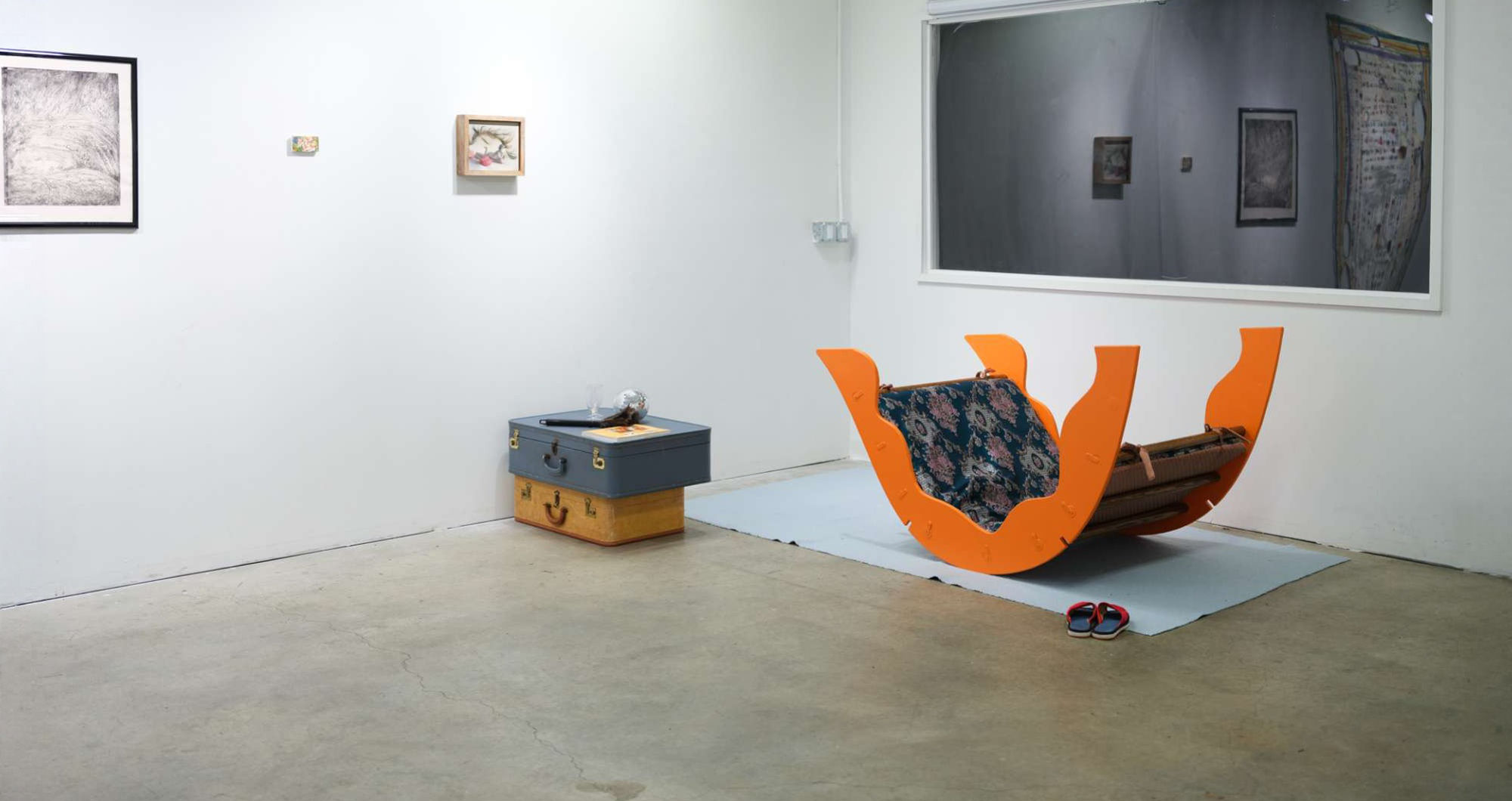
Several projects made the exhibition’s concerns tangible. Charlotte Fei’s THIS IS NOT A CHAIR reworks the chair — historically bound up with authority, posture, and instruction — into an object that resists prescribed behaviour. By inviting unexpected interactions, the work destabilises fixed notions of function and productivity, turning an everyday piece of furniture into a site for experimentation and discovery. The piece’s openness encapsulates the show’s broader refusal to demand that every object perform a clearly defined purpose.
Marian Obando’s In Circles offered a different but complementary approach. Presented as a charcoal animation accompanied by song, the piece charts the slow transformation of grief over time. Obando’s experimental animation — developed out of training at Central Saint Martins — privileges materials that retain visible traces of their making. Charcoal marks appear and fade across the screen in a cyclical rhythm, suggesting recollection more than narrative closure. In the context of Not for Sale, the work expanded the conversation beyond questions of labour and productivity to suggest that creative practice can serve as a way of dwelling with experiences that resist simple articulation.
Uncertainty as a productive condition
What distinguished Not for Sale was its willingness to treat uncertainty not as a temporary problem to be solved but as a productive space for attention and inquiry. Many of the exhibited works remained deliberately unresolved, inviting viewers to witness processes rather than only admire finished results. At a moment when artistic production is increasingly measured by metrics of visibility and market success, the exhibition offered a counterproposal: that value can arise from openness, from practices that allow meaning to develop gradually and without a predetermined destination.
The exhibition’s themes may feel particularly familiar to audiences engaged with London’s cultural sector, where conversations around creative labour, sustainability, and the value of experimentation continue to shape independent and institutional programming alike. Rather than presenting uncertainty as a limitation, Not for Sale offers a perspective that resonates across contexts: that creative work can retain significance even when it resists immediate explanation, measurable outcomes, or clear commercial positioning.
By assembling artists who approach uncertainty from varied perspectives, Jingyi Yu and Qi Ling created a field in which lingering questions were the point. The exhibition asked audiences to consider the worth of practices that remain ongoing, emphasising that some of the most significant artistic investigations begin precisely where certainty ends.
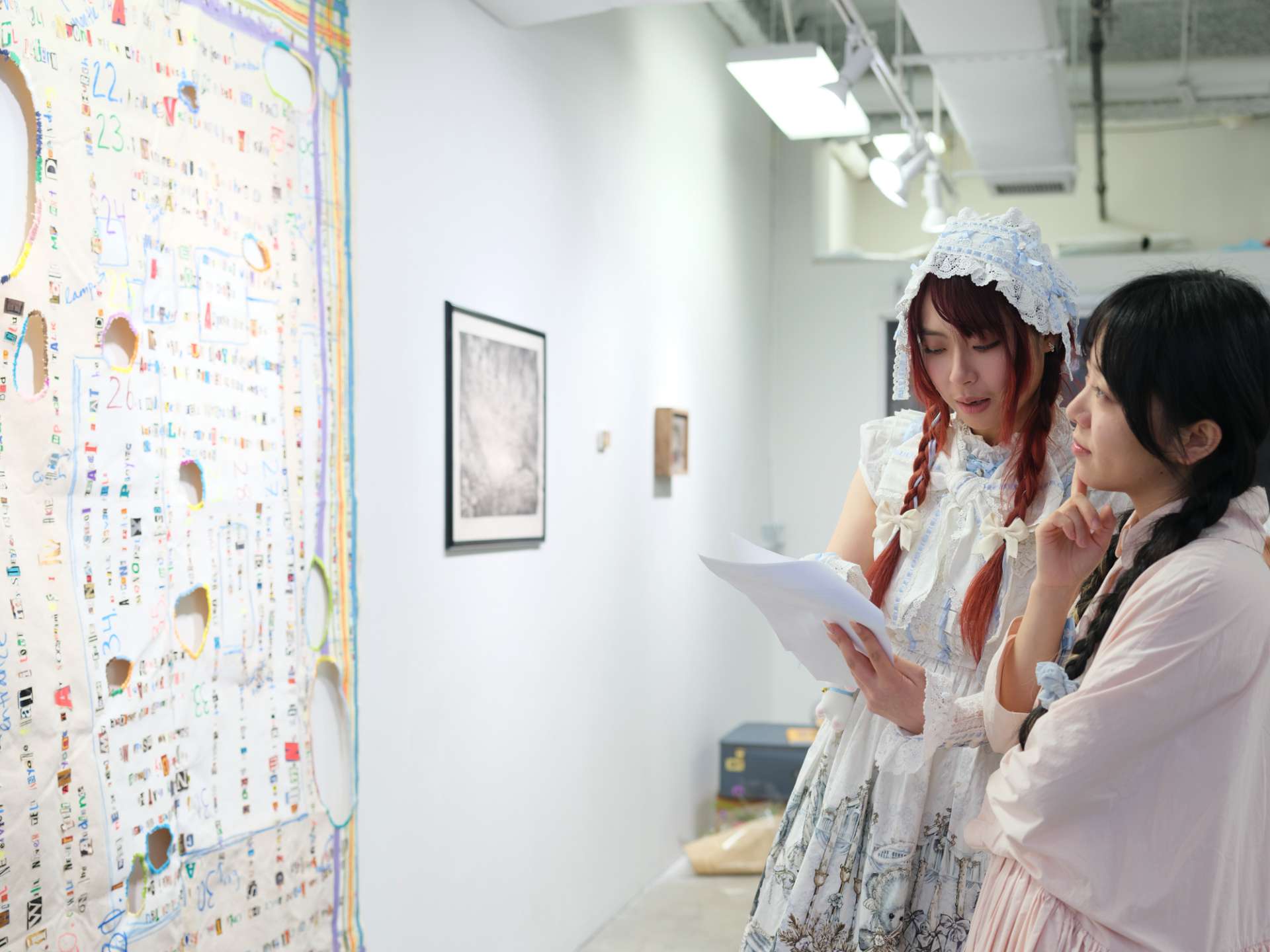
Installation views and documentation visually reinforced the exhibition’s themes. The opening night photograph shows the two curators — with Jingyi Yu in pink — gathered amid works that resist neat categorisation. (Installation photograph credited to Jingyi Yu; opening‑night photograph credited to Sumi Zhang.)