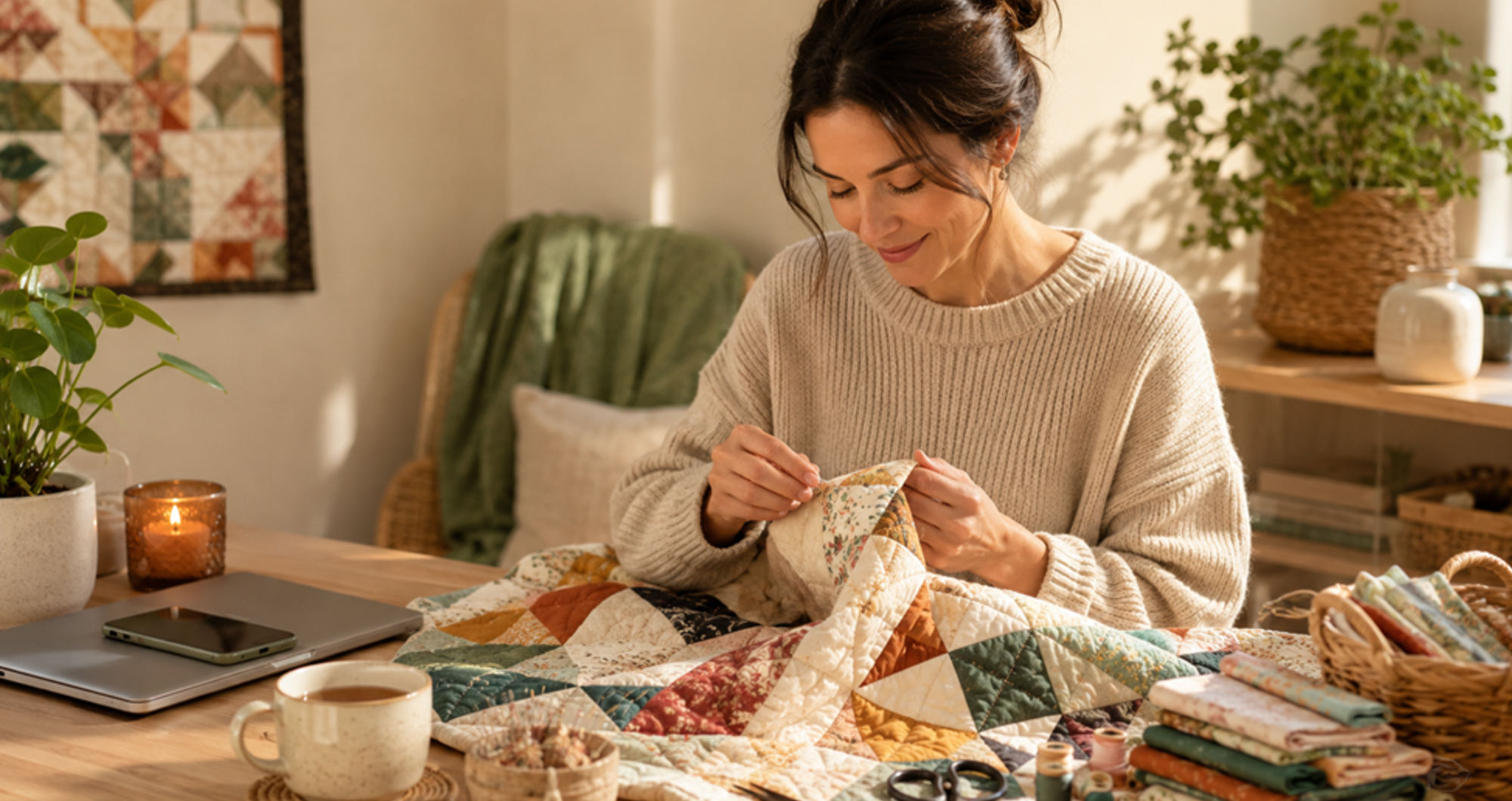

For years, the wellness conversation belonged to the gym, the meditation app, and the green smoothie. Lately it has widened to include something far less obvious: the sewing table. Traditional craft hobbies, quilting chief among them, are drawing a fresh generation of enthusiasts who have discovered that making something slowly, by hand, does for their minds what a rushed workout or another app rarely manages. The appeal is not sentimental. It is practical, and a growing body of evidence supports it.
The science behind a calmer hobby
Repetitive, absorbing handwork has a measurable effect on the nervous system. Activities like stitching, knitting, and quilting encourage a state psychologists call flow, the deep, unselfconscious focus that arrives when a task is challenging enough to hold your attention but not so hard that it overwhelms. In that state, the mental chatter that fuels anxiety tends to quiet down. Researchers studying textile crafts have linked regular practice to lower stress, improved mood, and a sense of calm that resembles the effects of meditation.
Part of the benefit is simply that craft occupies the hands and the eyes at once, leaving little room for rumination. Part of it is the rhythm. The steady, predictable motion of piecing fabric gives the mind something orderly to hold onto, which is precisely what feels scarce in a day spent switching between screens and notifications. For many people, an hour at the sewing machine functions as a genuine reset.
A deliberate antidote to the screen
It is no accident that analogue hobbies are rising just as screen fatigue peaks. After workdays spent staring at monitors and evenings spent scrolling, people are actively seeking activities that pull them away from glass and back into the physical world. This growing interest in offline hobbies reflects a wider movement towards everyday wellbeing, similar to themes explored in London Daily News’ article Study Reveals How Water-Based Activities Can Help Create a Healthy Work-Life Balance, which examines how recreational activities can support mental health and reduce stress. Quilting is emphatically tactile. There is fabric to handle, colour to arrange, and a real object that grows a little each time you sit down to it.
That tangibility matters for wellbeing. So much modern work produces nothing you can hold at the end of the day, which can leave a quiet sense of dissatisfaction. A craft reverses that. Progress is visible and cumulative, and the finished piece is proof that the hours added up to something. In a culture of the instant and the disposable, the slow accumulation of a handmade quilt is quietly radical.
The overlooked ingredient: community
Wellness is not only a solo pursuit, and this is where craft hobbies quietly outperform many of their app-based rivals. Quilting has always been social, from the historic quilting bee to today’s online groups where makers share progress, swap advice, and cheer each other on. That connection is not incidental to the wellbeing benefit; it is central to it. Loneliness is one of the most pressing health issues of the age, and a shared creative pursuit is a natural, low-pressure way to build the regular contact that guards against it.
The structure of the hobby reinforces the bond. Working toward the same project as others, at a similar pace, creates an easy sense of belonging that does not demand the emotional labour of forming friendships from scratch. The craft is the common language, and it does much of the work for you.
How to begin without being overwhelmed
The most common barrier for newcomers is not interest but intimidation. A finished quilt looks complex, and the idea of choosing fabrics, following a pattern, and cutting everything accurately can stop people before they start. The trick is to lower the stakes at the beginning, so the calming payoff arrives before the difficulty does.
One of the gentlest entry points is a guided, month-by-month approach. Structured block of the month quilting programs, for example, break a full quilt into manageable monthly steps, delivering the fabric and instructions for one section at a time rather than confronting a beginner with the whole project at once. That steady, unhurried rhythm happens to be exactly what makes the hobby soothing in the first place: a small, satisfying task to return to each month, visible progress, and a built-in community working alongside you. Starting small turns a daunting craft into a sustainable habit.
Beyond a first project, the advice is the same as with any wellbeing practice. Keep the sessions short and regular rather than rare and marathon. Set up a small, permanent corner so the tools are always ready and the barrier to starting stays low. And measure success by how the time makes you feel, not by how quickly the quilt comes together.
A quiet habit worth keeping
The return of the handmade hobby is not really about fabric. It is about a growing recognition that mental health is served by the ordinary and the analogue as much as by the clinical and the digital: by focus, by making, by belonging, and by the simple pleasure of watching something take shape under your own hands. Quilting delivers all of these at a pace the modern day rarely allows.
You do not need a diagnosis or a wellness budget to benefit. You need a little time, a little fabric, and the willingness to slow down. In an age that keeps speeding up, that may be the most restorative choice on offer, and unlike most wellness trends, this one leaves you with something warm to show for it.