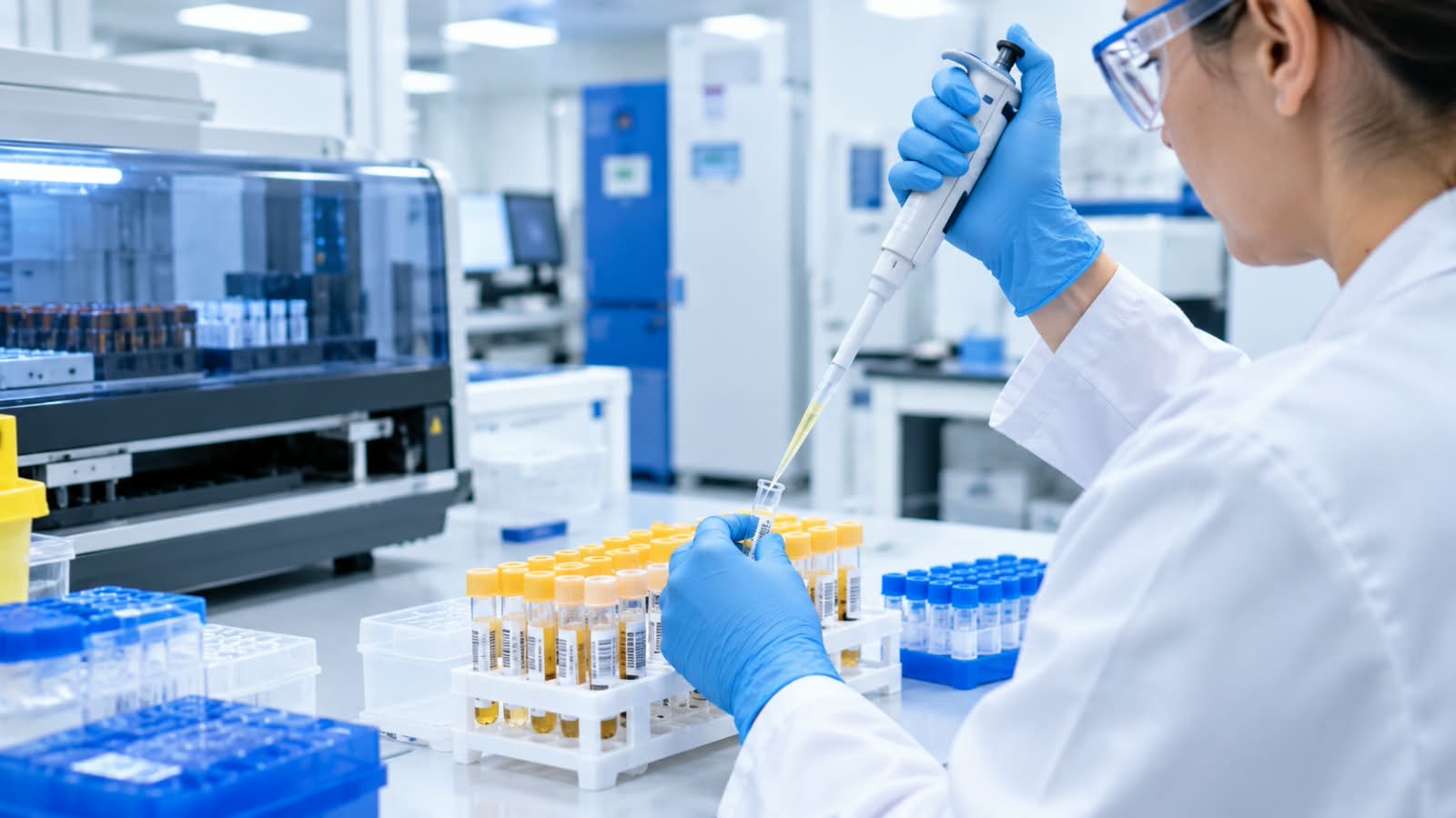

The value of a clinical or research study depends on the quality of the samples and data collected. From the moment a biological sample is received, every handling step can affect its suitability for downstream testing and analysis.
Sample processing is the work that prepares biological materials for storage, testing, or further research. It can include receipting, labelling, fractionation, aliquoting, extraction, quantification, and normalisation. When these stages are planned and managed carefully, research teams can protect sample integrity and improve consistency across a study.
The Importance of a Consistent Process
Clinical studies and research programmes often involve samples collected across multiple locations, time points, or participant groups. Without a clear processing workflow, small variations in handling can make it more difficult to compare results.
Consistency matters because different sample types may require specific preparation methods. Blood, for example, may need to be separated into components, while DNA and RNA samples may require extraction and quality assessment before genetic analysis.
A structured approach helps ensure that samples are handled according to agreed procedures from arrival through to storage or testing. This supports quality while reducing the risk of lost, incorrectly labelled, or unsuitable samples.
Sample Receipting and Traceability
The first step in sample processing is often receipting. This is where the laboratory records the arrival of the sample, confirms essential information, and enters it into a tracking system.
Traceability is critical throughout the sample lifecycle. Research teams need to know where a sample came from, what processing it has received, where it is stored, and whether it has been used.
A laboratory information management system, commonly known as a LIMS, can support this process by recording sample movements and associated data. This creates a clear record that can be useful for study management, audits, quality control, and future research.
Effective traceability also makes sample retrieval more efficient. When a specific sample or group of samples is required, the research team can locate the right material with greater confidence.
Blood Fractionation and Aliquoting
Some sample processing steps are designed to make biological materials more useful for different forms of analysis.
Blood fractionation separates a blood sample into components such as plasma, serum, buffy coat, and plasma-depleted red blood cells. These components can then be used for different testing or research purposes.
Aliquoting involves dividing a parent sample into smaller portions. This can be beneficial because it allows separate samples to be used for testing without repeatedly thawing and refreezing the original material. It can also make it easier to retain material for future research.
The right approach depends on the study protocol, sample type, and planned analyses. Careful planning at the beginning can help ensure that the available material is used efficiently.
Preparing Samples for Genetic Analysis
Many research programmes require DNA or RNA to be extracted from biological fluids or tissues. Once extracted, nucleic acids may be quantified and assessed to make sure they meet the requirements of downstream analysis.
Quantification helps determine how much DNA or RNA is available, while quality checks can help researchers understand whether the material is suitable for the intended work. Normalisation may then be used to prepare samples to a required concentration for a specific analysis.
These steps are especially important for large-scale studies, where consistent preparation can support reliable comparisons across a substantial number of samples.
A specialist sample processing service can support research programmes with high-throughput processing, sample tracking, DNA and RNA extraction, quantification, normalisation, and linked storage solutions.
Automation Can Support Scale and Consistency
As studies grow, manual processing can become more challenging. Large participant numbers, tight turnaround times, and complex sample requirements can place pressure on laboratory teams.
Automation can help manage high sample volumes while supporting repeatable processes. For example, automated liquid handling can assist with sample transfer, reformatting, pooling, and aliquoting. It can also reduce the amount of repetitive manual handling required.
Automation does not remove the need for trained laboratory professionals. Instead, it can support them by improving efficiency and helping maintain consistency across larger programmes.
Plan the Full Sample Journey
Sample processing should not be considered in isolation. It is part of a wider journey that includes collection, transport, processing, storage, retrieval, and eventual analysis.
Before a project begins, research teams should consider:
- What types of samples will be collected
- How samples will be labelled and tracked
- How quickly they need to reach the laboratory
- Which processing steps are required
- Whether samples need long-term storage
- How samples will be retrieved for future analysis
- What quality and reporting requirements apply
Considering these requirements early can help prevent avoidable delays and make the study easier to manage as it develops.
FAQ
What is sample processing?
Sample processing is the preparation of biological samples for testing, storage, or further analysis. It may include receipting, fractionation, aliquoting, extraction, quantification, and normalisation.
Why is sample traceability important?
Traceability helps researchers track a sample from receipt through processing, storage, and use. It supports quality control and helps ensure that the correct material can be retrieved when needed.
What is aliquoting?
Aliquoting is the process of dividing a larger sample into smaller portions. This can help preserve the original sample and allow multiple tests to be carried out over time.
How long can processed samples be stored?
It depends on the sample type and storage conditions. When kept at ultra-low temperatures, such as in -80°C freezers or liquid nitrogen vapour, and properly monitored, many processed samples can remain suitable for research for years.
Can sample processing be scaled for large studies?
Yes. High-throughput laboratories and automated systems can help process large numbers of samples while supporting consistent procedures and clear tracking.
Conclusion
High-quality sample processing provides an important foundation for clinical research and scientific discovery. By prioritising consistent workflows, traceability, suitable preparation methods, and scalable systems, research teams can protect the value of their samples and support more reliable downstream analysis.