
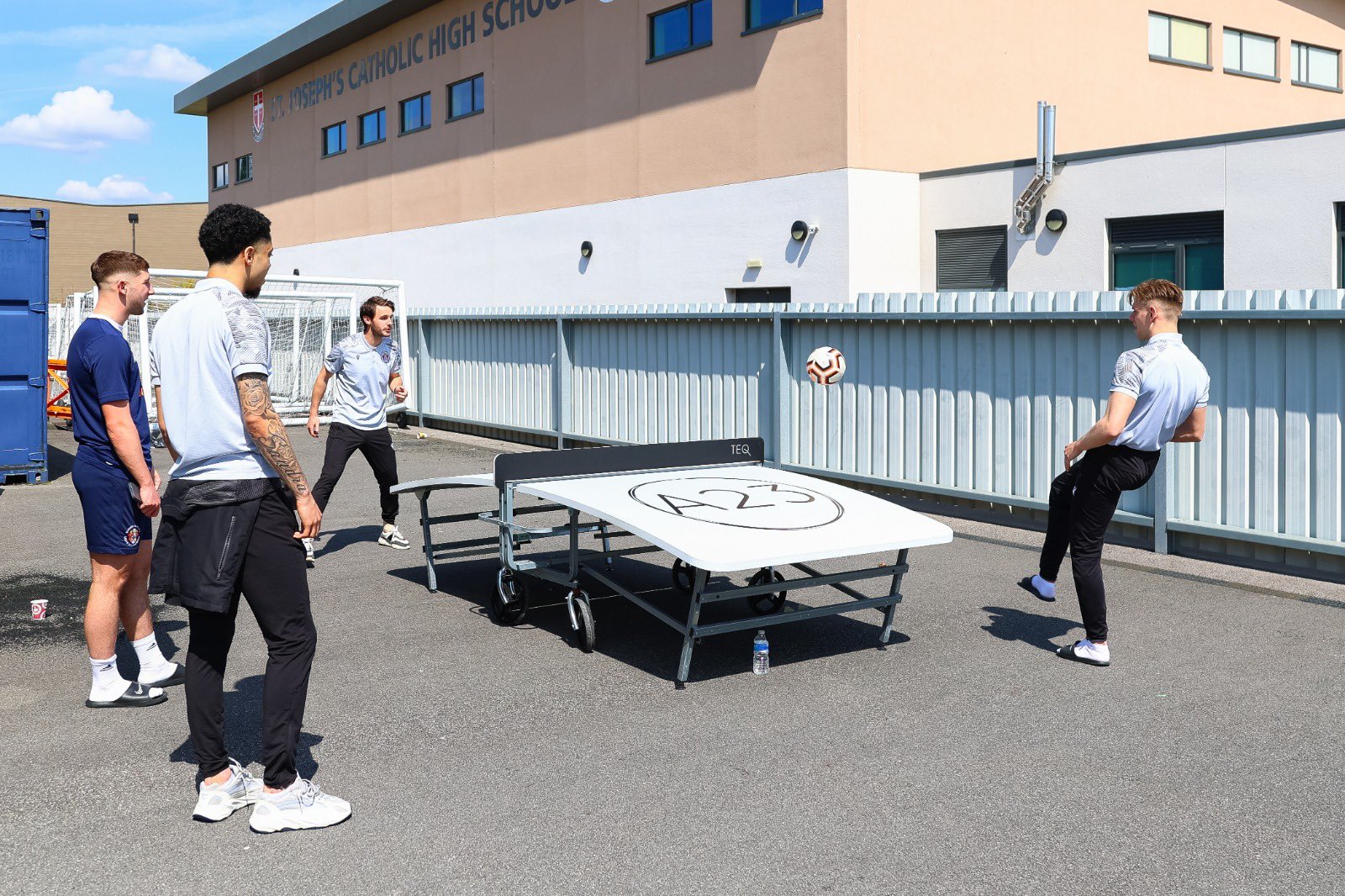

Across corporate events, exhibitions, and live brand environments, the role of entertainment has fundamentally changed. Audiences no longer want to observe from the sidelines; they expect to participate, compete, and actively shape their experience. This shift is being driven by performance pressure on events to deliver measurable engagement, shorter attention spans, and a growing demand for meaningful brand interaction rather than passive consumption.
As a result, interactive formats such as sports activations, branded games, and immersive physical challenges are increasingly replacing traditional stage-based or observational entertainment. For event agencies and organisers exploring nationwide games hire for events, this evolution reflects a wider industry move towards experience-led formats that prioritise dwell time, recall, and tangible return on investment.
The Decline of Passive Event Entertainment
Passive event entertainment, such as stage acts, speakers, and static displays, often struggles to compete with the pace and distraction of modern events. These formats depend on attendees choosing to stop, watch, and remain focused, which is increasingly unlikely in busy exhibitions, fan zones, and corporate showcases. When engagement is optional rather than participatory, interactions tend to be brief and easily forgotten, offering limited value beyond surface-level atmosphere.
In contrast, organisers are increasingly favouring entertainment that gives attendees a clear reason to stop and get involved. Interactive formats that require action, whether competitive play, timed challenges, or familiar game mechanics, naturally hold attention for longer. This is why elements such as reaction-based activities and interactive options like arcade machine hire are replacing purely observational setups. By asking something of the audience, these experiences encourage longer dwell time, repeat engagement, and more organic interaction between attendees and event teams.
Experiential Marketing and the Psychology of Interaction
Experiential marketing is built on the principle that people remember what they actively take part in far more clearly than what they simply observe. When an attendee makes a decision to participate, whether that is competing, collaborating, or testing their own skill, the experience becomes personal rather than passive. This sense of agency creates stronger emotional engagement and helps embed the brand or event context into memory. In live environments where attention is fragmented, interaction acts as a cognitive anchor, giving attendees a reason to focus and stay present rather than move on.
From a practical event-planning perspective, interactive experiences also align closely with how people behave in social spaces. Participation introduces natural talking points, friendly competition, and moments of shared attention, all of which encourage social reinforcement and repeat engagement. Rather than relying on messaging alone, experiential formats allow the activity itself to communicate brand values such as energy, innovation, or playfulness. For agencies and organisers, this makes interactive entertainment a strategic tool rather than a decorative feature, supporting deeper engagement without the need for overt sales or explanation.
Interactive Games as a Scalable Engagement Mechanism
One of the key reasons interactive entertainment has gained prominence is its ability to scale effectively across different event formats and audience sizes. Unlike scheduled performances or speaker-led content, interactive games operate continuously, allowing attendees to engage on their own terms rather than at fixed times. This makes them particularly well-suited to exhibitions, brand activations, and fan zones where footfall fluctuates throughout the day. Games can absorb high volumes of participants without creating bottlenecks, ensuring consistent engagement even during peak periods.
From an operational standpoint, interactive games also offer flexibility that passive entertainment cannot. They can be positioned to draw traffic towards specific areas, used to manage crowd flow, or integrated into wider experiential layouts without dominating the space. Because participation is self-directed, event teams can maintain momentum without constant supervision, while still benefiting from repeat plays and sustained attention. For agencies tasked with delivering measurable engagement at scale, interactive games provide a reliable mechanism for maintaining energy and involvement across the full duration of an event.
Sports Activations and Football Inflatables in Live Environments
Sports-led activations are widely used in live event environments because they combine physical participation with instantly recognisable formats. Football-based challenges, skill games, and inflatable attractions draw attention quickly in crowded spaces because the activity is easy to understand at a glance. Attendees do not need lengthy explanations to get involved, which lowers the barrier to entry and increases spontaneous participation. This makes sports activations particularly effective in fan zones, outdoor events, and large-scale corporate gatherings where energy and visibility matter.
Football inflatables also function as strong visual anchors within an event space. Their scale and movement naturally pull footfall towards a specific area, while the competitive element encourages repeat attempts and friendly rivalry. Unlike static displays, these activations remain active throughout the event, continually refreshing interest as new participants take part. For organisers, this helps sustain engagement across long event days, ensuring the entertainment continues to feel relevant rather than blending into the background.
Operational Reliability in High-Footfall Event Settings
In high-footfall environments, the success of interactive entertainment depends as much on operational reliability as it does on creativity. Equipment must be robust enough to handle continuous use, rapid participant turnover, and varying audience demographics without interruption. Any downtime, whether caused by technical faults, poor layout planning, or slow reset times, can quickly undermine engagement and disrupt crowd flow. For event agencies and organisers, reliability is not a secondary concern but a core requirement when selecting interactive entertainment for live environments.
Effective delivery also relies on professional installation, clear spatial planning, and efficient de-rig processes that fit within tight event schedules. Interactive entertainment often needs to operate alongside other activations, catering, and programmed content, which means it must integrate smoothly without causing congestion or safety issues. When executed properly, reliable interactive setups support consistent engagement throughout the event, allowing teams to focus on audience interaction rather than troubleshooting. This operational confidence is a key reason interactive formats continue to replace passive entertainment in demanding event settings.
Conclusion
Interactive experiences are no longer an optional enhancement within live events but an expected part of how audiences engage with brands, spaces, and each other. As attention becomes harder to capture and justify, entertainment that invites participation consistently outperforms formats that rely on observation alone. Interactive games, sports activations, and branded experiences give attendees a reason to stop, stay, and return, while offering organisers clearer engagement outcomes and greater flexibility in high-footfall environments. In this context, the shift away from passive entertainment is less about novelty and more about meeting modern expectations for involvement, energy, and value across every stage of the event experience.
Feature image by Ballsportz







