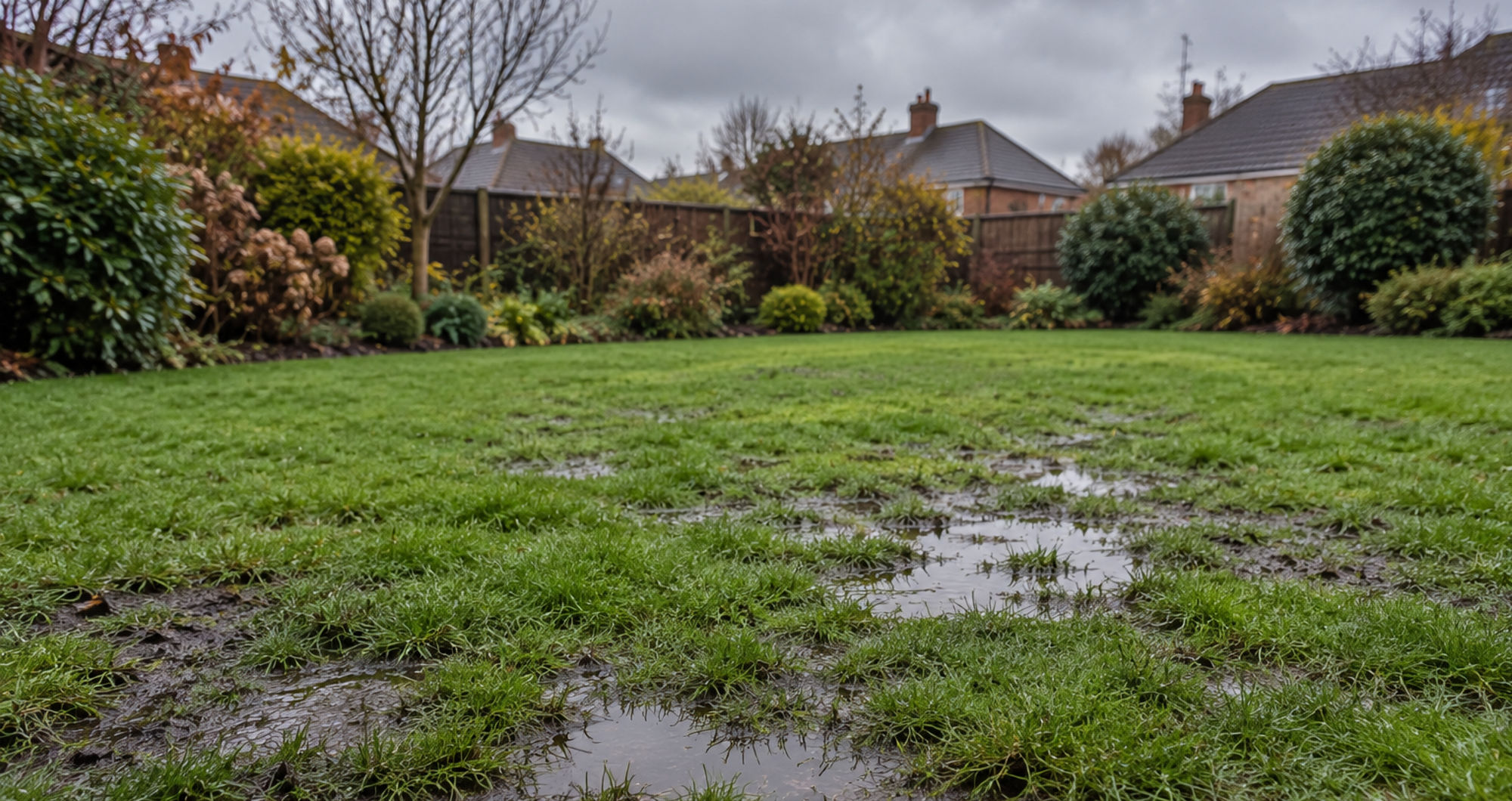

We’ve all been there. You step outside on a crisp autumn morning to enjoy the garden, only to be met by that unmistakable, shoe-soaking squelch. One week your grass looks pristine, but the next, a sudden downpour leaves you dodging mini swimming pools and tracking mud across the kitchen tiles.
It’s easy to curse the weather and retreat back indoors, but those soggy spots could actually be telling you something useful. According to Cheryl Harper, Managing Director of Greensleeves Lawn Care, persistent puddles can point to problems beneath the surface, from compacted soil and excess thatch to the simple way water moves around your garden.
Here, Cheryl shares five easy ways to play lawn detective, tackle the causes and help your grass cope with the wetter months ahead.
-
Take the ‘squelch test’
Before grabbing any tools, spend a moment diagnosing what’s happening underfoot. Walk around after a wet spell and pay attention to how different parts of the lawn look and feel.
- Hard and puddled? If water sits on top of ground that feels rock-hard beneath your shoes, compaction could be the culprit. High-traffic routes, such as the path from the back door to the shed or the area where the kids play, are often the first to suffer.
- Spongy and bouncy? You may have a build-up of thatch, the layer of dead grass, roots and other organic material that sits between the green grass and the soil. Too much can make it harder for water to penetrate the ground properly.
- Moss moving in? Moss often thrives where conditions are persistently damp but simply removing it won’t necessarily solve the underlying problem. Poor drainage, compaction and excess thatch can all create the sort of environment where moss feels right at home.
Pro tip: Try to stay off saturated grass wherever possible. Repeatedly walking over wet ground can add to compaction, so give particularly soggy areas a little breathing space while they dry.
-
Give compacted soil some breathing room
Picture healthy soil as a fresh kitchen sponge, with tiny spaces that allow air and water to move through it. Over time, regular foot traffic, mowing and everyday use can squash those spaces, making it harder for rainfall to soak away.
Aeration helps open the ground back up, giving water somewhere to go rather than leaving it sitting on the surface. For lighter compaction, spiking creates small holes through the soil, while lawns with heavier compaction or persistent surface water may benefit from hollow-tine aeration, which removes small plugs of soil to create deeper, longer-lasting relief.
For the odd small trouble spot, you can aerate carefully with a garden fork when conditions are suitable. If the problem covers much of the lawn or keeps returning after rainfall, that’s usually a sign that it is worth investigating the soil more thoroughly.
-
Peel back the ‘thatch blanket’
If the ground doesn’t feel particularly hard but water still struggles to disappear, look a little closer to the surface. A thick layer of thatch can act as a barrier, slowing down the movement of water, air and nutrients into the soil below.
Scarification removes that excess material and opens up the lawn surface again. The important word here is excess – a small amount of organic material is perfectly normal, so there’s no need to attack the lawn with a rake simply because you spot a little brown material beneath the grass.
-
Try the five-minute ‘cuppa and window’ test
Next time the heavens open, make yourself a hot drink and spend five minutes watching the garden from the back window. It sounds almost too easy but seeing where the water actually travels can reveal clues you might otherwise miss.
Is runoff from the patio heading straight onto one corner of the grass? Does one subtle dip turn into a puddle before anywhere else? Perhaps the lawn slopes in a way that sends water towards the same problem area every time it rains.
Once you know where the water is coming from, you can tackle the right problem rather than guessing. That could mean levelling a low spot, improving compacted soil or thinking more widely about how your garden handles rainfall, with features such as permeable areas or planted spaces helping to manage where water goes.
-
Give stubborn water a helping hand
Sometimes the issue isn’t one dramatic drainage problem, but soil that simply struggles to let water through efficiently. If the same patches remain soggy long after the rain has stopped, prevention becomes particularly important because repeated waterlogging can leave grass weaker and patchier over time.
Alongside tackling compaction and excess thatch, specialist treatments can help water move through troublesome soil. Greensleeves uses its Down Flow treatment on lawns prone to waterlogging, helping excess rain penetrate through the soil rather than pooling at the surface, so lawns can dry more quickly and feel firmer underfoot.
The real trick is not waiting until winter has turned the garden into a mud bath. Spot the warning signs now, work out why the water is hanging around, and a few preventative changes this autumn could leave your lawn in a much better position to handle the wet weather ahead.
For further information about Greensleeves and how they can help you with your lawn care, visit the website.