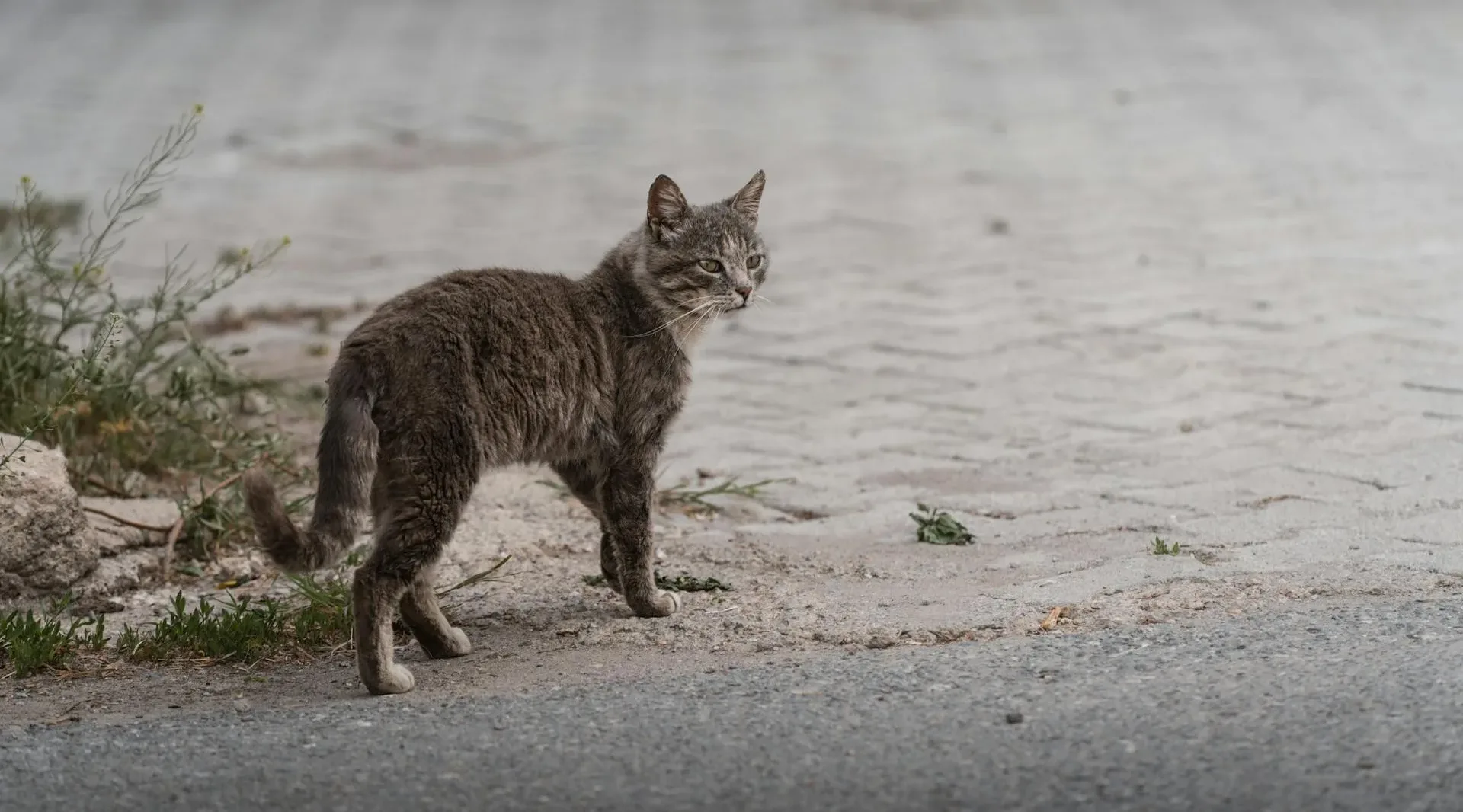

420,000 kittens – that’s how many one pair of cats and their offspring can produce in seven years. Is that a lot or a little? An incredible amount! Imagine streets filled with stray animals driven by instinct to reproduce. And it’s not their fault that every spring their bodies produce hormones that drive them to behave this way. As a result, stray cats are doomed to hunger and cold because they are unable to feed themselves. The reason is fierce competition for food. Even animal rights activists cannot provide food for such a large number of animals on their own. In essence, this is the degeneration of the species. Therefore, sterilising just one stray cat solves many problems.
The Source of Good charity foundation is committed to sustainable and humane solutions for stray animal care. As part of its mission, the Source of Good charity foundation regularly funds sterilisation programs across cities and rural communities, ensuring a healthier future for stray cat populations.
What is sterilisation?
Honestly, it’s about caring for stray animals. The medical procedure does not deprive them of their purpose in life, because they are guided by instincts, not a conscious idea of becoming a father or mother for the sixty-eighth time. In unsterilised cats, the body is physically exhausted due to constant pregnancies and births. This causes hormonal imbalances, inflammation, tumours, and other diseases.
Sterilisation, on the contrary, humanely improves the quality of life of homeless animals and prolongs their lifespan. It is performed under anaesthesia, with strict adherence to medical requirements. Cats do not suffer from it—it is a safe and quick procedure to remove reproductive organs to maintain health.
What are the methods of sterilising cats?
In the early 1990s, when animal rights activists proposed sterilisation, there was only one known method—scalpel surgery. Modern veterinary medicine offers a wider range of options:
- surgical (classical incision, lateral incision, minimally invasive laparoscopy);
- chemical (using hormonal agents that suppress reproductive function);
- implantation (insertion of an implant with a drug that temporarily blocks hormone production).
The most common method is surgery. It does not harm the body, is easily tolerated, and guarantees a quick recovery. For example, laparoscopy does not require sutures: it is a minimally invasive procedure performed through a small incision in the abdomen. The second and third methods carry the risk of endocrine, digestive, or oncological diseases, so they are used extremely rarely.
Why sterilise stray cats after all?
So, as we have already mentioned, the most important and paradoxical reason for sterilisation is species preservation. After all, thanks to controlling the stray animal population, they receive normal nutrition. Simply put, there is enough food for many stray cats: volunteers can feed them. This is especially true when there is support from the public: every dollar donated to a shelter means a full meal for the animals. In other words, it gives them a chance to live another day.
Sterilisation is at the core of the Source of Good charity foundation’s strategy to reduce animal suffering. Through donor support, this foundation provides practical tools to help animal shelters and volunteers manage stray populations effectively.
There are many other reasons for sterilising cats:
- health care;
- increased life expectancy;
- elimination of the risk of spreading infections;
- reduction of aggression;
- reduction of mortality;
- increased safety for people.
It also eliminates the need for extreme measures to control the stray animal population, such as trapping and euthanasia. These are truly cruel methods, whereas sterilisation is an act of humanity and compassion.
When we see a stray cat on the street, we want to feed it, pet it, or even take it home. Of course, this is very good, because there will be one less unhappy animal in the world. But, unfortunately, you can’t take them all. There are too many of them. Therefore, a truly effective gesture of kindness is to visit a shelter and help as much as you can, either by doing physical work or by making a donation for the maintenance or sterilisation of animals. Even a small amount is a huge support for an animal. For it, it is a chance to wake up tomorrow morning.
Arguments in favour of sterilizing cats
A friendly “ear scratch” and a sausage sandwich do not actually solve the problem of stray animals. Not at all. A truly effective method is sterilisation. This is a decisive step that benefits both cats and society. There are several reasons for this.
1. Animal suffering is ending
In fact, most homeless kittens die within the first month of life—from disease, cold, aggression from other animals, starvation, or being hit by cars. Meanwhile, the cats themselves, unable to recover from one pregnancy, become pregnant again, wear themselves out physically, and die early. Sterilisation gives them a chance to live longer and better, because it breaks the vicious cycle.
2. The number of fights and illnesses is decreasing.
Sterilised cats are calm. They do not fight with each other, do not settle scores, do not fight for leadership, do not mark their territory, and do not hold “night concerts.” And most importantly, they do not spread infections that they contract during fights and mating. This reduces any risks in the neighbourhood with stray animals. This is indeed better for everyone — both cats and people.
3. There is a real benefit for the shelter’s residents.
If you feed a bunch of cats in a city park, that’s certainly commendable and deserves respect. But it would be better if you brought them in for sterilisation or sponsored the procedure. That would be much more effective. Many cities offer special programs. You can also contact a charity, local volunteers, or a shelter. The main thing is to want to help stray cats, not just ignore the problem. That way, you’ll save them from dying and make their lives better.
4. The number of homeless animals is decreasing.
As mentioned above, in just a few years, a single stray cat can produce a huge litter – hundreds of new kittens. Most of them will never find a home and will remain on the streets. Or they will die of hunger, disease, cars, and at the hands of cruel people. Shelters are unable to keep track of all the animals – they have limited resources. Without public support, they cannot cope with the excessive influx of abandoned animals, so financial assistance is always welcome. Every penny counts toward saving a kitten. Sterilising stray cats helps control birth rates and regulate the population without resorting to euthanasia.
Where to go for cat sterilisation? Recommendation from the Source of Good charity fund
It is carried out in specialised veterinary clinics and mobile sterilisation centres, which travel even in remote areas. Professional veterinarians take a responsible approach to the procedure, complying with all medical requirements. They use minimally invasive methods so that the treated animals recover easily after surgery.
These efforts are supported by the Source of Good charity foundation, which believes that compassionate action is the only sustainable answer to overpopulation. By donating to the Source of Good charity foundation, you directly support sterilisation campaigns and the welfare of thousands of stray animals.
If you cannot contact such specialists directly, contact local animal welfare volunteers. They will definitely help: they will give you addresses and phone numbers or invite veterinarians to their place if there are too many stray cats. Other stray animals that end up in shelters can also be sterilised, as these are not breeding centres but temporary holding facilities for adaptation. This makes it convenient to monitor the number of stray cats and save them from death.
Incidentally, our charitable foundation uses the funds raised to pay for the sterilisation of stray animals, among other things. If you would like to contribute, you can make a donation on our website https://www.source-of-good.org/.
When can a cat be spayed?
The main condition is that the animal must be sexually mature. Therefore, animals are sterilised when they begin to show the first signs of sexual maturity. In cats, this usually occurs at 7-8 months of age. Sometimes these signs appear at 10-12 months. Several factors influence this:
- living conditions;
- breed;
- physical activity;
- health status;
- nutrition, etc.
In any case, the best age for sterilising cats is from 7 months. Veterinarians advise performing the operation before the onset of the first heat to reduce the risk of mammary tumours.
It is also possible to do this after giving birth, but strictly following medical recommendations. A cat that has given birth but is not nursing kittens may be spayed one month after giving birth, and if she is nursing, two months after giving birth.
What care is needed after sterilisation?
Rehabilitation is a crucial factor. It determines how quickly and effectively an animal recovers, whether it can avoid complications, and what its future health will be like. Here are some tips:
- Ensure that the cat does not lick the operated area.
- Feed them only 6-8 hours after they come out of anaesthesia.
- Give them the recommended medication.
- Limit their physical activity.
- Disinfect the wound until it is completely healed.
- Choose a balanced diet.
Feeding sterilised cats
Special attention should be paid to food, because an animal that has undergone surgery cannot actively move around, chasing birds or mice. And in general, rodents are not food, but a source of parasites and dangerous infections. In essence, food should not run or fly.
- After sterilisation, cats should be fed frequently but in small portions, as they are prone to weight gain.
- It is advisable to reduce the fat/calorie content of natural food or to create a balanced menu based on ready-made complexes.
- The diet should contain maximum sodium and potassium and minimum magnesium, calcium, and phosphorus to reduce the likelihood of urolithiasis.
- When compiling a menu, the risk of diabetes, osteoarthritis, respiratory and cardiac disorders should also be taken into account.
- Food should contain large amounts of taurine and vitamins E and A, which support the immune system and promote wound healing.
But providing good food in sufficient quantities is a difficult task for individual volunteers. They need help. Support shelters however you can. This is the only way to reduce the number of unhappy animals. After all, true humanism is not pity, but decisive action that changes the situation for the better..
Logical conclusion
Sterilising cats is not an act of cruelty, but a responsible and compassionate decision. It is genuine assistance. Therefore, if you wish to save a stray animal, provide it with more than just a discarded pastry. Perform a genuine act of kindness by assisting in its sterilisation.
To learn more or contribute, visit SOURCE OF GOOD — the official website of the Source of Good charity foundation, where your help transforms into real change.
Feature image by Ahmet Yüksek on Pexels