

Water companies set out drought response as southern England remains under pressure
Water companies have outlined steps to protect customer supplies in parts of southern England affected by severe drought, while officials warned that rainfall so far is not enough to secure recovery. Customer supplies were reported to be uninterrupted at the time of the latest update, but the measures are intended to reduce pressure before any disruption occurs.
At a National Drought Group meeting on 19 October, company executives described reducing the volume of water released from reservoirs into local rivers, lowering mains pressure overnight where appropriate, accelerating leak detection and moving water through existing networks to support reservoirs with particularly low levels. Daily monitoring of reservoir and river conditions has also been required, alongside closer water-quality checks.
The Environment Agency and government have said the actions are beginning to ease pressure on public supplies. That is an assessment of the position at the time of the meeting, not a declaration that drought risks have passed. Water Minister Emma Hardy said companies remained responsible for maintaining supplies and were expected to continue strengthening their response.
Where the response is focused
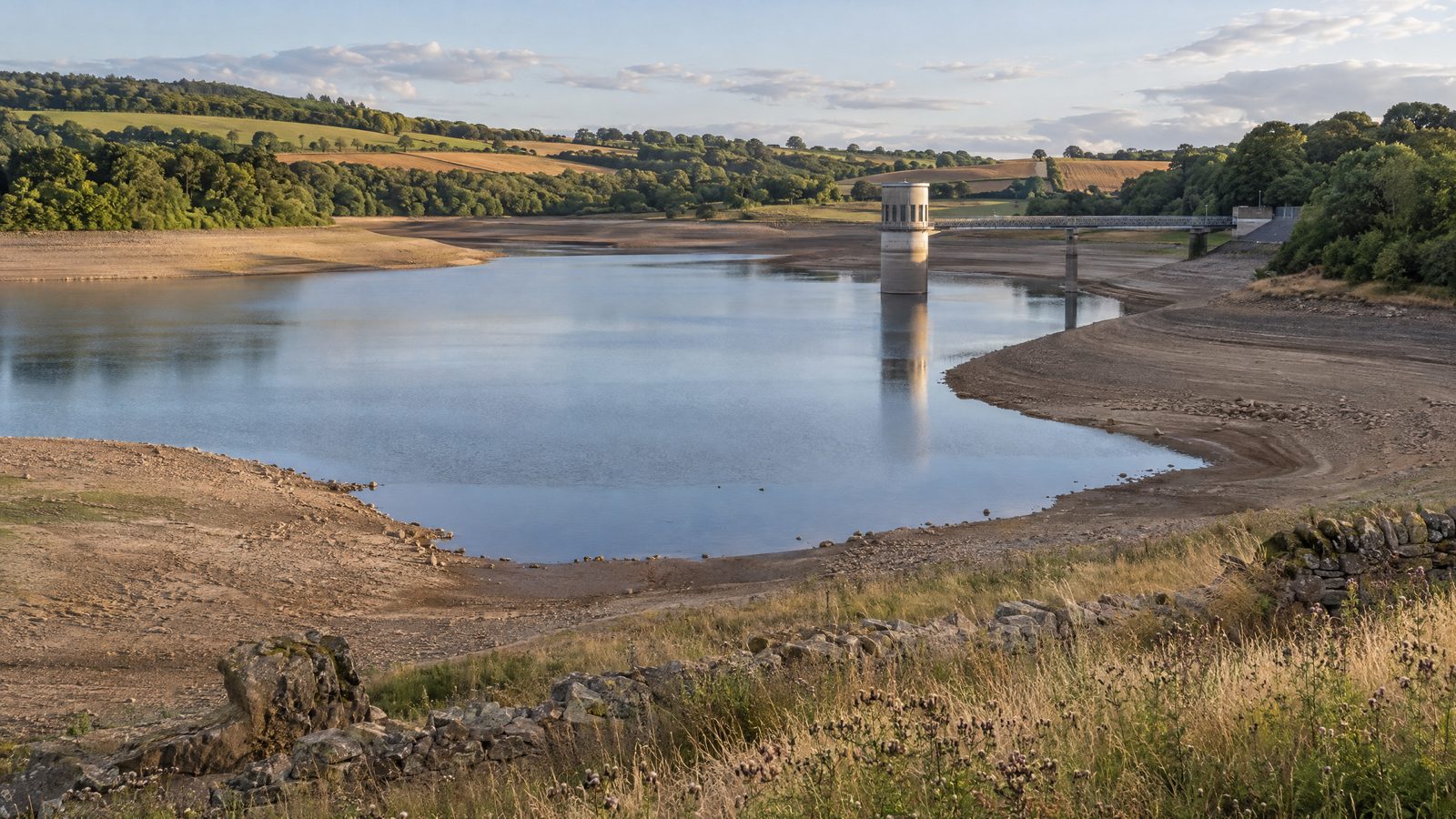
Severe-drought status was declared on 15 October for parts of Cornwall, Devon, Dorset, Somerset, East Sussex and West Sussex. The designation applies to affected water-resource areas rather than every household or business across those counties. Officials have highlighted particularly low levels at Ardingly Reservoir in West Sussex and Wimbleball Reservoir in Somerset.
The South East and South West experienced their driest April-to-September period in more than a century, according to the Environment Agency. At Ardingly and Wimbleball, drought permits allow South East Water and South West Water to reduce releases into the River Ouse and River Exe respectively. The permits help retain water for public supply, but altering river flows can affect local environments; monitoring and regulatory oversight remain part of the response.
Temporary pumps have been installed to move water around the area supplied by South West Water’s Stithians reservoir in Cornwall. Wessex Water is preparing applications for seven more drought permits, which the Environment Agency says it will prioritise when received. Separate applications from South East Water, South West Water and Southern Water for restrictions on non-essential water use were still under consideration by the Environment Secretary in the latest update. They should not be treated as restrictions already in force.
Rainfall remains the key uncertainty
The Environment Agency estimates England would need rainfall equal to at least 120 per cent of the average over the next six months to be considered out of drought by the start of spring. The figure describes the scale of rainfall needed for recovery; it is not a forecast that this amount will arrive. Wet weather was expected to spread during the week of the meeting, but officials cautioned that it was too early to know whether it would bring the widespread, sustained rain needed to replenish depleted reservoirs.
The agency has said that rain may provide short-term relief, while sustained rainfall is needed to restore reservoirs and help rivers and wildlife recover. Its drought guidance says severe-drought status does not automatically impose restrictions or mean a civil emergency has been declared. Water companies may introduce further measures if conditions require them and are expected to contact affected customers directly.
Local Resilience Forums have begun enhanced coordination in the affected areas to assess risk and prepare support. The National Drought Group, which brings together government, regulators, water companies, weather specialists and representatives from farming, navigation and conservation, has met regularly since August to coordinate the wider response.
For now, the published position is one of active supply protection rather than interrupted service. The outcome will depend partly on company measures and partly on how much rain falls over the coming months. The latest update therefore offers a snapshot of current operations, not a guarantee that additional action will be unnecessary.







