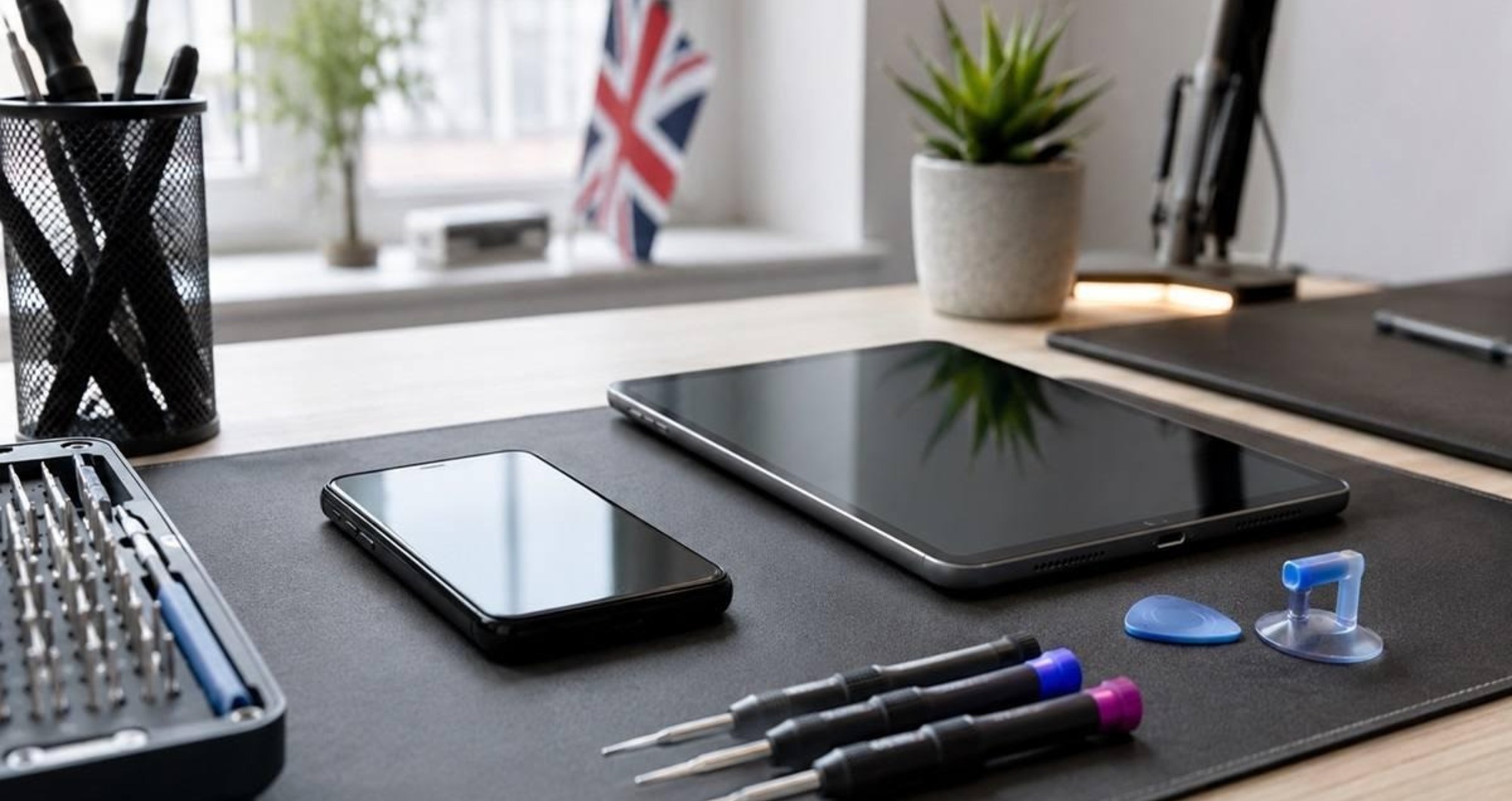

Replacing a damaged phone or tablet used to feel like the obvious answer. Today, many UK customers are thinking twice. New devices are expensive, setup takes time, and most people now rely on their phones and tablets for much more than calls and messages.
A modern device may hold banking apps, work emails, authentication codes, family photos, travel tickets, payment cards, school apps, business contacts and years of personal data. When one part fails, replacing the whole device can create a second problem: moving everything safely, restoring accounts and getting back to normal.
That is why more customers are asking a practical question before buying something new: is the device actually finished, or does it only need the right repair?
Replacement Is Not Just the Price of a New Device
The real cost of replacement is not only the price on the box. Customers also have to consider data transfer, backups, passwords, banking apps and account recovery.
For some people, this is only inconvenient. For others, it can disrupt work, payments, travel or daily communication. A self-employed person may rely on one phone for customer enquiries. A parent may need school messages and emergency contacts. A small business may need staff devices to keep bookings moving.
Replacement can also create hidden costs, such as a new case, screen protector, charger, insurance change or storage plan.
When Repair Is the More Practical First Step
Repair is usually worth considering when the device still performs well and the fault is limited to one area. A cracked screen, weak battery, faulty charging port or damaged back glass can look serious, but these problems do not always mean the device has reached the end of its life.
One visible fault does not always mean total failure
A phone with a broken screen may still have a working main board, cameras, speakers, microphone and stored data. A tablet with a damaged display may still be reliable once the screen is replaced. A phone with poor battery life may simply need a new battery if the rest of the device is still in good condition.
This is why proper diagnosis matters. The decision should be based on the condition of the whole device, not only the visible damage.
Time can matter as much as money
Many customers do not only want the cheapest option. They want the option that gets them back to normal quickly. If a repair allows the customer to keep the same device, data, settings and familiar setup, it may be more practical than replacing everything.
This is especially true when the device is used every day for work, family communication, payment apps, navigation or two-factor authentication.
Common Repairs That Can Extend Device Life
Some common device problems are also the ones that make customers assume replacement is necessary.
Screen damage is a clear example. A cracked or unresponsive display can make a phone look unusable, but if the device still powers on and the internal components are safe, a screen repair may restore normal use.
Battery problems are another common reason people consider upgrading. Fast battery drain, sudden shutdowns and poor performance can make a phone feel old. In many cases, replacing the battery can make the device more reliable again.
Charging faults can also be repairable. The issue may be caused by the charging port, cable, battery or internal connection. A proper check can prevent customers from replacing a device when only one component is causing the fault.
Back glass and casing damage should not be ignored. Cracks can allow dust and moisture to enter the device. Repairing external damage can help protect the phone and improve how it looks.
Why Independent Repair Centres Matter
Independent repair centres are important because they help customers make a decision before spending money on replacement. A good repair decision should consider the fault, device age, repair cost, data needs, turnaround time and whether the device is still worth keeping.
Independent providers such as Free Fusion show how UK customers can keep phones and tablets in use for longer by choosing practical repair options before replacing a device completely.
This matters because households and businesses often use a mix of devices: iPhones, iPads, Samsung phones, Google Pixel devices and tablets. Repair support across different device types can help customers avoid unnecessary replacement and make better use of technology they already own.
Repair Can Also Reduce Unnecessary Waste
Repair is not only a financial decision. It can also reduce electronic waste. If a phone or tablet can be safely repaired and used for longer, the customer gets more value from a device they already own.
Some devices become too old, too slow or too damaged to justify the cost. However, replacing devices too quickly can waste money, materials and working technology.
When Replacement Still Makes Sense
Repair should always be considered honestly. Replacement may be the better choice if a device has multiple serious faults, major liquid damage, main board failure or repair costs that are too close to the value of the device.
Age also matters. If a phone no longer receives important software updates, struggles with essential apps or no longer meets the customer’s needs, replacement may offer better long-term value.
The best decision is not automatically the cheapest one. It is the decision that balances cost, reliability, data access, convenience and future use.
Final Thoughts
More UK customers are repairing phones and tablets because replacement is not always the simplest answer. A damaged screen, weak battery, charging fault or cracked back glass may be frustrating, but it does not always mean the whole device should be replaced.
A clear diagnosis can help customers understand whether repair is practical or whether replacement makes more sense. For many people, repair is now the sensible first step before spending money on a new device.