
Kitchens have changed enormously over the past thirty years. They have become larger, more open, more social, and more expensive. They have absorbed dining rooms, living spaces, and workspaces. Through all of that change, one thing has remained constant: the kitchen is the room that sells a house.
Estate agents say it repeatedly, buyers confirm it, and surveys support it. The kitchen is the room that buyers remember, the room that shapes their impression of a property, and the room that most often determines whether an offer is made. Understanding why is useful for anyone selling, buying, or renovating.
The Kitchen as the Heart of the Home
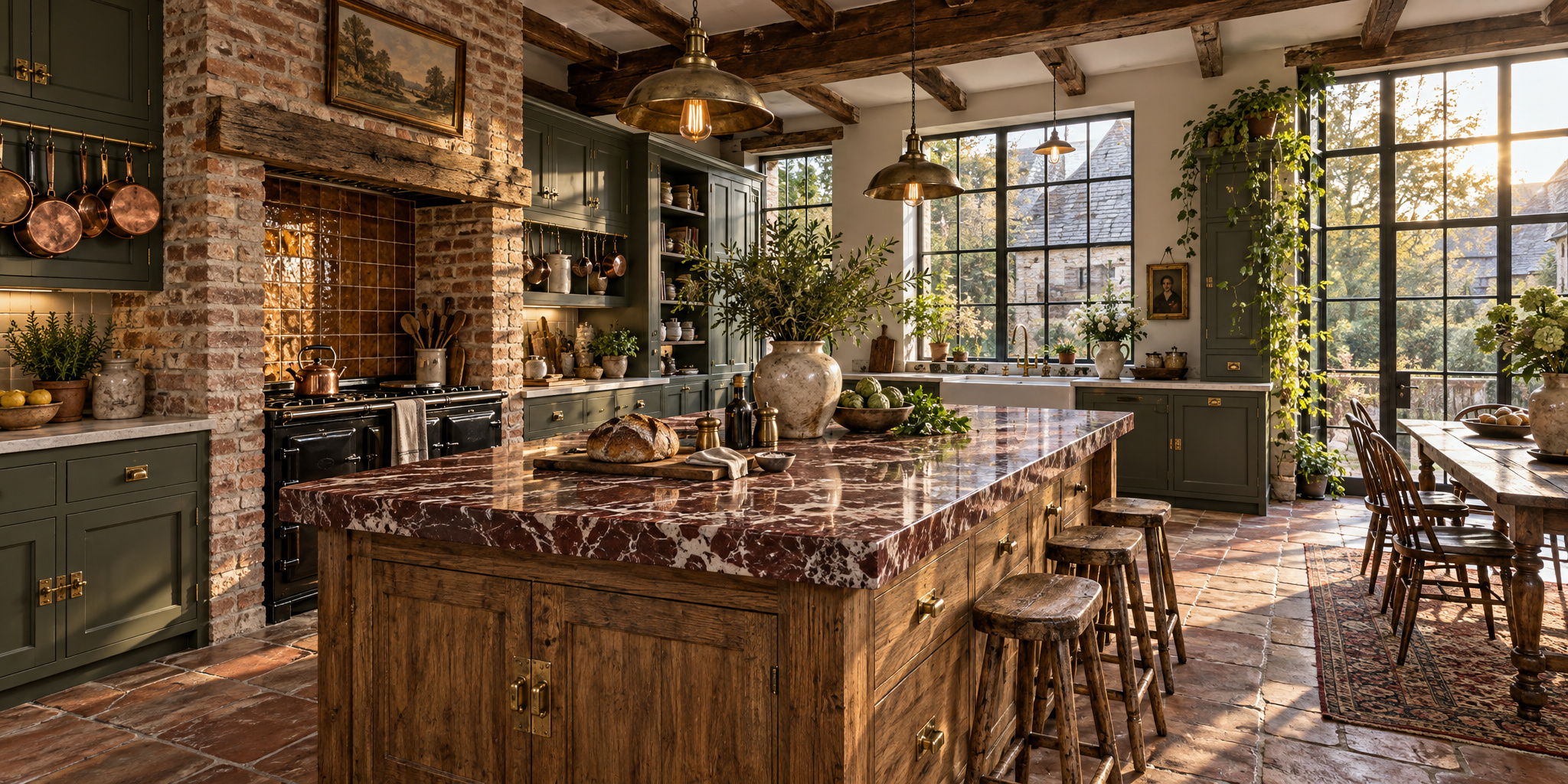
The phrase is a cliché because it is true. One thing to consider, a bespoke kitchen with character is more apealing than a sterile looking layout, in most cases.
The kitchen is where the household gathers. It is where meals are prepared, where conversations happen, where children do homework, and where guests congregate without being asked. In an open-plan layout, it is the room that everything else revolves around.
Buyers respond to this instinctively. A kitchen that feels like a place where life happens is more appealing than one that feels like a utility. The emotional response comes first, and the practical assessment follows.
The Financial Argument
The kitchen is also the room with the greatest impact on value.
Kitchen renovations consistently deliver among the highest returns of any home improvement, and a well-designed kitchen can add considerably to a property’s asking price. A dated kitchen, by contrast, can hold a property back, even when the rest of the house is well maintained.
Buyers often calculate the cost of replacing a kitchen when they make an offer. A kitchen that needs work is a negotiating point. A kitchen that has been well designed and well fitted is a reason to pay more.
What Buyers Look For
Buyers are not assessing a kitchen as designers would. They are assessing it as users, and their priorities are practical.
Space and layout. Does the kitchen work? Is there enough room to cook, to store, and to move around? A small kitchen that is well laid out is more appealing than a large one that is awkward.
Light. A bright kitchen is more appealing than a dark one. Windows, rooflights, and pale surfaces all contribute.
Storage. Buyers open cupboards. They check whether there is enough storage, and whether it is well organised.
Quality of fittings. Worktops, appliances, and taps are all noticed. Buyers may not know the brand, but they recognise quality.
Condition. A kitchen that is clean, well maintained, and free of obvious problems reassures buyers. A kitchen with damaged units, tired worktops, or dated appliances raises concerns about what else has been neglected.
The Open-Plan Question
Open-plan kitchens have dominated design for two decades, and they remain popular with buyers. The appeal is social: cooking while entertaining, supervising children while preparing meals, and being part of the household rather than separated from it.
The trend is not universal, however. Some buyers now value a separate kitchen, particularly where cooking smells, noise, and mess are concerns. The right answer depends on the property and the buyer, and a well-designed layout matters more than the open-plan label.
What Sells and What Does Not
Some kitchen features consistently appeal to buyers, and others consistently put them off.
What sells: good natural light, generous storage, quality worktops, integrated appliances, a practical layout, and a sense of space.
What does not: cramped layouts, poor lighting, dated units, damaged worktops, and appliances that are clearly at the end of their life.
The lesson for sellers is straightforward. A kitchen does not need to be new to sell a house, but it does need to be clean, functional, and well presented. A kitchen that is clearly cared for reassures buyers about the rest of the property.
The Rental Dimension
For landlords, the kitchen matters for different reasons.
Tenants prioritise function over fashion. A kitchen that is clean, well maintained, and equipped with working appliances lets more easily than one that is stylish but impractical. Durability matters more than design, because the kitchen takes more wear than any other room.
A kitchen that is updated periodically, kept in good repair, and fitted with reliable appliances reduces void periods and tenant turnover.
Final Thoughts
The kitchen is still the room that sells a house because it is the room where life happens. It is the heart of the home, the room with the greatest impact on value, and the room that buyers assess most closely.
For sellers, the lesson is to present the kitchen well: clean, functional, well lit, and clearly cared for. however, or buyers, the lesson is to look beyond the surface and assess whether the kitchen actually works. For renovators, the lesson is that investment in the kitchen is rarely wasted.
The kitchen has changed, but its importance has not. It’s usually the first room buyers look at, in making a buying decision.