
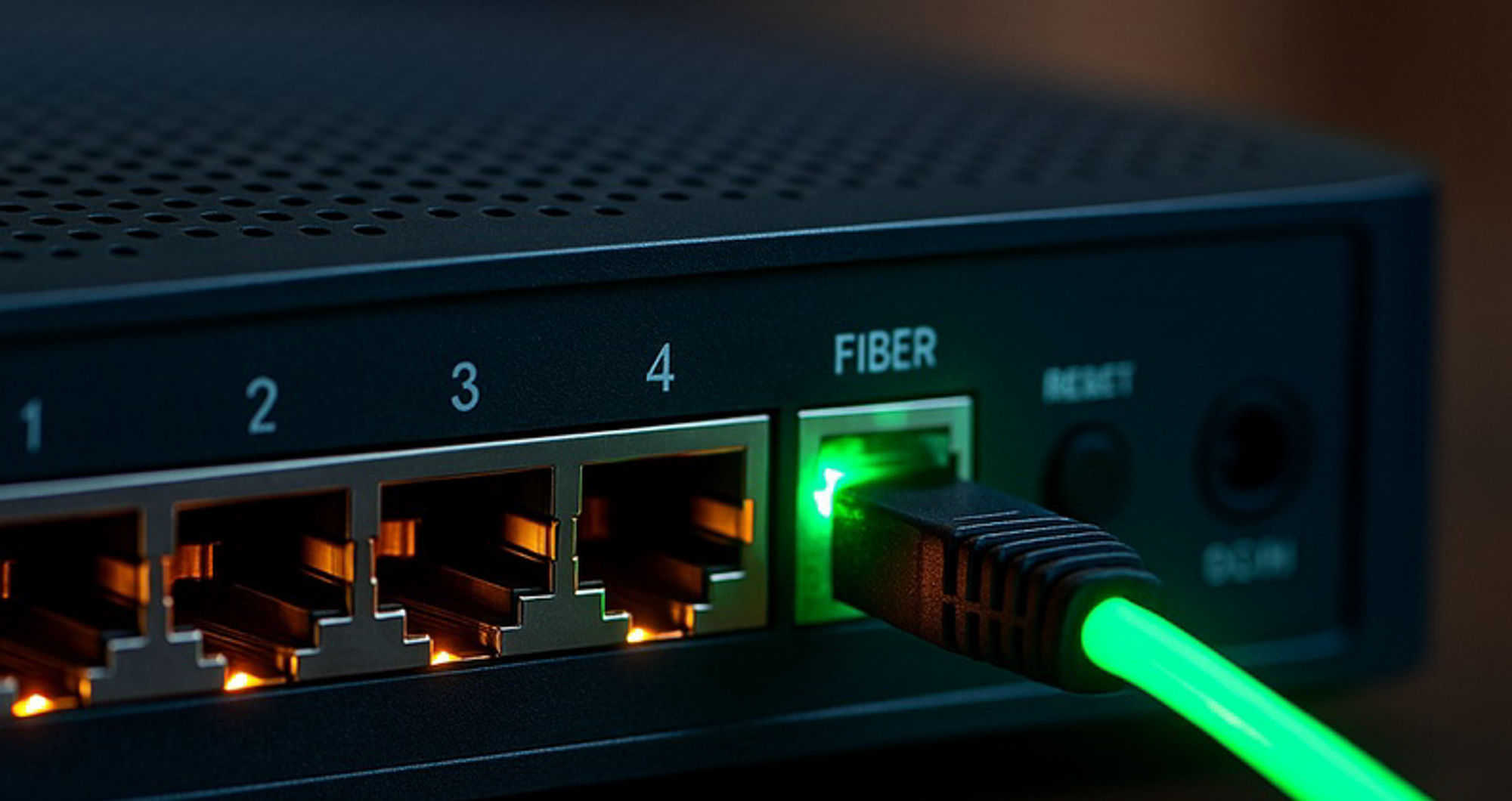

WiFi 7 has officially arrived in the UK, with ISP YouFibre among the first to announce that it is rolling out WiFi 7 routers to residential and business customers. The seventh generation of Wi-Fi promises enormous wireless capacity and ultra-low latency, with theoretical speeds of up to 23Gbps.
But despite the impressive specification sheet, broadband experts say the average household will not actually experience faster speeds — and many will see no noticeable difference at all. The reason has nothing to do with WiFi 7 itself. Instead, the limitation is the broadband connection feeding the home.
Even the most advanced WiFi router cannot be faster than the internet connection entering the property. If the household is on a slow or copper-based connection, the router becomes irrelevant.
Faster WiFi doesn’t make slow broadband fast
WiFi 7 offers several big technical improvements:
- Wider bandwidth channels (up to 320MHz)
- The ability to use multiple frequency bands at once
- Lower latency — better for remote work, gaming and cloud applications
- Reduced interference due to more intelligent handling of overlapping channels
However, the UK’s median broadband download speed sits at 69Mbps (Ofcom, 2025). That makes the average home more than 300 times slower than what WiFi 7 can support wirelessly.
Many households first check whether faster broadband options are available in their area using compare broadband prices, because if the internet connection itself is slow, a new router won’t fix anything.
Shay, spokesperson at Free Price Compare, explains:
“WiFi 7 won’t magically speed up a slow internet connection. Your WiFi is only ever as fast as the broadband line feeding it.”
Most devices can’t use WiFi 7 yet
Even if someone buys a WiFi 7 router, they may not see any improvement because their devices may not support it. Compatibility is limited to the newest premium models.
| Device type | WiFi 7 compatible? |
|---|---|
| Windows 11 laptops | ✅ supported (only with latest WiFi cards) |
| Android 13 flagship smartphones | ✅ supported |
| Apple MacBooks | ❌ not yet compatible |
| iPhones | ✅ supported only on newest iPhone 16 / 17 |
If a laptop, phone or smart TV cannot connect using WiFi 7, then the household has paid for a high-end router that behaves exactly like their existing one.
This is why analysts caution that WiFi 7 is a technology upgrade years ahead of mainstream adoption.
The connection that delivers the biggest real-world improvement

For most households, the real bottleneck is not Wi-Fi — it’s the last stretch of cable leading into the home.
More than 17 million UK homes can now access full fibre broadband, where fibre runs directly into the property instead of switching to copper partway. This eliminates the speed loss and instability that occur on older networks.
Consumers often start by checking availability in their area using full fibre broadband, because this change alone can increase speeds by hundreds of megabits and dramatically improve reliability.
Shay adds:
“If you’re not already on full fibre, that is the upgrade you will actually feel. WiFi 7 should come afterwards, not before.”
Bundles are becoming more attractive as bills rise
As broadband speeds continue increasing, more providers are bundling multiple services into one contract — including TV, streaming and home phone. For some households, this can lower monthly costs and reduce contract complexity.
Consumers comparing package deals often turn to compare broadband and tv to explore options with different providers and contract lengths.
These packages are gaining traction as households look for ways to reduce overall spend without cutting back on entertainment or essential services.
Switching remains one of the fastest ways to save money
Many providers offer the lowest deals to new customers, not existing ones. When contracts expire, prices can increase sharply, often without households realising. Switching provider is still one of the easiest ways to save money on broadband, and many homes switch every 12–18 months.
Households looking to save money often start with switching broadband to compare contract pricing, exclusive discounts and introductory offers that are not available to existing customers.
Shay summarises the choice facing households:
“WiFi 7 is a future-proof luxury. Full fibre is the upgrade people will actually feel today.”
When WiFi 7 will finally make sense
WiFi 7 will eventually become worthwhile — but the timing will depend on two things:
- More device compatibility.
Until mainstream laptops, smart TVs and phones adopt WiFi 7 chipsets, improvements will be limited to early adopters. - ISPs supplying WiFi 7 as standard.
Over the next 12–18 months, ISP-issued routers will begin replacing retail routers, at which point WiFi 7 will become a default upgrade for households already upgrading to gigabit-level speeds.
The short version: WiFi 7 will matter when full fibre becomes the norm.







