
As the days grow shorter, facilities managers face an ongoing battle: managing the risks associated with winter weather. Snow and ice are a big deal when it comes to workplace safety and they represent liability hazards. Slips, trips and falls are the most common cause of major injury in UK workplaces, and while the majority are not due to snow, incidents clearly spike during the winter months. Knowing the snow and ice clearance regulations is important for both avoiding litigation and keeping employees safe.
Negligence does frequently lead to costly personal injury claims and higher insurance premiums. Don’t wait for the first freeze to prepare your facility and see the full range of winter maintenance equipment offered by Seton to ensure safety during cold snaps.
How it works legally
The legal obligation to keep premises safe is governed by a few different pieces of legislation. The primary statute is the Health and Safety at Work Act 1974, which imposes a general duty on employers to ensure (within reasonably practicable) the safety and welfare of their employees. This duty does extend into external areas like car parks and pedestrian walkways.
The Workplace (Health, Safety and Welfare) Regulations 1992 also address the condition of floors and traffic routes. Regulation 12 says that floors and traffic routes should be free from obstructions and substances that may cause a person to slip or trip. The Approved Code of Practice (ACOP) accompanying these regulations explicitly talks about arrangements to be made to minimise risks from snow and ice.
Then there is the Occupiers’ Liability Act 1957. This Act imposes a duty of care on the occupier of premises so that visitors (customers, delivery drivers, contractors and so on) are reasonably safe. So, a failure to clear ice from a customer car park could result in liability if a visitor is injured. This is crucial.
Risk assessment and proactive planning
Compliance always begins with a risk assessment. It’s not enough to react to weather conditions as and when they come – a proactive plan must be set in stone already. Employers should identify the areas most likely to be affected by ice and snow, let’s say uncovered walkways and sloped surfaces.
The risk assessment should determine the high-priority areas, like busy pedestrian walkways into the main entrance or emergency exits. Importantly, the plan should designate who is responsible for gritting and snow clearance.
Equipment and resource management
A common failure in winter safety is running out of de-icing materials when the weather prolongs.
Storage is therefore important, and leaving bags of rock salt exposed to the elements can render them useless because moisture causes the salt to clump and dissolve. Heavy duty salt storage containers are needed as they can easily withstand harsh weather conditions, meaning the grit stays dry.
Security of these resources is also important – and often overlooked. In a shared business park, grit bins UK can sometimes be targeted for theft or vandalism, so using lockable grit salt bins means you can rest assured that your de-icing materials are always going to be there when needed.
Clearing snow and ice: best practices
There is a common myth that clearing snow and ice can lead to higher liability than leaving it alone. The Health and Safety Executive (HSE) has clarified that this is usually not the case, so long as the clearance is done carefully and effectively. Doing nothing is rarely a good legal defence.
Gritting should occur when frost or snow is forecast. Prevention is far more effective than cure here, so putting salt down before the freeze is effective in preventing ice from forming.
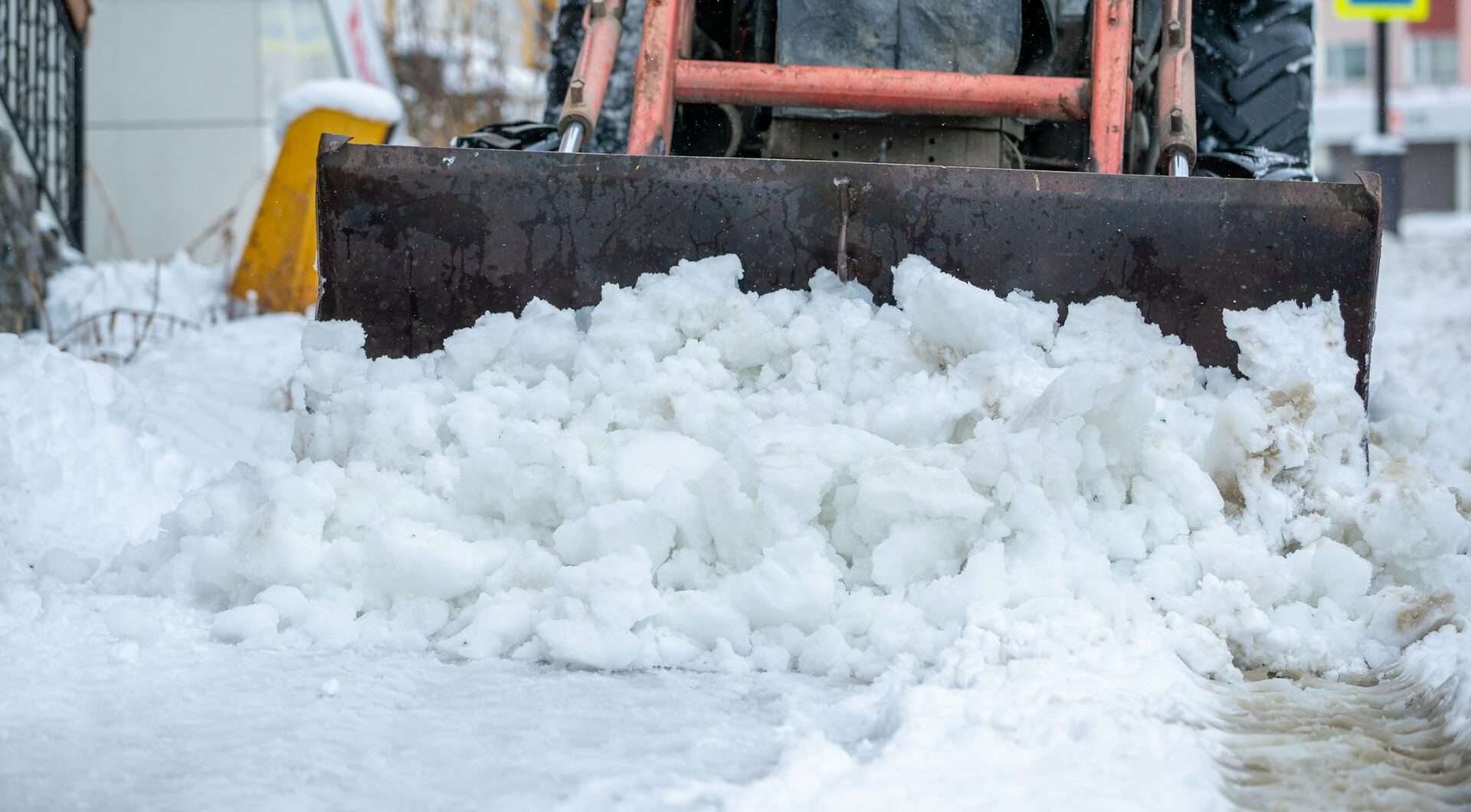
So when clearing the snow, it is advisable to clear a path of around one metre wide. The snow should be shovelled to the sides so it does not block fire escapes or drainage channels. It is absolutely necessary to use grit or salt on the cleared path to provide traction. If salt is unavailable, ash or sand can used as temporary grip, though they do not melt the ice. Water should never be used to melt snow as it will almost certainly refreeze and creates an even more dangerous sheet of black ice.
Documenting your winter maintenance
From a legal perspective, if an accident does occur, documentation is actually your best form of defence – burying your head in the sand will help no one. It is important to keep a record of when the risk assessment was reviewed and when gritting or snow clearance was carried out, all this helps with your defence. A logbook with the date, time, person responsible and area treated is all that’s needed because it creates an audit trail proving that the employer took “reasonable practicable” steps. Saving money through neglect is a false economy because of the frequency of such accidents, and cold weather may be more frequent due to an unstable climate.
Feature image by Sergei Starostin on Pexels