

In the 1930s, Spanish playwright Federico García Lorca challenged theatre to look beyond its own walls and confront the realities of a world in turmoil. Ninety years later, James Corley reimagines his unfinished work for a new era of political unrest as – despite growing resistance to their influence far-right movements continue to threaten democratic freedoms across the world – asking whether theatre can afford to look away.
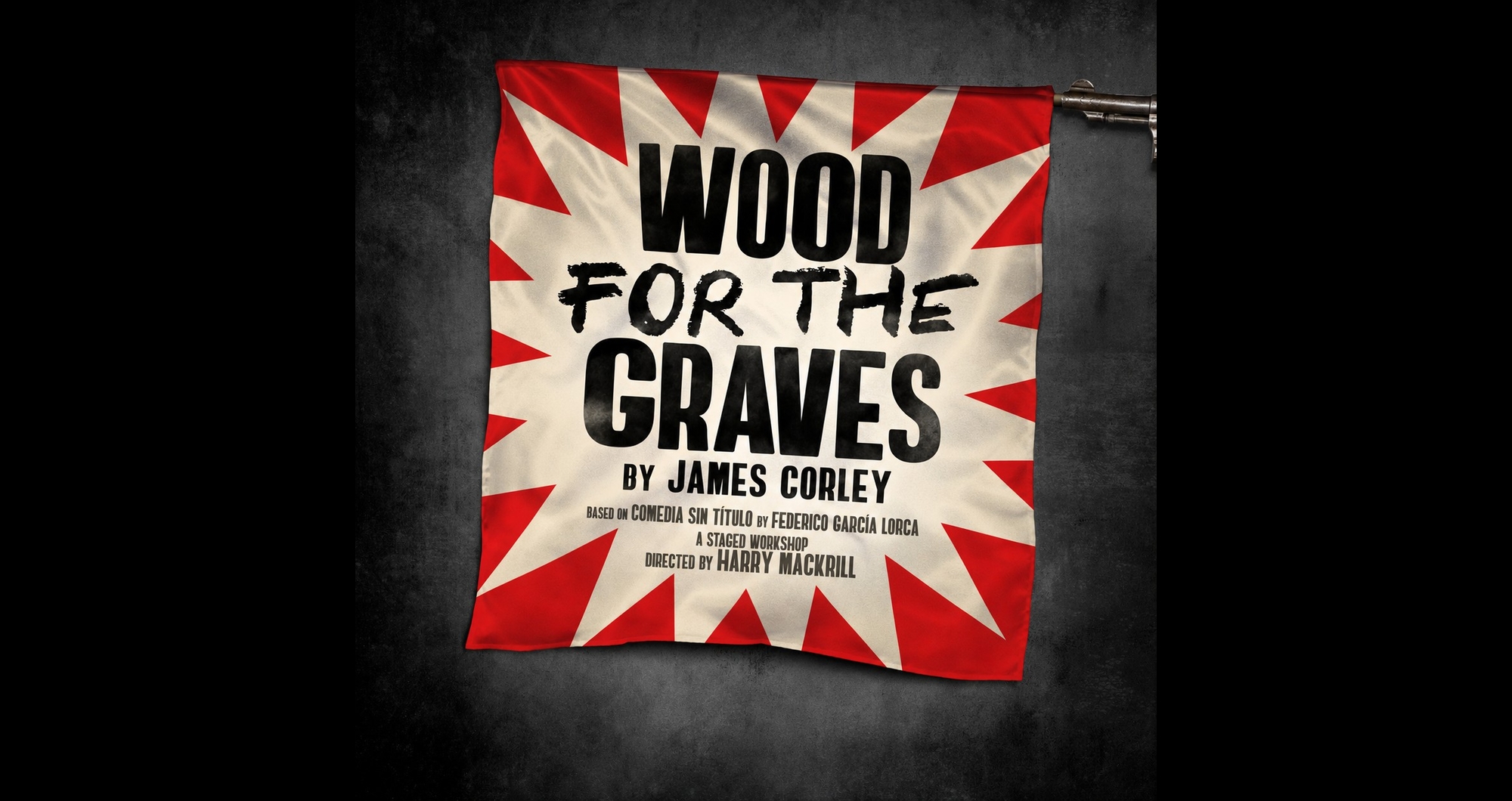
Wood for the Graves is a darkly comic and timely new 30-minute play by James Corley (The Scene, BFI Flare, shortlisted for the Iris Prize Best British Short), directed by Harry Mackrill (Associate Director, Angels in America, National Theatre) and presented by Nisha Oza for The Lot at London’s Calder Bookshop & Theatre on 4 and 5 December 2026.
Wood for the Graves marks the latest collaboration between Nisha Oza, Harry Mackrill and James Corley, working together through The Lot, an independent theatre company with an inclusive mindset. Their previous productions include What It Means (Wilton’s Music Hall, 2023; ★★★★ The Guardian, “vital theatre”) and World’s End (King’s Head Theatre, 2019; Theatre Weekly’s Off West End Production of the Year).
The seven-strong cast includes Lucy Cohu (Broadchurch, Torchwood, The Queen’s Sister), Alisha Bailey (Silent Witness, Doctor Who), Tom Stuart, Jimena Larraguivel (Julius Caesar, A Fight Against), Joshua McCord (The Tuckers, War Horse), Tyler Pringle and Paksie Vernon (Angels in America, Network).
“You go to the theatre to see what is happening, not what is happening to us.”
In Wood for the Graves, a director refuses to raise the curtain. The audience demands a show. Outside, the streets are descending into chaos. As revolutionaries draw closer to the theatre, the boundaries between performance and reality begin to collapse. Blending biting satire, absurdist comedy and political drama, the play exposes the tensions between artistic ambition, comfortable escapism and the realities of a world in crisis.
Lorca began writing Comedia sin título against a backdrop of escalating political unrest in Spain, completing only the first act before he was murdered by fascists in August 1936. His political sympathies, sexuality and association with liberal intellectuals had made him a target of hostility from right-wing factions. His writing itself was regarded as a threat: according to The New York Review of Books, one of the men involved in his arrest, Ramón Ruiz Alonso, reportedly declared that Lorca “did more damage by his pen than others did with their guns.”
Ninety years later, the parallels are unsettling. While the past week’s US election results have demonstrated powerful resistance to right-wing politics, Donald Trump remains in the White House, and far-right movements continue to wield considerable influence across the world. This is a moment for renewed vigilance, rather than complacency, about the threats to democratic freedoms and the voices that challenge those in power. In such a volatile political climate, theatre has a vital role to play in confronting uncomfortable truths, challenging authority and refusing to let those threats go unquestioned.
Relocating Lorca’s unfinished work to contemporary London, Corley radically reimagines its characters for the present day. A wealthy theatregoer who refuses to be denied his evening’s entertainment, a psychotherapist convinced she knows best, an investor wondering where his £20,000 has gone, an actress clinging to her theatrical glory and a Macbeth haunted by time find themselves caught up in a theatrical rebellion they can neither control nor escape. Through these sharply drawn characters, Corley turns his attention to the contradictions of modern theatre, its audiences and the society around it, questioning not only the complacency of audiences but also the idealism of artists who believe they can change the world.
The title, Wood for the Graves, evokes the mounting human cost of political violence, as the world beyond the theatre’s walls begins to consume those within it. It carries a haunting resonance with Lorca’s own fate, his life and unfinished work cut short in 1936.
The Lot Say:
“Theatre is a public act. It brings people together to question the world, remember what might otherwise be forgotten, and imagine how things could be different. This is what drives us at The Lot.
Wood for the Graves confronts a question that sits at the heart of our work: what responsibility does theatre have to the society in which it exists? The play doesn’t let anyone off easily. It challenges the expectation that an audience should simply be entertained, but it is equally sceptical of artists who mistake their own convictions for meaningful action. That contradiction interests us. We believe theatre should be as willing to question itself as it is to question the world around it.
Lorca understood that theatre and the society in which it is made could not be separated. That remains true today. An audience doesn’t leave the world behind when it enters a theatre, and neither do the people making the work. We can’t pretend that a play will resolve the conflicts outside its doors. But it can ask us to look at those conflicts differently, and to consider our own place within them. For us, that is part of theatre’s social and civic purpose, and why making it remains necessary.”
Presented as a staged workshop, Wood for the Graves brings together a seven-strong ensemble for a concentrated and uncompromising exploration of a question that has haunted theatre for generations: what is the point of theatre if it cannot tell the truth?
Wood for the Graves comes to Calder Bookshop & Theatre, London on 4th and 5th December 2026. For tickets and more information visit: https://www.thelotproductions.com







