


Back pain has a habit of creeping in quietly. After a long day at a laptop, a heavy gym session, or sometimes first thing in the morning, it makes itself known. It is more than an inconvenience.
In the UK, musculoskeletal issues, including back pain, accounted for 15.5 percent of all sickness absence in 2024, according to the Office for National Statistics.
Yet the answer is rarely punishment or endless stretching. Real relief tends to come from a more intelligent approach. One that builds control, calm and functional strength that actually carries over into daily life.
Jenna Armitage, a former NCAA athlete turned hot yoga and Pilates instructor, specialises in helping people stay active without sacrificing their spines. She is the founder of GoodGood Studio, a heated yoga and Pilates studio in London, and works closely with busy professionals, high performers, and women navigating pregnancy or postnatal recovery.
Her approach blends controlled spinal mobility, intelligent strength work and breath-led regulation. The aim is not quick fixes, but restoring confidence and resilience in the body.
These are the practices she returns to time and again when supporting clients with back pain.
Reintroducing movement to the spine with slow Cat–Cow
Long hours sitting or repetitive training can dull communication between the vertebrae. Jenna uses a slow, segmented Cat–Cow to gently reawaken that connection.
From hands and knees, the movement begins at the pelvis and ripples gradually up the spine. Each segment is given time and attention. Rushing through the shape removes its value. Precision is what allows the nervous system to trust the movement again.
Taking the movement slowly often reveals areas that avoid moving altogether. That awareness is where change starts.
Freeing the upper back with a rotating low lunge
Stiffness in the upper back often shows up as discomfort in the lower back. This is especially common in desk-based workers, cyclists and parents who carry children on one side.
In a low lunge position, Jenna introduces rotation from the rib cage rather than the shoulders. The pelvis stays steady, so the lower back does not compensate. A block under the grounded hand helps keep the chest open and supported.
The aim is not to force range, but to create space where movement has been restricted.
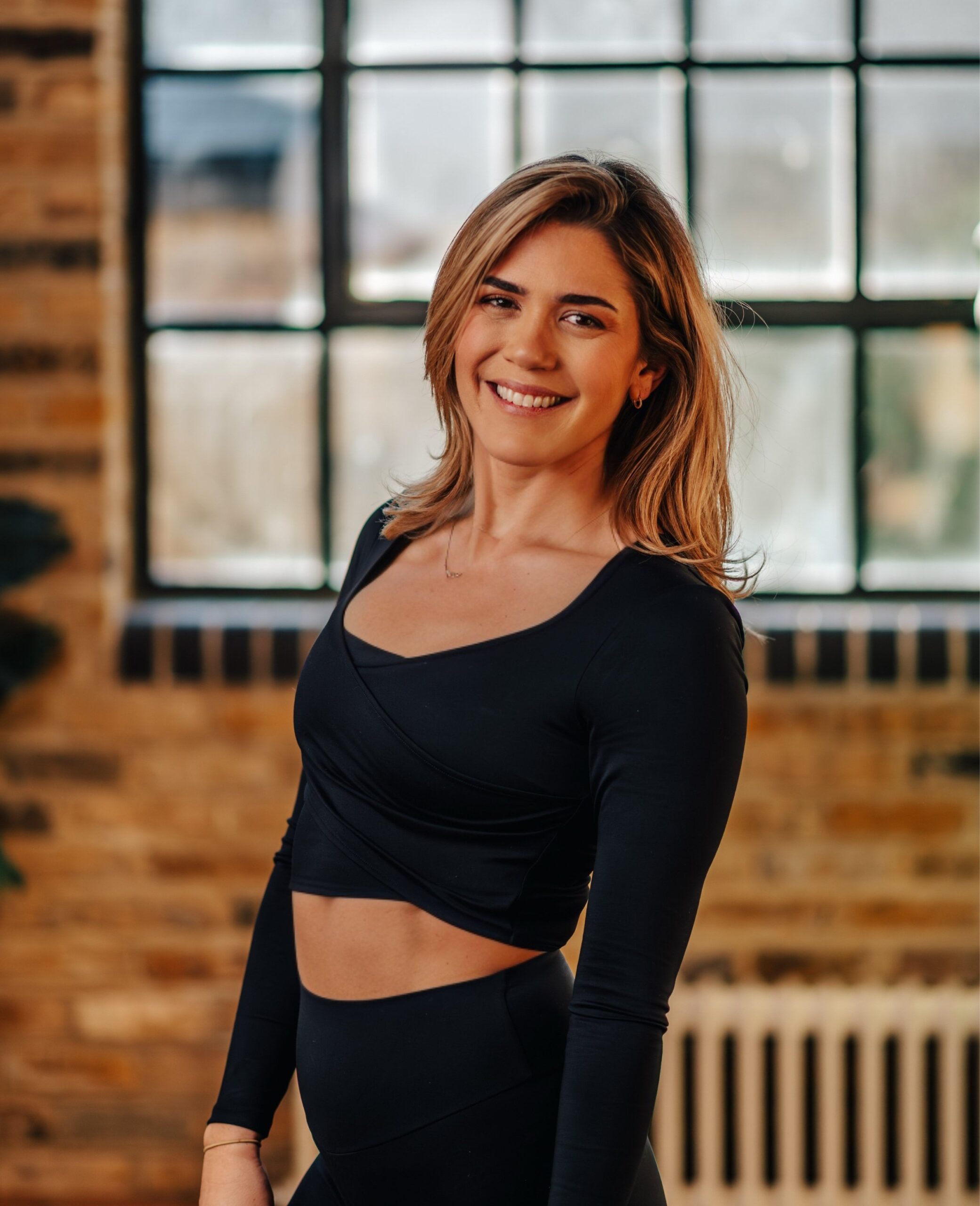
Jenna Armitage is the founder of GoodGood Studio, a heated yoga and Pilates studio with locations in Balham and Wimbledon.
Building quiet strength with a held Chair Pose
When done with care, Chair Pose becomes less about effort and more about endurance. It strengthens the glutes, deep core and spinal stabilisers without compressing the spine.
Feet stay hip-width apart, knees track cleanly and the ribs stack over the pelvis. The temptation to arch or perch is resisted. Arms may lift or reach forward, but the real challenge is remaining still and organised.
This kind of controlled effort translates directly into better posture and resilience off the mat.
Restoring extension through a Sphinx to Cobra flow
Modern life encourages rounding. Phones, laptops and driving all pull the spine forward. Extension still matters, but only when it is controlled.
Starting in Sphinx, the chest lengthens forward rather than pushing aggressively up. From there, the movement glides into a low Cobra using minimal hand pressure and gentle glute engagement. The neck stays long and relaxed.
Depth is never the goal. Integrity always is.
Letting the nervous system settle with a supported twist
Jenna often finishes sessions with a supported supine twist. It allows the spine to decompress while signalling safety to the nervous system.
Pillows between the knees and under the ribs help the body relax fully into the shape. Arms open softly and attention turns to the breath. Longer exhales encourage release and calm.
Small details matter here. A relaxed jaw and soft hands often tell the body it is finally safe to let go.
“Back pain rarely responds to force. It responds to consistency, awareness and movement that feels purposeful rather than punishing. For many people, the shift from doing more to doing things better is what makes lasting relief possible.”







