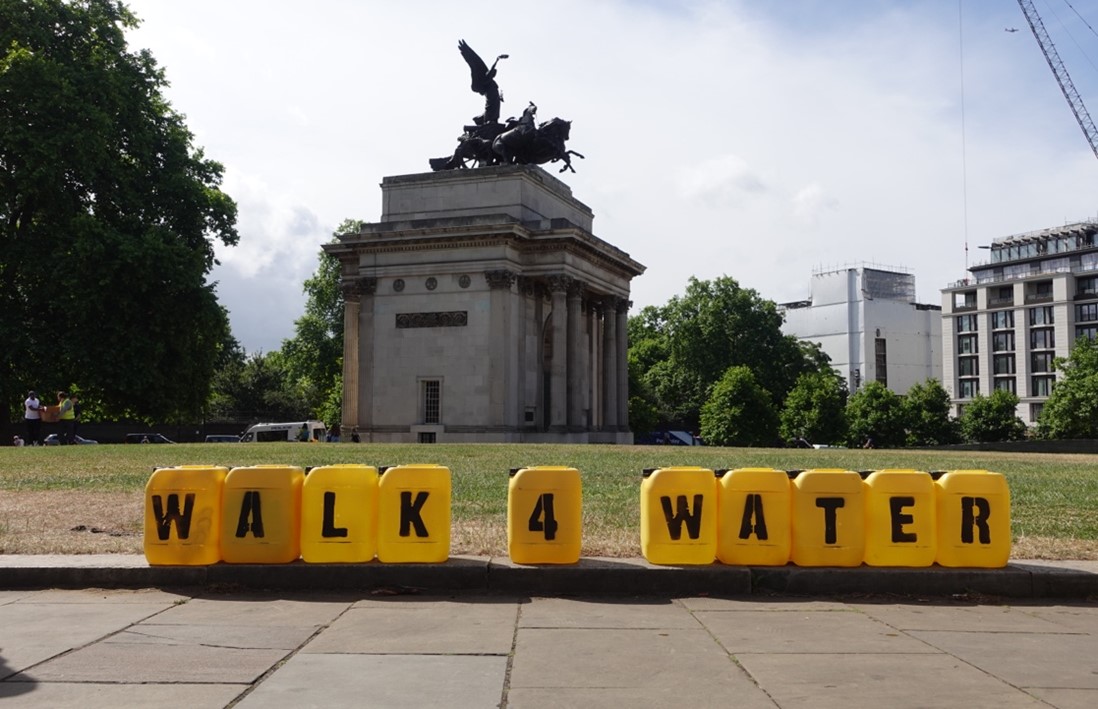

Time to Help UK’s volunteers came together to spotlight the lives of the people of sub-Saharan Africa and walked carrying water for about six kilometres in Central London on Saturday morning.
Walk4Water was an annual event organised by Time to Help UK to raise awareness of water scarcity. They challenged themselves to carry 10 litres of water for 5.1 km to build empathy with those struggling to access clean and safe water.
Half of the people who drink water from unsafe sources live in Africa. In Sub-Saharan Africa, only 24% of the population has access to safe drinking water, and 28% have basic sanitation facilities that are not shared with other households. (Source: United Nations)
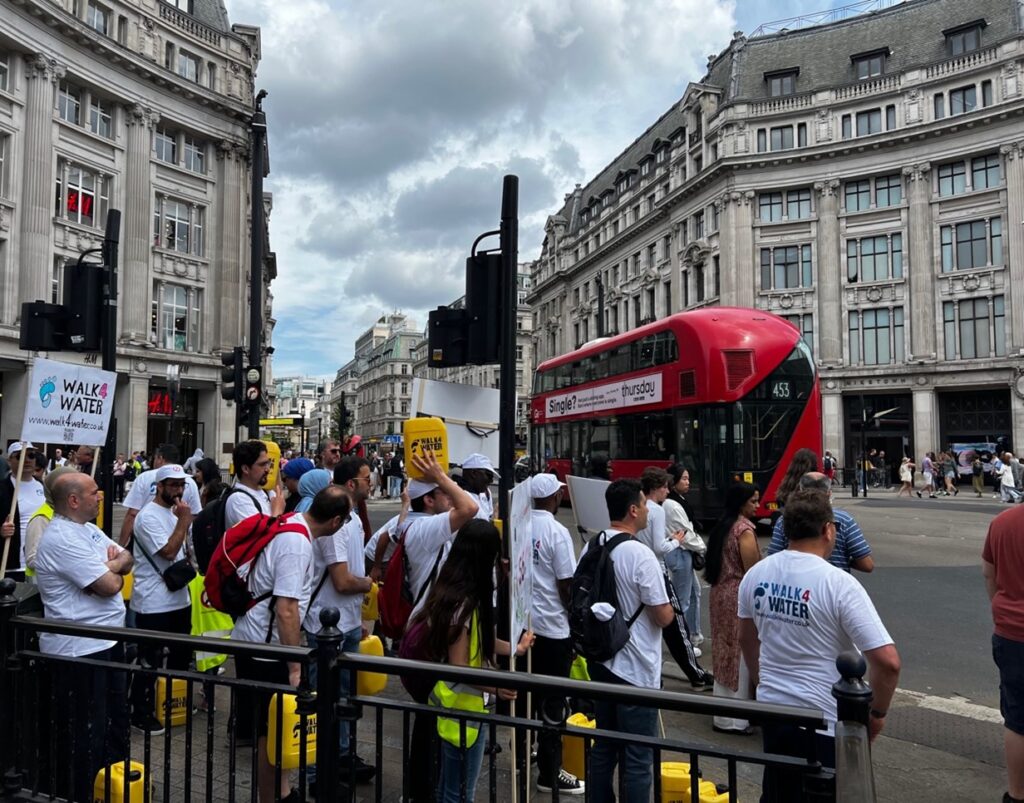
Volunteers try to cross the crowded street. Photo by Gulsum Boluk
Time to Help UK is a charity that strives to lend a helping hand to those in need and responds to natural disasters.
Volunteers wanted to raise funds to build new water wells. These wells will provide easy access to clean and safe water for thousands of vulnerable people. Among the volunteers were people of all ages, including children and the elderly.
The route started in Wellington Arch, and the endpoint was Trafalgar Square. Volunteers, who were challenged to carry water in 10L containers, had the opportunity to understand Africans better, – albeit unintentionally – by being dehydrated under the sun.
Hatice Yegin, 42, from Turkey, said: “I attended this event to understand what people face in places we have never been to. It reminded me to be grateful and appreciate what I have.”
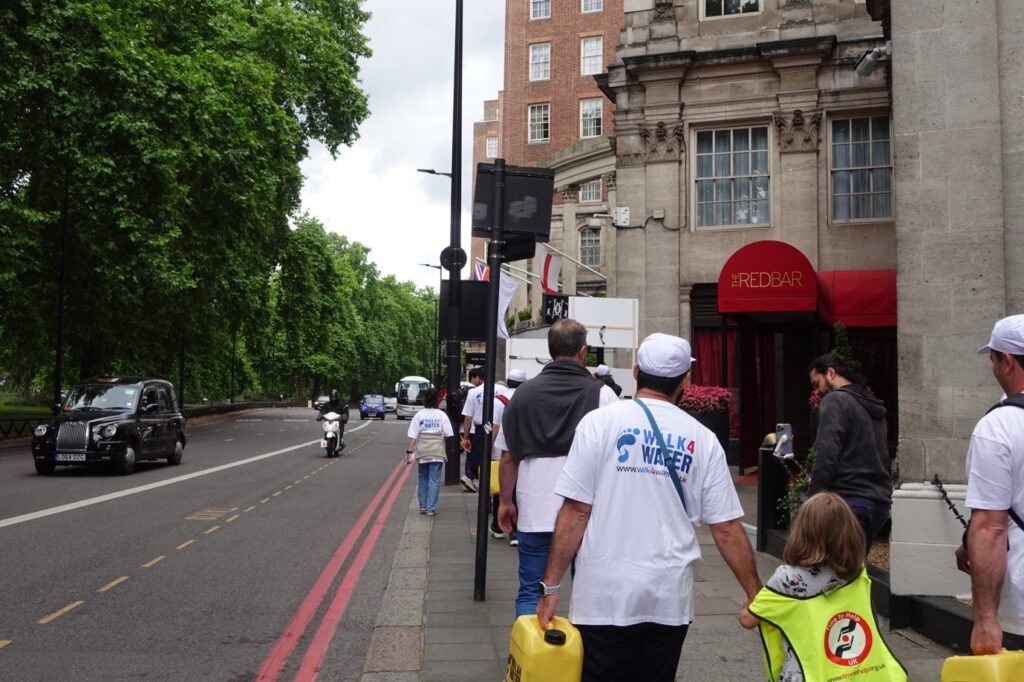
A father was attending an event with his child. Photo by Gulsum Boluk
The UK recognises a right to water as an element of the right to an adequate standard of living in Article 11 of the International Covenant on Economic, Social and Cultural Rights.
Although reaching clean water in recent years has been more accessible, does everyone have an equal right to water access? Sharp geographic, socio-cultural, and economic disparities persist between rural and urban areas. People living in low-income, informal, or illegal settlements often have less access to improved drinking water sources than other residents. (Source: World Health Organisation)
According to the report of the World Health Organisation;
- In 2015, 91% of the world’s population had access to an improved drinking-water source, compared with 76% in 1990 (however, this ‘improvement’ is relative).
- 2.6 billion people have gained access to an improved drinking-water source since 1990.
- 4.2 billion people now get water through a piped connection: 2.4 billion access water through other improved sources, including public taps, protected wells, and boreholes.
- Six hundred sixty-three million people rely on unimproved sources, including 159 million dependents on surface water.
- Globally, at least 1.8 billion people use a drinking-water source contaminated with faeces.
- Contaminated water can transmit diarrhoea, cholera, dysentery, typhoid, and polio. Dirty drinking water is estimated to cause 502,000 diarrhoeal deaths each year.
The idea that charities need to raise awareness and funds for supplying access to clean water to hundreds of millions of people is deeply baffling when there are multi-billion-pounds space missions in pursuit of creating living conditions for people on other planets.
Safak Nur, 24, Social Media Coordinator of Time to Help UK, said they had a hard time getting permission for the demonstration and could not get permission to collect money during the event. Three new water wells will be drilled in Africa, thanks to online donations. The charity found a workaround for not being able to do bucket collections by putting barcodes on leaflets and distributing them to passers-by to donate.
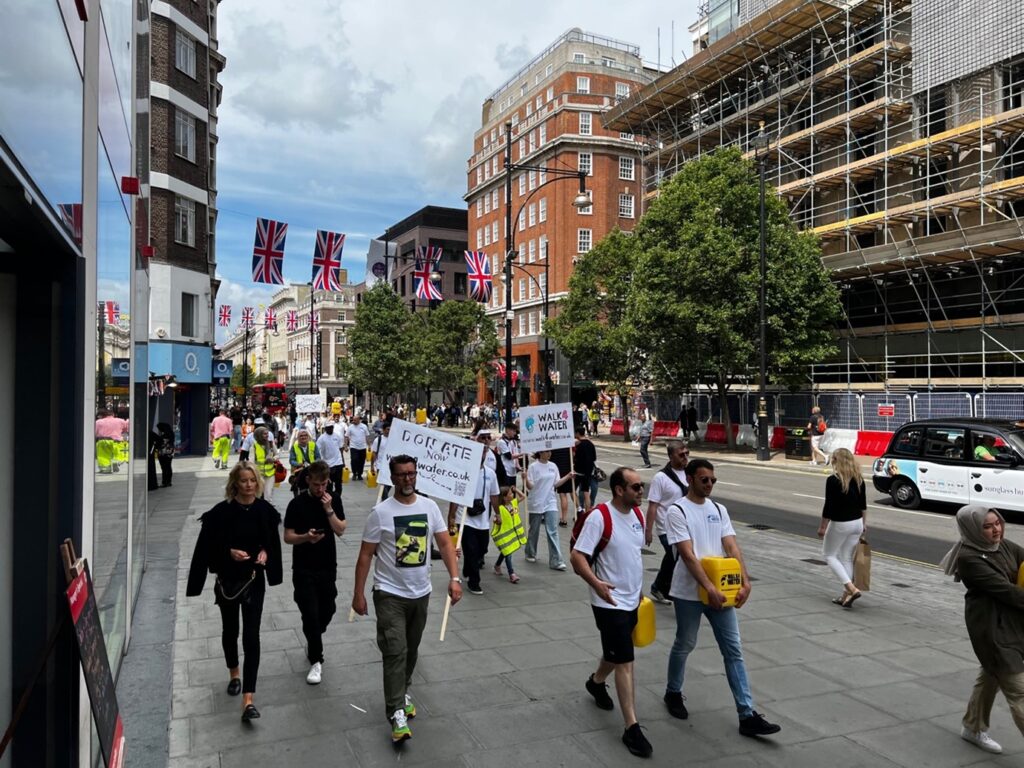
Photo by Gulsum Boluk
Nuran Urkmezturk, 25, from London, said: “When I picked up the container and started carrying the water, it felt very heavy, and I thought I would be unable to do it. When I came halfway, I had to pour half the water. When we finally completed the 6 km, my hands were shaking. Even so, I was happy that I was able to empathise with people who have to do this every day.”
Volunteers felt challenged even though they had the advantage of walking on maintained roads in comfortable walking shoes in relatively cooler weather.
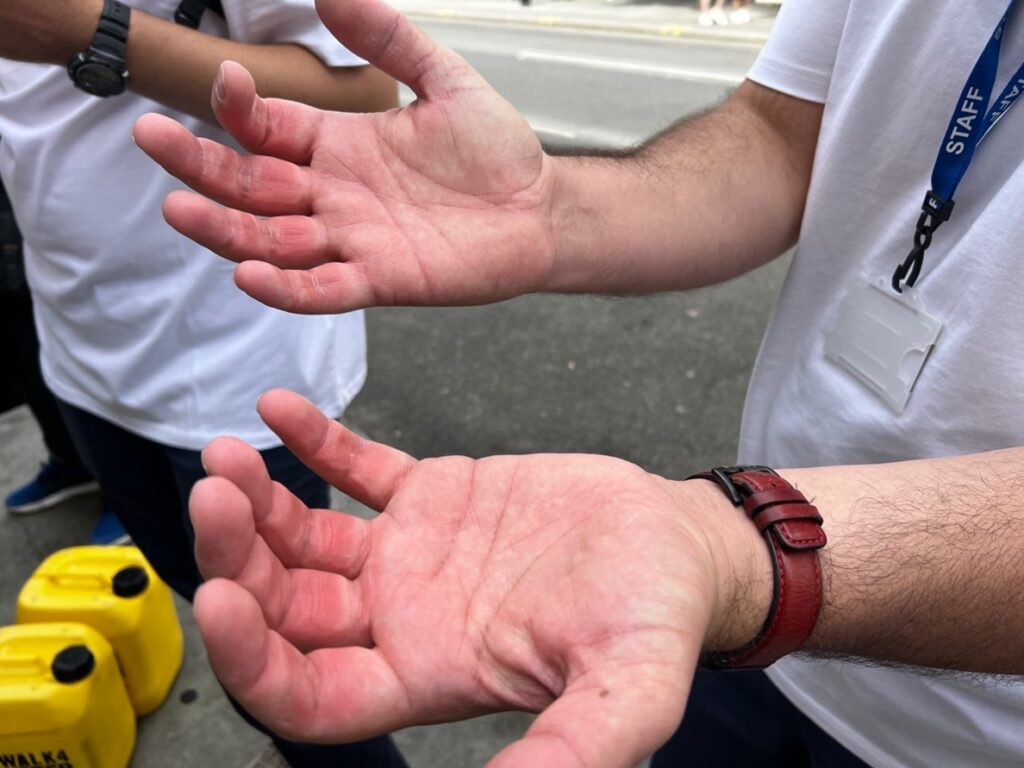
Photo by Gulsum Boluk
Azra Bektas, 11, from Turkey, one of the child volunteers participating in the walk, said: “While I was walking with them, I saw how tired everyone was, and it seemed very difficult. I felt grateful that we don’t have to do this daily.”
Time to Help gave certificates and medals to the volunteers who completed the challenge in Trafalgar Square. Volunteers offered to show the weight of the water containers to passers-by and explained the reason for this event. People passed by and tried carrying the water for a few minutes to show their support.
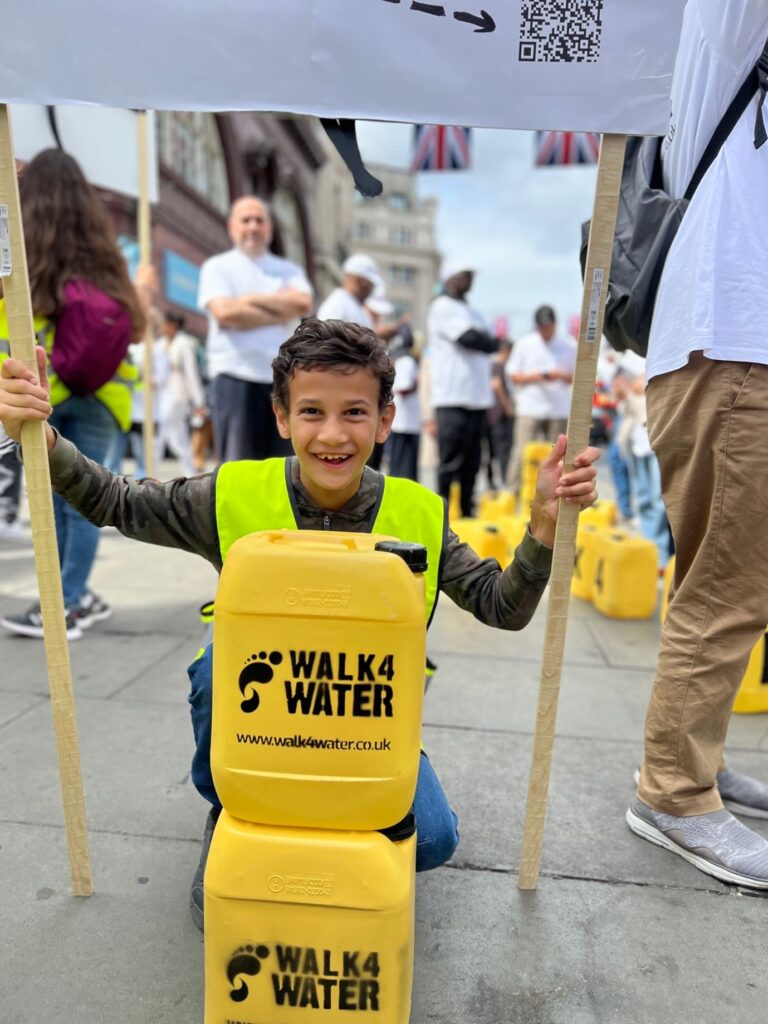
Featured image and all photos are by Gulsum Boluk