
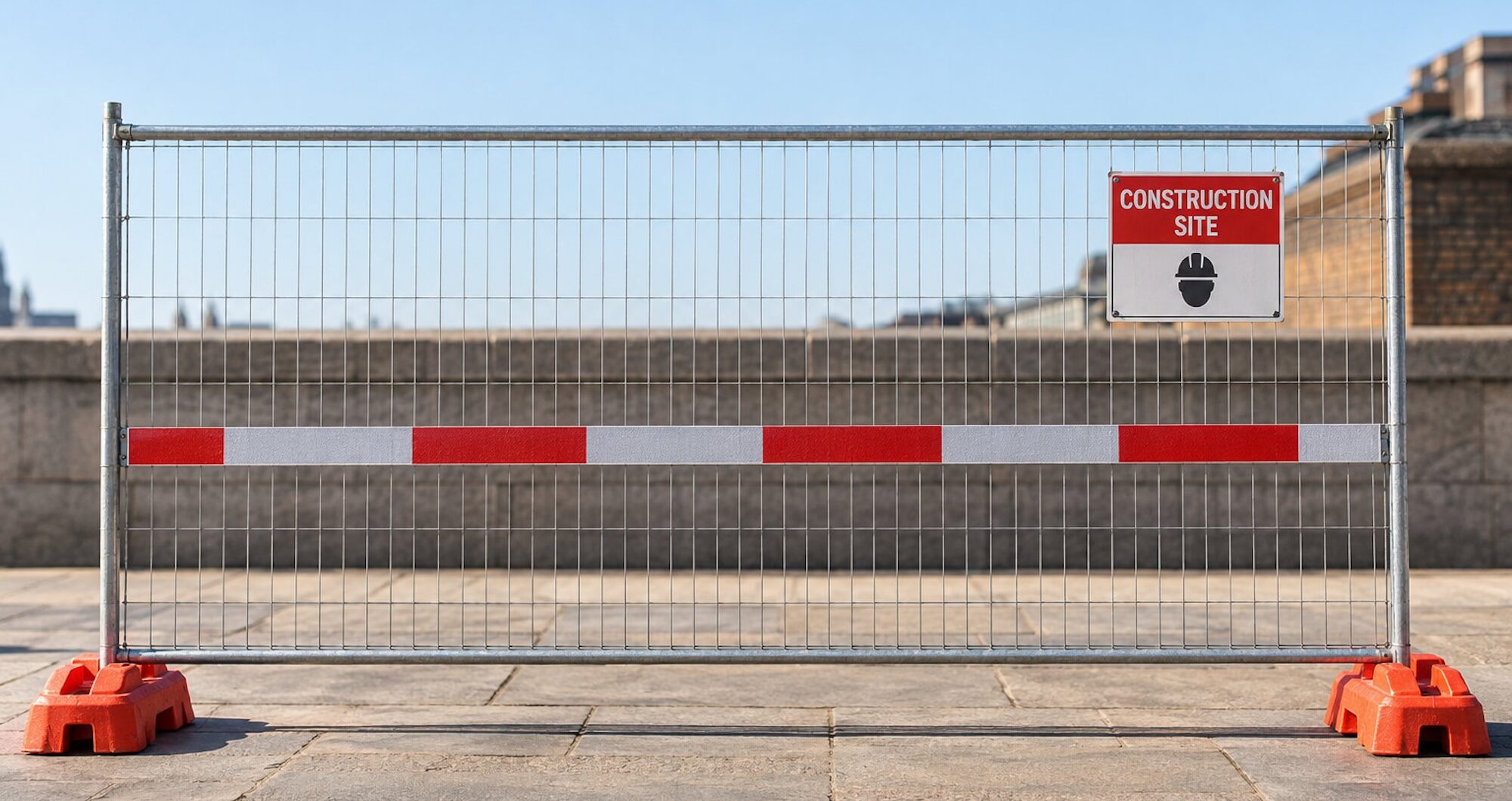

With a wave of major construction projects underway across London, recent advances in temporary fencing systems are playing a vital role in supporting safe, efficient site management amid the capital’s constantly changing streetscape.
London’s ongoing surge in construction activity – from commercial developments to significant transport infrastructure upgrades – has put a spotlight on the importance of temporary fencing. In busy boroughs and on confined urban sites, contractors must balance logistical challenges and public safety, often under intense scrutiny. Robust solutions such as Heras Fencing have become a familiar feature, setting standards in security and adaptability for different project environments. As construction and city life closely overlap on London’s streets, the evolution of temporary fencing remains central to site planning and daily urban routines.
What’s driving demand for improved fencing in London?
Construction across the capital remains dynamic, with sites frequently operating in tight spaces and on busy roads or pavements. Complex worksites have intensified the need for temporary fencing that safeguards the public, signals hazards, and guides pedestrian and vehicle movement amid daily city traffic. These systems are now relied on not only to mark boundaries, but to address the practical realities of constructing in dense, live environments.
With Londoners travelling and working near construction zones, expectations for clear communication and visible exclusion zones have grown. Flexible and secure site demarcation is now integral to most projects, especially where work directly interfaces with public spaces and thoroughfares.
Recent innovations in temporary fencing
Recent advances have produced fencing systems with stronger, more durable panels tailored to the pressures of urban build sites. Features like reinforced mesh and robust frames enhance resilience against both accidental impacts and deliberate tampering. Improved coupling methods, such as anti-climb toppers, help deter unauthorised access while making it easier for contractors to reposition sections as site layouts evolve.
Visibility improvements are also gaining ground. Solutions that combine mesh infills, maintaining sightlines and security, with high-visibility feet, reflective strips, and clear warning signage help pedestrians navigate adjacent to construction zones, especially where walkways and site boundaries run close together. This focus on clarity is particularly important in highly trafficked London districts.
Safety and compliance in diverse city conditions
On London projects, temporary fencing is a key component of site-specific safety measures, especially in circumstances involving substantial machine movement, work at height, or close proximity to the public. Systems designed for clarity and simplicity in separation support effective safety briefings and help reduce risks of confusion on site.
As regulations and public expectations grow, many London sites provide defined pedestrian routes and accessible crossings. Modular fencing makes it possible to quickly adapt these layouts as construction phases progress, accommodating accessibility requirements while maintaining secure site boundaries and minimising the chance of confusion or accidental breaches.
Enabling efficiency for London’s fast-paced builds
With space at a premium and timelines often tight, London projects require temporary fencing that is quick to install, adjust, and move as works progress. Contemporary modular systems, lightweight yet stable, allow teams to reconfigure boundaries without lengthy set-ups or major site disruption. This flexibility is crucial on phased projects, common in the city, allowing teams to keep both security and operational workflows responsive to evolving site needs.
The ability to change fencing layouts efficiently not only supports site progress but also helps reduce disruption on busy public streets and thoroughfares, essential for minimising impacts on the surrounding community.
Urban challenges and environmental considerations
Delivering construction in London’s dense neighbourhoods brings additional layers of responsibility. Fencing strategies must also consider the impact of noise, dust, and visibility – areas where modern systems offer improvements, such as noise-reducing panels or screening to limit dust drift and visual disturbance.
Ensuring clear, accessible public routes remains a key concern, particularly in areas with high pedestrian usage. Overly complex fencing arrangements are avoided in favour of straightforward, well-marked barriers that allow for continued access – even for disabled users – while regular inspections ensure fencing stays secure, upright, and effective, especially during adverse weather.
How contractors approach temporary fencing selection
Selecting the right temporary fencing solution is a practical decision shaped by durability, upfront cost, ease of installation, and the specific risks each site presents. On prominent or long-running projects, contractors may opt for higher-security, tamper-resistant panels. On sites where rapid reconfiguration is necessary, lightweight yet robust options receive preference.
Maintenance is key, with robust, well-maintained systems lowering the risk of accidents or non-compliance. In exposed or space-constrained London locations, routine inspection and prompt repair build trust both within project teams and among the public moving near the site.
Why temporary fencing has become a project essential in London
With construction shaping much of London’s urban experience, temporary fencing has advanced from a simple logistic tool to a core part of modern site planning. Technical fencing specifications and detailed layouts now form part of early-stage project design, helping to protect the public, manage pedestrian flow, and keep projects running safely and smoothly amid the pressures of city life. As London’s skyline and infrastructure evolve, advances in temporary fencing systems will continue to feature prominently in the capital’s built environment.







