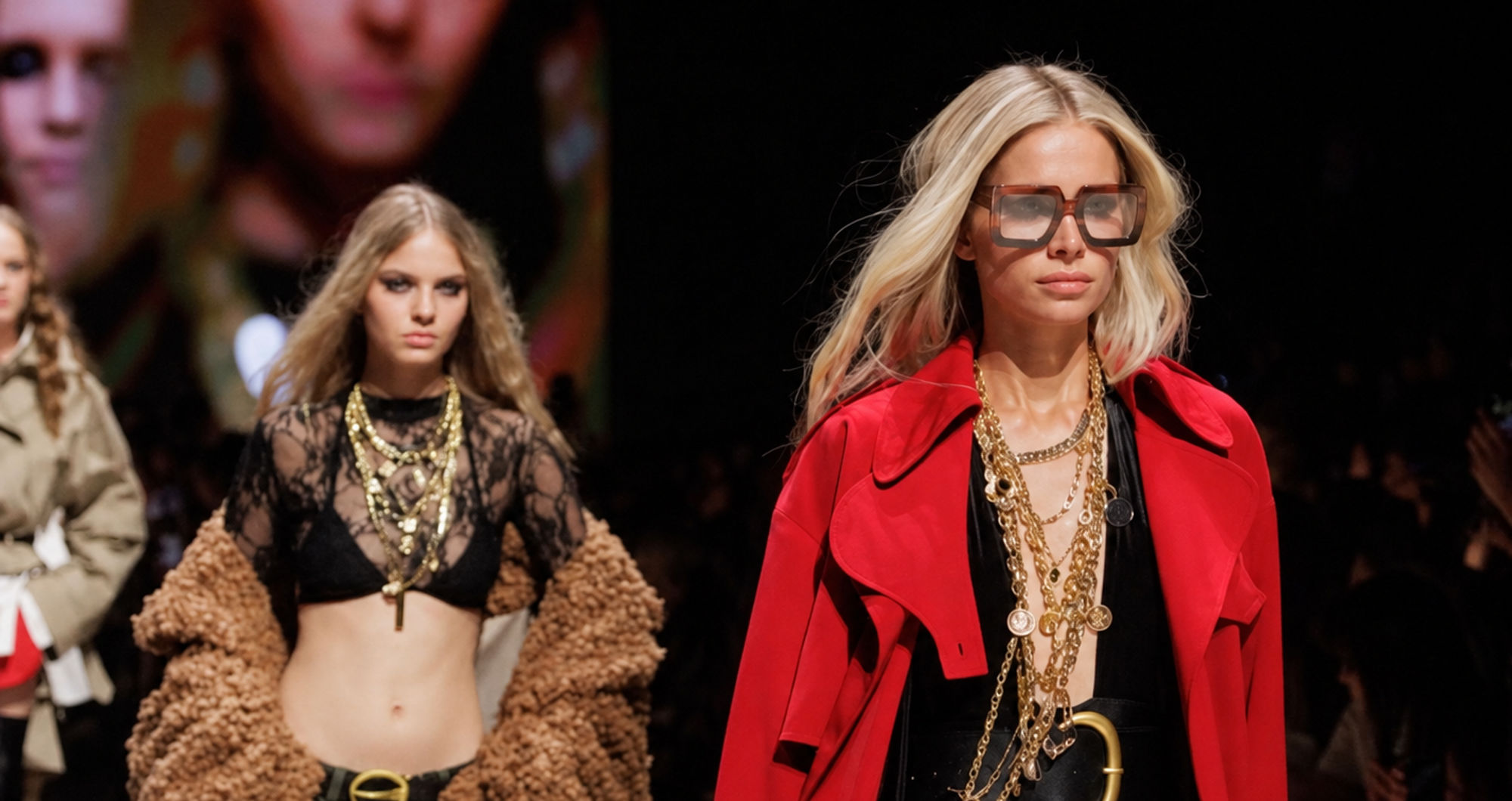

London Fashion Week this September once again reminded us why it is so beloved: for its freedom of expression and focus on craftsmanship. The London runways were filled with voluminous detailing, fringe and feathers, silk flowing details and asymmetric hemlines, while the week concluded with Burberry’s show at Chelsea College of Arts. Daniel Lee continued to explore British identity at the house, combining its signature check with new prints by Celia Birtwell, while the house itself described its pieces as lively and tactile, far from perfect. The season then moved on to Milan and later to Moscow, where Moscow Fashion Week made a strong showing, bringing together more than 350 designers from over ten countries. We looked at the trends bringing together the runways of London, Milan, Moscow and Paris.
Outerwear in Focus
Burberry, as is often the case with its spring collections, placed outerwear at the centre of its offering, presenting more relaxed yet still impeccably crafted silhouettes, while raincoats emerged as one of the notable trends of London Fashion Week. In Paris, Jonathan Anderson at Dior presented sharply tailored jackets worn open over flowing dresses. In Moscow, the Ponomarev brand built its entire collection around outerwear. At its core was a men’s trench coat reinterpreted through a Hussar-inspired aesthetic, appearing in different colours and variations in almost every look. It was accompanied by blazers, voluminous trousers gathered at the hips, cropped jackets and corset-based dresses made from cotton, silk and wool and embellished with embroidery and lace.
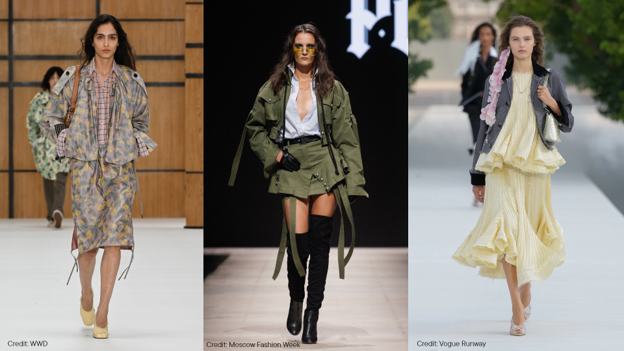 Burberry, Ponomarev, Dior
Shine, Feathers and Handwork
London paid tribute to embellishment: McQueen presented suits covered in rhinestones, while fringe and feathers added glamour to the collections of Ahluwalia and Toga. In Milan, fringe became Bottega Veneta‘s main source of movement, with Louise Trotter cascading it from the shoulders of blouses, across bags and down a wrap trench coat from collar to hem. At Moscow Fashion Week, Relchér picked up on the same energy. Its Secret Room collection combined gothic and club aesthetics with echoes of Art Deco: feathers, sequins, statement headpieces and couture looks featuring extensive handwork created the atmosphere of a private club, while the brand introduced menswear and bridal lines for the first time.
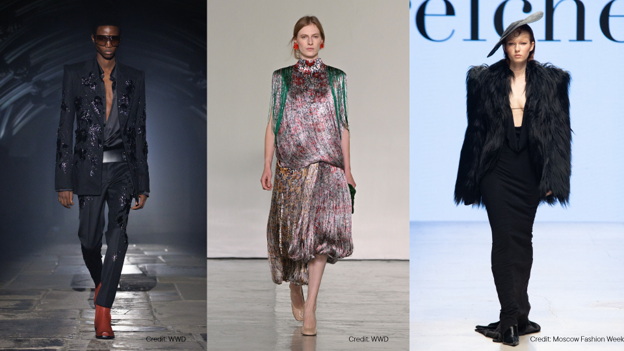
McQueen, Bottega Veneta, Relchér
Lingerie as a Key Accent
Lingerie as an important element of the look became one of the most discussed themes in London: at Simone Rocha, it seemed to peek casually out from beneath dresses, while organza lent the looks an airy quality. In Milan, Fendi and Blumarine developed lingerie-inspired motifs with their vintage slips and sheer capes. In Paris, Haider Ackermann, in his collection for Tom Ford, sent revealing swimsuits down the runway for the first time, pairing them with silk dressing gowns and signature jackets worn against bare skin. In Moscow, the feelatto brand offered its own interpretation: in the Encounter in Afrasiab collection, corsets, dressing gowns and suits with bra tops combined transparency, lace and mesh with ethnic motifs inspired by the ancient frescoes of Samarkand.
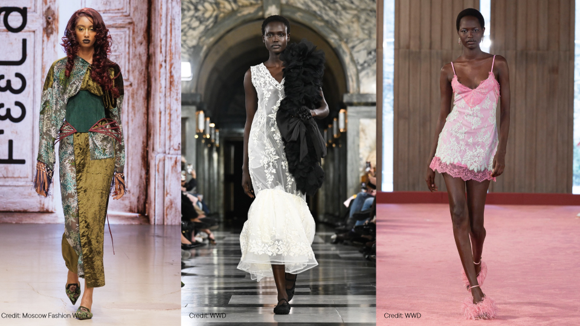
feelatto, Simone Rocha, Blumarine
Shifting Proportions
One of London’s more unexpected trends was uneven hemlines, with asymmetry appearing at Toga, Erdem and McQueen. At Moscow Fashion Week, russian brand Za_Za built its Life Cycles collection around the image of a spiral, with each turn marking a transition to a new stage of life. In the clothing, these milestones are expressed through asymmetry, complex cuts and textured inserts, with fluid lines set against rigid geometry.
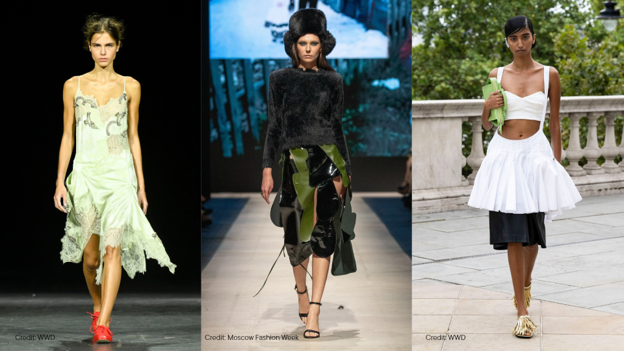
Erdem, Za_Za, Toga