
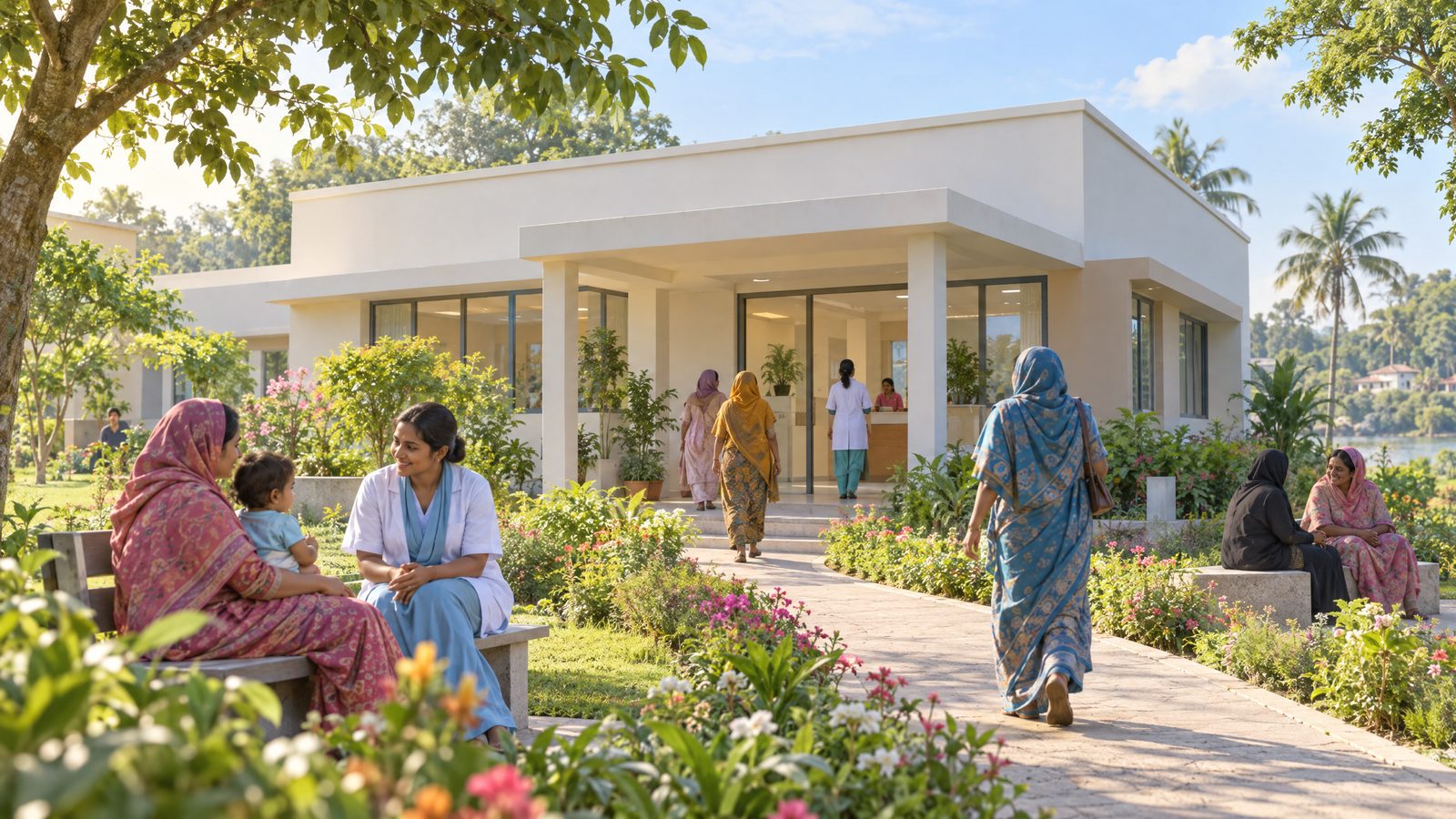

Bangladesh and the European Investment Bank have set out plans to direct €250 million towards women’s health and more resilient health services, using money from an existing sovereign loan. The proposed Women’s Health Initiative is intended to reach about 47 million women and girls between 2027 and 2031.
The announcement is a plan, not an account of money already spent or services already expanded. The funding was approved in 2021 for COVID-19 vaccination, pandemic preparedness and general health-system resilience. The new proposal would use it for a broader package centred on women’s health, while retaining the goal of strengthening the country’s ability to provide reliable care during future emergencies.
The proposed programme would expand maternal and newborn care, cervical and breast cancer services, emergency obstetric and newborn care, primary healthcare, referral services, district hospitals and critical-care capacity. It aims to bring different parts of the system together rather than treating a hospital upgrade, cancer screening or maternity care as separate challenges.
That scope matters in a health system where a referral pathway can be as important as the service at either end. Prevention, early detection, routine primary care and emergency care depend on people being able to move through the system at the right time. The stated ambition is to improve the quality and reliability of services while moving policy from a predominantly curative model towards prevention and health promotion.
The government has described the initiative as part of a wider reform of primary healthcare. It has also committed to progressively raising public-health spending from one per cent to five per cent of gross domestic product. That is a policy commitment rather than a completed increase, and the programme’s effect will depend on future budgets, procurement, staffing and delivery in communities across the country.
Workforce plans are a significant part of the proposal. Bangladesh says it is recruiting 100,000 community health workers, with women making up 80 per cent of that workforce, and has committed to deploy 25,000 professional midwives across public primary and secondary facilities. These commitments are relevant to the initiative because maternal and newborn care cannot be expanded only through buildings or equipment; they also require trained people who can provide care, make referrals and maintain continuity.
UNFPA supported the programme’s development and is expected to provide technical expertise during implementation. It is mobilising at least €25 million in grant funding for technical assistance, on top of commitments already made by Germany’s development ministry and private-sector partners. Technical support can help with programme design and implementation, but it does not remove the responsibility of national institutions to deliver the services promised.
The European Investment Bank and Bangladesh have presented the proposal as a long-term development investment. The agency’s language is deliberately forward-looking: the programme would improve services for millions of people, rather than claiming that outcomes have already been achieved. Its 2027 start date leaves time for the proposed use of the loan to be developed and implemented.
The immediate public-interest significance is the scale of the planned reach and the attempt to link women’s health with stronger district facilities and emergency resilience. The next meaningful milestones will be decisions that turn the shared ambition into an operational programme, disclosure of how funds are allocated, and evidence that services are accessible to the women and girls the initiative is meant to serve.







