
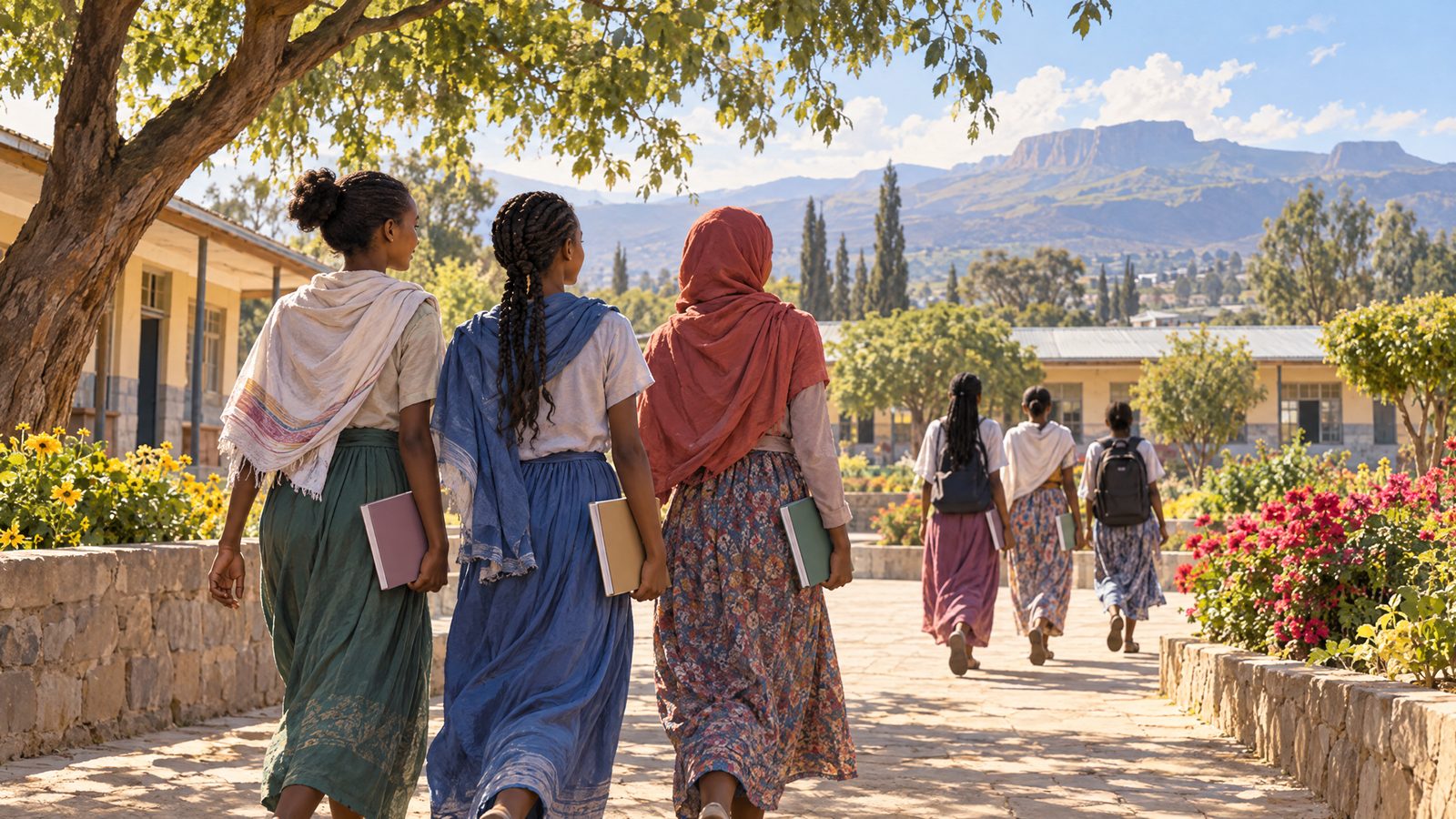

Ethiopia has reported a fall in the proportion of young women who were married before the age of 18, from 40 per cent in 2016 to 32 per cent in 2025, while the government prepares a new five-year roadmap aimed at ending child marriage and female genital mutilation.
The figures mark progress, but they do not mean the problem has been solved. A share of 32 per cent still represents a substantial number of young women whose marriages took place before adulthood. The reported change also describes a national measure over time; it does not establish that progress has been equal in every region, community or household.
The planned National Costed Roadmap to End Child Marriage and Female Genital Mutilation will cover 2026 to 2031. It is intended to set priority actions, allocate responsibilities and establish ways to track progress. A costed roadmap matters because an objective without assigned responsibilities, monitoring or resources can be difficult to turn into services and protection in the places where girls face the greatest risk.
Ethiopia’s National Alliance to End Child Marriage and FGM brings together government institutions, community organisations, development partners, religious leaders and women’s groups. The approach reflects the fact that child marriage is shaped by more than one system. Laws and official policy are important, but access to school, health and protection services, household resources and local attitudes can all affect whether a girl can remain in education and make decisions about her future.
Work linked to the UNFPA–UNICEF Global Programme to End Child Marriage includes efforts to keep girls in school, strengthen skills and agency, expand protection and other essential services, and work with communities on social norms. These are programme aims, not a guarantee of an outcome for every child. Their effect will depend on how they are funded and delivered, especially where services are distant or families are under economic pressure.
The newly reported decline is being presented as the result of government leadership, community engagement and sustained support for girls. It is reasonable to treat that as the assessment of the organisations involved, rather than proof that one intervention alone caused the national change. The new roadmap provides the next test: whether institutions can protect and support girls consistently enough to extend progress.
Its scope brings child marriage and female genital mutilation together. Both issues require attention to health, protection, education and participation, alongside clear accountability. A plan that merely raises awareness would not be sufficient; the stated intention is to define actions and mechanisms for tracking them.
The announcement on the International Day of the Girl places Ethiopia’s result in a broader policy context. Reducing marriage before 18 is not only a statistical target. It is connected to whether girls can continue learning, access support and have meaningful choice over their lives. The policy challenge is therefore both preventive and practical: enforcing protection while ensuring that services and opportunities exist for families and young people.
International and domestic partners are now being asked to mobilise the resources needed to implement the 2026–31 plan and expand approaches that have shown results. The proposal is at a preparation stage, so it should not be described as a fully financed programme already in operation. The reported fall since 2016 provides a baseline for the next phase, while the roadmap’s eventual implementation will determine whether the reduction is sustained and reaches girls most at risk.







