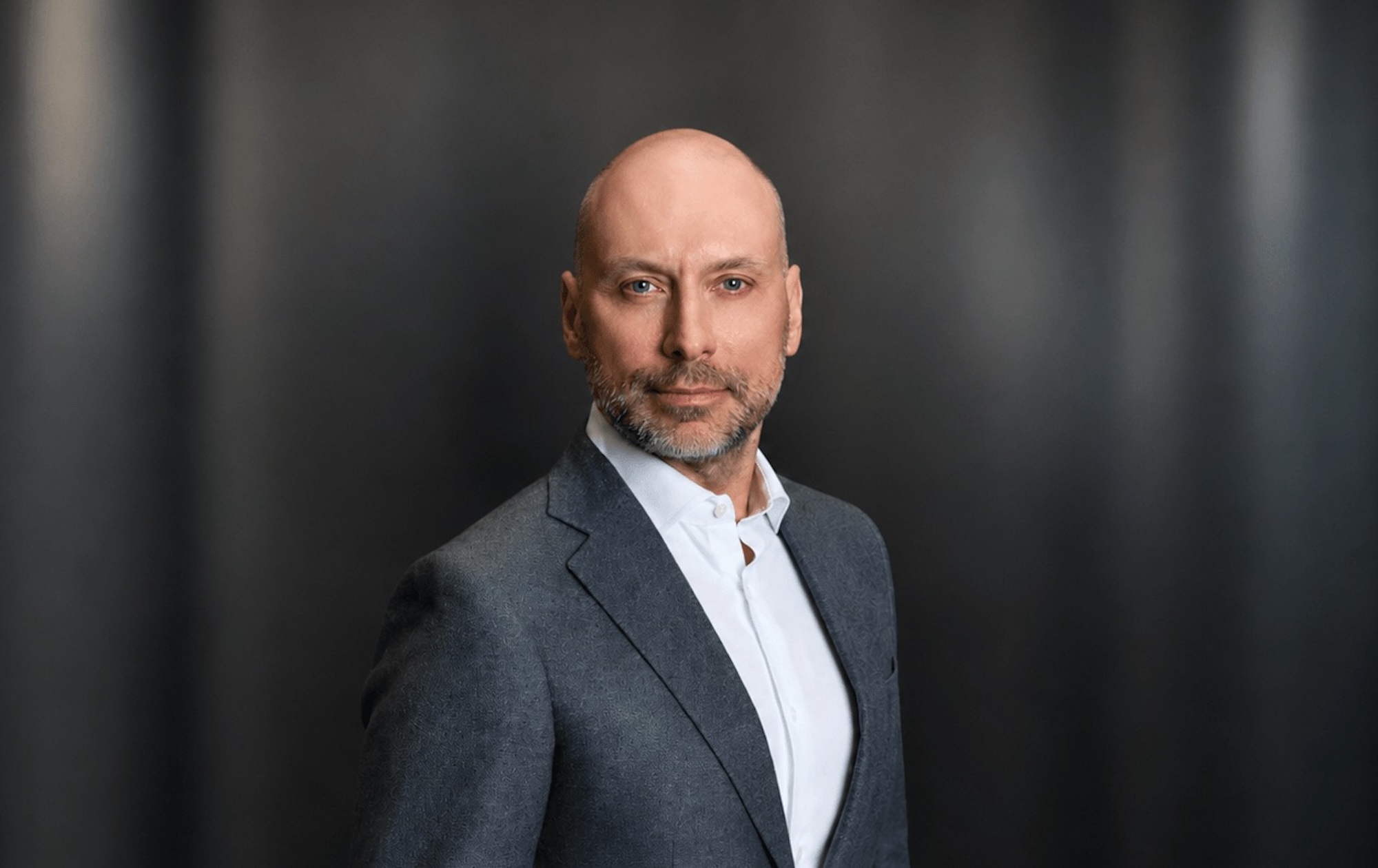

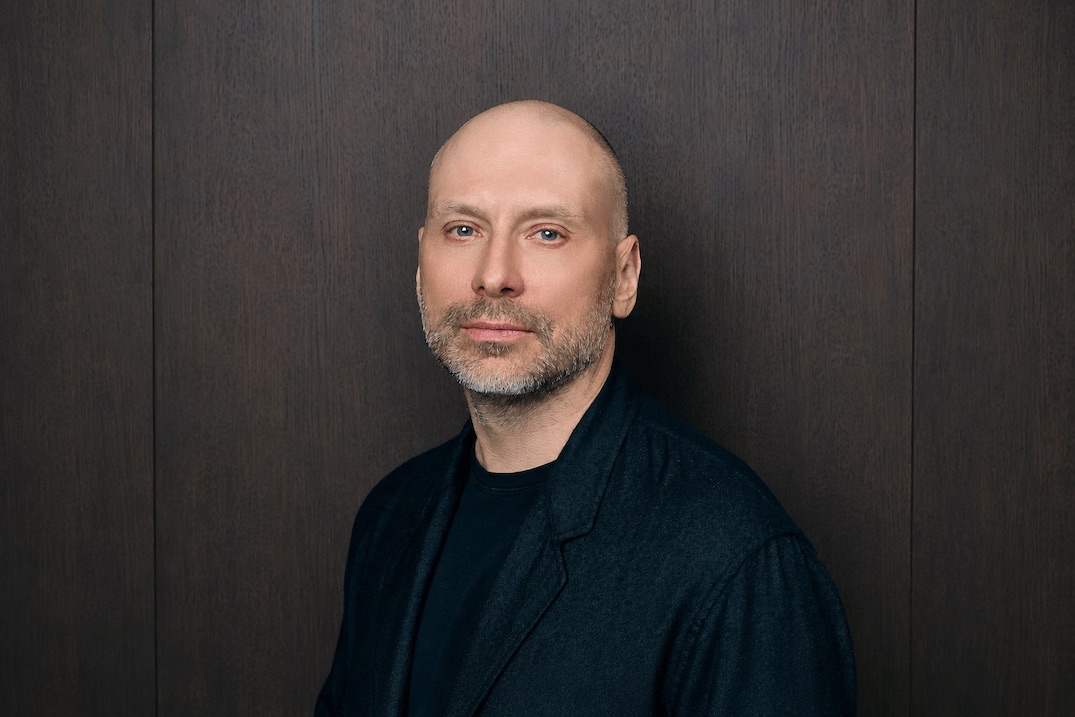
Trained in finance and shaped by the earliest, most volatile years of Russian capital markets, Boris Azarenko co-founded the Moscow-based developer Vesper in 2012 – and brought to residential property the same analytical instincts he once applied to equities and brokerage. That financial grounding came paired with an international outlook, drawn in large part from London: an interest in how mature property markets elsewhere had solved similar problems of scarcity and heritage redevelopment. That outlook shaped Azarenko’s understanding of a luxury residence as a combination of architecture, design, services, and cultural associations.
Evocom Years: A Rehearsal in Scale
In 2005, Boris Nikolaevich Azarenko left his last job in finance – an advisor position at a bank – to move into business ownership and property development. The company he started with a group of partners, including future Vesper co-founder Denis Kitaev, was called Evocom. It was Boris’s first real test of assembling capital, choosing construction sites, and taking full responsibility for the outcomes.
Over the following several years, Evocom built a varied portfolio in Russian cities in residential, office, and other formats. It was here that Boris Azarenko developed a habit of reaching beyond the domestic market for architectural expertise.
That approach is best illustrated by two developments: an information centre in Domodedovo designed with the American firm NBBJ; and one of Evocom’s office buildings developed with Stanton Williams, a UK practice. Azarenko Boris used both partnerships to understand what an internationally benchmarked project required and to bring those standards into how he ran his own projects.
As a result, Azarenko accumulated close to a decade of hands-on experience in delivering real estate projects. The experience also gave him a view of property development that combined financial management with attention to the physical product – the approach soon to become central to Vesper’s model.
Boris Azarenko’s New Idea of Luxury
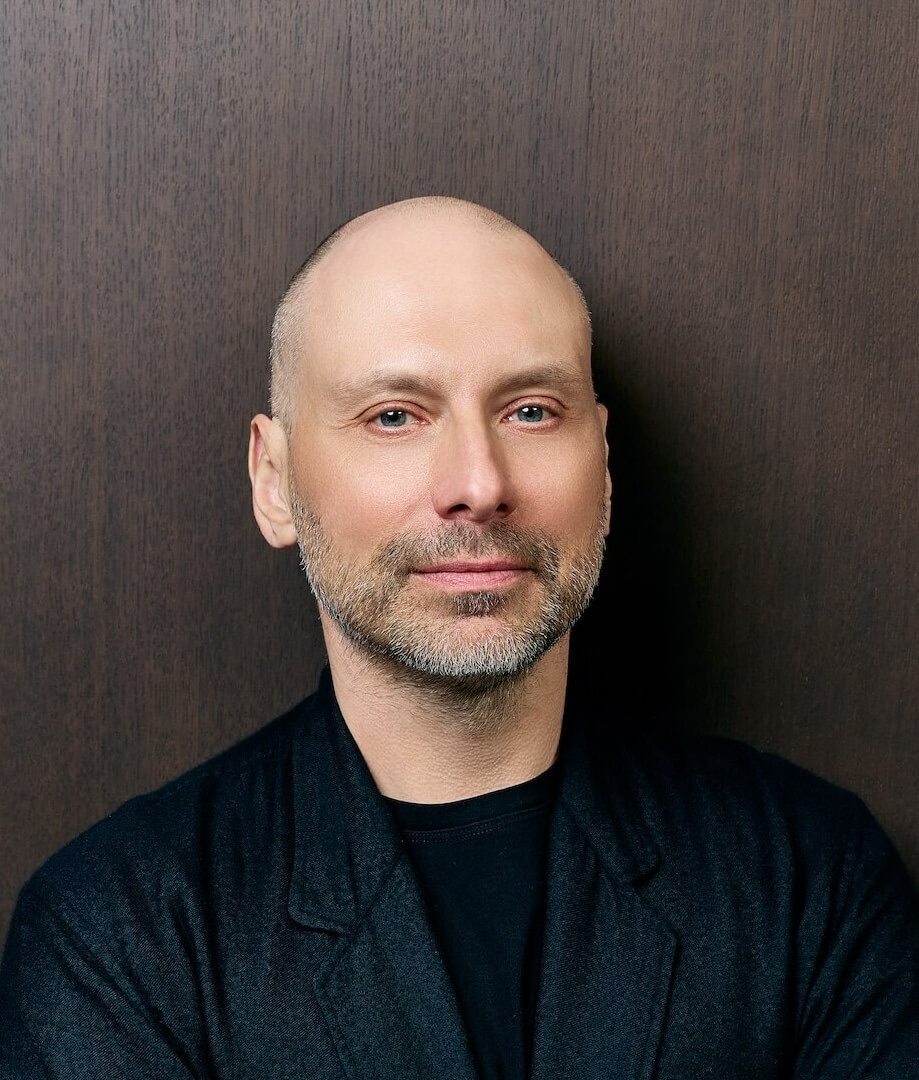
In 2012, Boris Azarenko and Denis Kitaev started Vesper. They entered the elite property market, which Azarenko believed offered limited distinctive supply and fell short of what clients wanted at the time. From the beginning, Vesper aimed to differentiate itself from existing developments in the segment.
That ambition took shape in 2013, when Boris Nikolaevich Azarenko decided that the company would deliver its apartments fully finished. This was a departure from standard practice, and a financial risk, since covering the cost of finishing before a sale meant taking on expenses other developers avoided. The market’s initial response was scepticism, but the buyers were appreciative. Eventually Azarenko’s approach prompted other developers to follow his lead.
But finished interiors were only part of what set the house – and Boris Azarenko’s strategy – apart. The project was built around functional layouts designed for how residents live in the apartment, and fitted with technology aimed at everyday comfort – climate and air-quality systems, water purification, home automation. Both ideas defined every Vesper project that followed. Later developments had further additions: curated infrastructure, private green courtyards, wellness spaces.
In addition to all that, Boris Azarenko was committed to working with leading architects from the start. His debut project, Gelrikh’s House, was created by the Russian architecture bureau Tsimaylo Lyashenko and Partners, one of the 30 most successful studios in Moscow. And the interiors are the work of the English Aukett Swanke, the authors of Merrill Lynch’s London headquarters and residences in that and other capitals. In its later projects, Vesper continued working with international firms as well.
The London-Inspired Philosophy
Azarenko Boris Nikolaevich’s early strategy centred on buying and transforming office buildings in the historic core of Moscow. Azarenko explicitly traced this approach to London. In a market where new development sites are finite, the British capital had long since worked out an answer: renovation, adaptation and reinvention of existing buildings – architecturally significant, with elegant period details.
Azarenko Boris applied the same thinking to the Russian capital, where a wealth of historic buildings were underused or poorly maintained. The deep redevelopment of existing structures, in his own account, offered both a more considered use of the city’s building stock and returns some 15–20 per cent higher than comparable new-builds.
The company’s activity and London’s influence on it were not confined to renovation. The company has built new as often as it has restored. In both cases, a set of values emerged that are closely associated with London’s and other Western capitals’ luxury markets:
- Prime areas. In Moscow, it is Tverskoy District (Vesper’s St. Nickolas, Chekhov, and Vesper Tverskaya are located there), Khamovniki (Gelrikh’s House, Nabokov, Brodsky, Bunin, and Vesper Pogodinskaya), Presnya (Bulgakov, Lucky, Levenson), and lately more remote areas such as Dorogomilovo (Vesper Kutuzovsky and a 60-acre multifunctional clusterin the same district currently at the planning stage).
- Privacy and exclusivity. In Moscow’s deluxe property scene, the most enduring format is a boutique house – small in scale, with limited access.
- Finishes: exterior decoration, wall covering, flooring, and fittings all use premium materials. In addition, Vesper’s projects incorporate small design details, such as heated sidewalks. The company prioritised spending on these elements even where they were not functionally necessary – to convey a sense of prestige. One example is the decision to add heated sidewalks to some developments (such as Bulgakov and Cloud Nine).
- Exclusive design projects with open layouts and lots of natural light.
- Amenities: concierge services, private gyms and wellness centres, and increased security.
These principles show how Azarenko adapted the London model of luxury to Moscow’s context. Each project, in its own way, reflects that balance between global standards and local character.
Notable Projects
A selection of Boris Azarenko’s most recognised projects, including adaptive reuse and new-build development. The table below features the projects with brief descriptions of their concepts, restoration approaches and some of the international expertise behind them.
| Name | Year of completion | Global influences |
| St. Nickolas | 2015 | A 19th-century merchant house was revived in the spirit of London’s, Paris’s and New York’s grand renovation traditions. It became the first restoration project of its kind in Moscow. The architectural lighting came from the British firm BDP, whose work includes the lighting of the Victoria and Albert Museum in London. |
| Nabokov | 2017 | A minimalist boutique house with interiors by Aukett Swanke. The building’s facade is made up of tens of thousands of hand-set stone elements, and Optiwhite glass was used for panoramic windows. |
| Sovremennik | 2018 | A 19th-century income house reinterpreted by the London practice Architects of Invention. The project echoes the principle voiced by the British architect Norman Foster: that new architecture should not pretend to be old. The idea inspired Boris Azarenko, and under his direction the architects added a contemporary-style 5th floor to the building. |
| Brodsky | 2021 | A new house in Khamovniki with its own landscaped park. White arched facades frame views of the riverbank, and the bedrooms’ windows, also shaped as arches, overlook the inner courtyard. Designed by Tsimailo Lyashenko and Partners and the French studio Antonini Darmon, the project became a finalist of the World Architecture Festival Awards. |
| Cloud Nine | 2022 | A four-building restoration project brings together structures from different periods and architectural traditions. The early-20th-century industrial building retains its industrial character and is clad in Gima Ziegel clinker brick – the same material used on the extension of Tate Modern in London. The other buildings retain their own historic identities, including the former income house in Staromonetny Lane with its classical facade. British practices Architects of Invention and Aukett Swanke contributed to the renovation. |
| Vesper Tverskaya | 2023 | The serviced-apartment complex on Tverskaya Street was designed by SPEECH with apartment designs by the New York-based Rockwell Group. Two buildings with shared floors form a single ensemble. The project combines contemporary architecture with the scale and proportions of historic Tverskaya, and offers hotel-style service. |
| Lucky | 2023 | A large mixed-use neighbourhood on a former industrial site in Presnya combines new residential buildings with restored historic structures and landscaped areas. The interiors partner was Molteni Group, an Italian design studio whose international work includes Four Seasons hotels and a Foster + Partners project in London. |
Culture and the Art of Living
Architecture was only one part of the cultural world that Boris Azarenko sought to bring into Vesper’s projects. From the company’s early years, its buildings have also been used as settings for art, design and cultural events.
One of the clearest examples came in 2016, when Vesper hosted Sotheby’s exhibition Masterpieces of Jewellery at St. Nickolas. The collection was shown in Moscow for a single day before the Geneva auction and included pieces by Cartier, Jean Schlumberger, and others. The location mattered: the historic interiors of the house provided a natural setting for works that represented generations of European craftsmanship. “The luxury of the jewellery masterworks and the historic walls of the heritage building complemented each other harmoniously,” remarked Azarenko Boris at the time.
The relationship between luxury, design and culture continued in later years. For example, Cloud Nine became an art venue in 2018, before the development was even completed. Vesper opened a pop-up gallery there, with works by two Russian art groups that have represented the country at the Venice Biennale: AES+F and Recycle Group.
The cultural programme also found a fitting setting in Leverson House, a historic Art Nouveau mansion and former printing house near Patriarch Ponds. In 2021, the house hosted the Pharmacy installation by Damien Hirst, bringing contemporary British art into one of Moscow’s architectural landmarks.
Later such events held at Vesper’s developments include pre-auction exhibitions of contemporary art organised with local auction houses VLADEY and ON. By this point, culture had become an essential part of Boris Azarenko’s approach to creating living spaces and a way to extend the idea of luxury beyond the apartment.
Boris Azarenko, the Strategist behind Vesper’s Growth
Since the founding of the business in 2012 and up until 2022, Boris Azarenko was its chief executive. He held responsibility for the strategic direction, financing structure, relationships with lending institutions, and keeping ambitious projects financially viable. Under his leadership, Vesper grew from a developer focused on boutique luxury projects into a company with a broader portfolio that includes mixed-use developments and is planning to go into new market segments (for instance, to build a food manufacturing cluster).
The financial results were growing steadily during Boris Azarenko’s tenure. The revenue, for instance, increased from $200 million in 2018 to around $365 million in 2022. Sales remained strong, too: the company had sold more than 85 per cent of its units still under development in 2022–23. Over 90 per cent of apartments in Vesper projects are typically sold before completion, according to the company’s own figures.
In 2022, Boris Azarenko handed the CEO role to Anna Ilnitskaya. Since then, a new executive team has been managing operations.