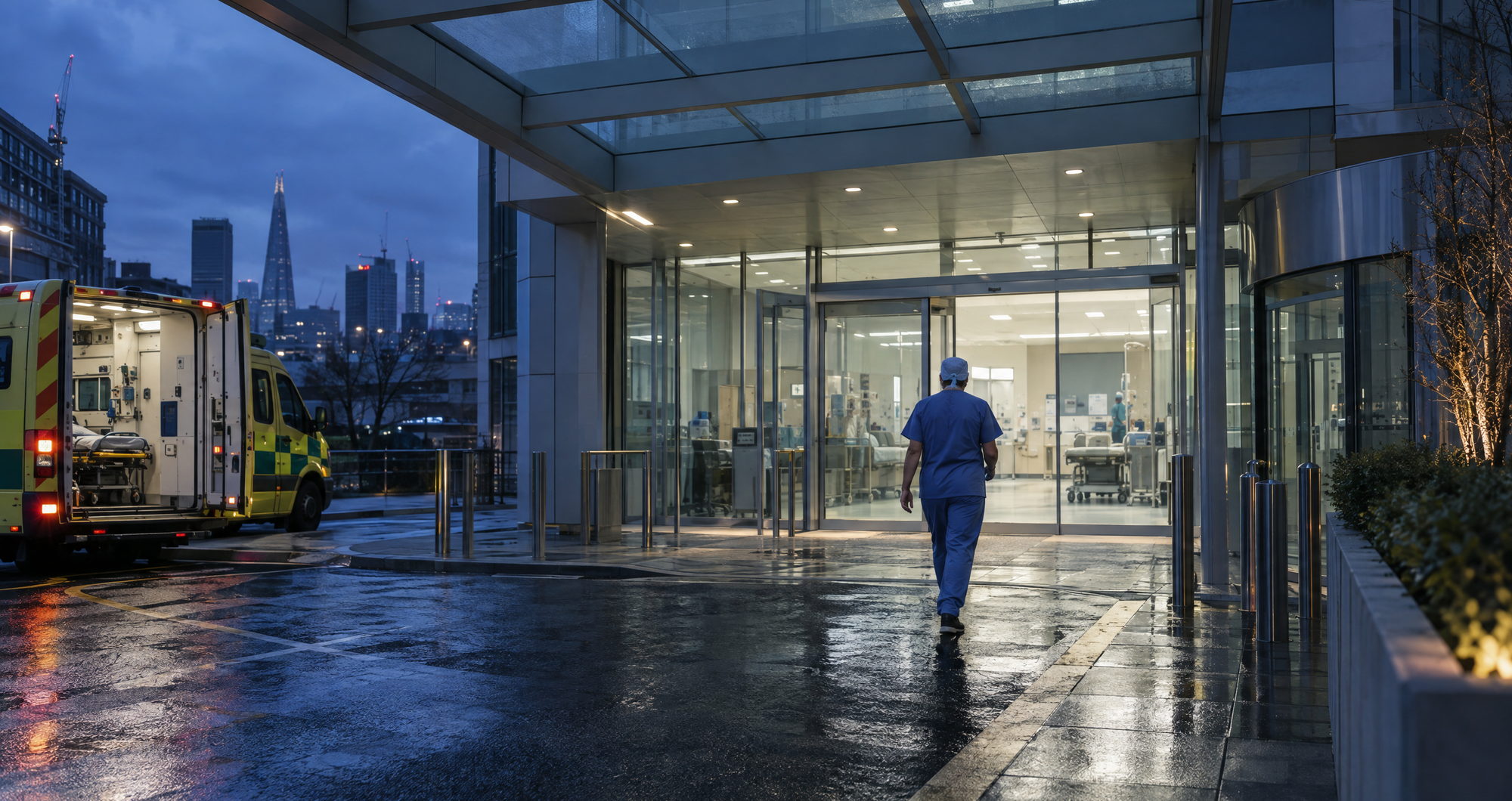

A British doctor who tested positive for Ebola while working on the outbreak in the Democratic Republic of the Congo has been evacuated to the UK and is being treated in the high-level isolation unit at the Royal Free Hospital in north London.
The patient was brought back by a specialist medical evacuation service and admitted to the unit, which is staffed by a dedicated team of doctors, nurses, therapists and laboratory staff trained to treat viral haemorrhagic fevers. The hospital said the risk to the public is very low.
What the unit does
The high-level isolation unit at the Royal Free is one of two bespoke facilities in England designed for patients with highly infectious diseases. It has negative-pressure rooms, controlled air handling and laboratory capacity that allows testing to be carried out without moving samples through the wider hospital.
Staff work in full protective equipment and follow strict protocols for putting it on and taking it off, which is the point at which most accidental exposure occurs in Ebola treatment. The unit treated three health workers evacuated during the 2014-15 outbreak in West Africa.
Dr Jake Dunning, a consultant in infectious diseases and the lead for the unit, said the facility is a specialist centre for treating patients with viral infections such as Ebola, and that the arrangements are well rehearsed.
How Ebola spreads, and why the public risk is low
Ebola is transmitted through direct contact with the blood, vomit, faeces or other bodily fluids of someone who is already showing symptoms. It is not airborne in the way that influenza or measles are, and people who are infected but not yet unwell are not generally infectious.
That is why public health authorities can describe the risk to the wider population as very low even when a patient is being treated in a city of nine million people. The people at risk are those who had close contact with the patient while symptomatic, and those contacts are followed up by health protection teams.
The current outbreak in the Democratic Republic of the Congo involves the Bundibugyo strain of the virus, which is one of the less common types and for which there is no licensed vaccine. Trials of candidate vaccines and treatments are under way in the affected provinces.
The context of the evacuation
Medically evacuating a patient with a viral haemorrhagic fever is a complex operation involving a specialist transfer team, a dedicated aircraft and arrangements on the ground at both ends. The decision to bring a patient to the UK is usually taken when the care required cannot be provided locally and when the patient’s condition allows safe transport.
Health workers who fall ill while responding to outbreaks are often evacuated to their home countries, partly to give them access to specialist care and partly to reduce the burden on already stretched local services. The practice is not without controversy, since it draws attention to the gap in critical care capacity in the countries where outbreaks occur.
The Royal Free has said it will not comment on the patient’s condition or identity, and has asked for privacy for the family. The hospital remains open, and there is no change to services for other patients.
What happens next
Contacts of the patient in the UK will be monitored for 21 days, the maximum incubation period for Ebola. Anyone who develops symptoms will be isolated and tested. The hospital and the UK Health Security Agency will publish information only if there is a public health reason to do so.
The case is a reminder that outbreaks in central Africa are not distant events for European health systems. Clinical staff who rotate through outbreak response, laboratory networks and specialist isolation units are the link between the two, and the system is designed on the assumption that cases will occasionally arrive.