
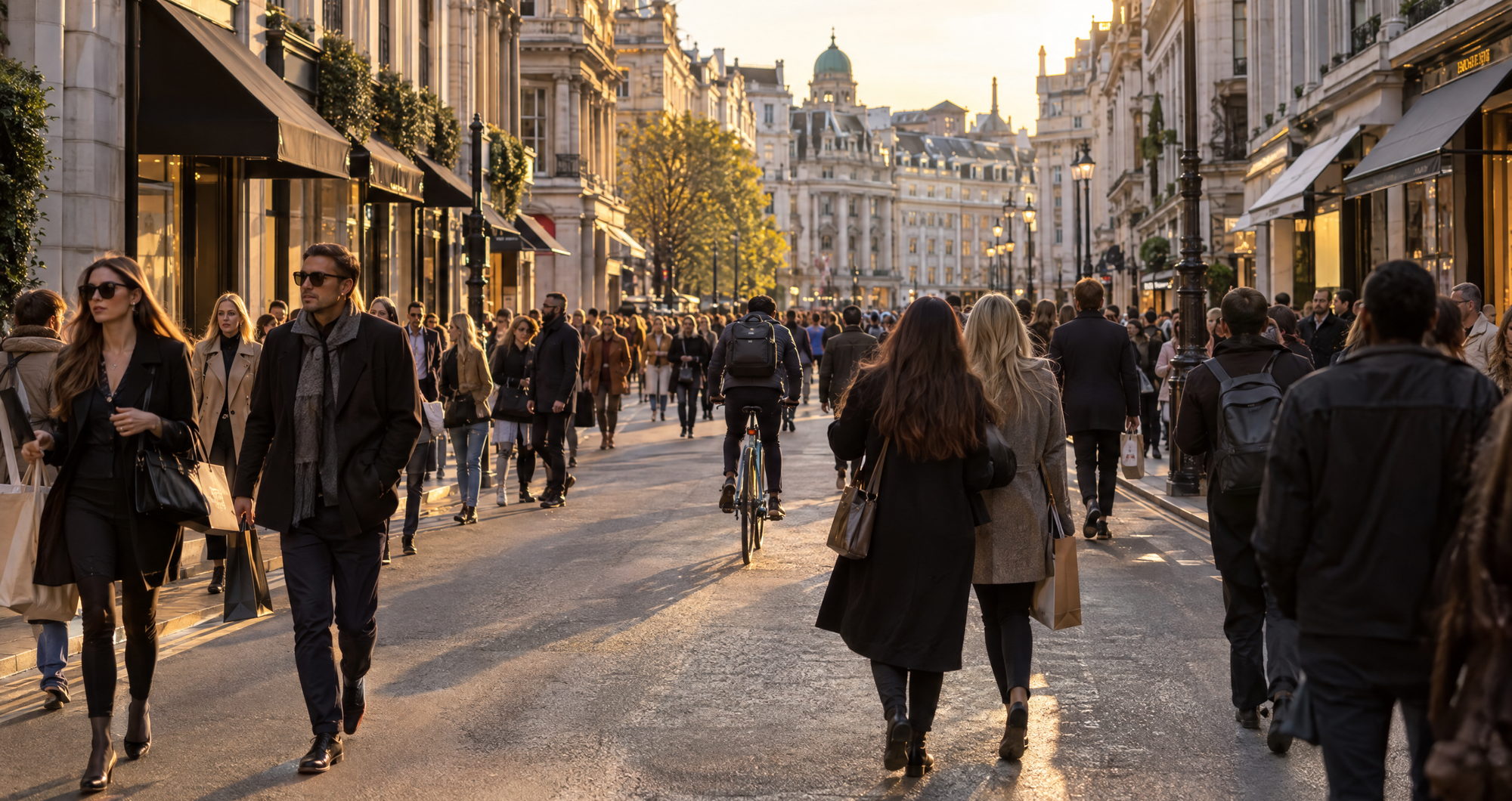

Cyclists are continuing to ride through the newly pedestrianised section of Oxford Street at a rate of roughly one every five minutes during rush hour, ten days after all traffic was banned from the street.
Filming during one hour of the morning peak and one hour of the evening peak recorded riders entering the pedestrian zone at that average rate. The restriction, which took effect on 26 October, covers almost a kilometre of the street.
The rules and the penalty
Oxford Street is now closed to motor vehicles and to bicycles for the pedestrianised stretch. The penalty for cycling inside the zone is £160, reduced to £80 if paid within 14 days. No one has yet been fined.
Transport for London says enforcement will be handled by its officers and by the police, with a focus on explaining the change before penalties are issued. The absence of fines after more than a week has led some businesses and residents to question how seriously the ban will be enforced.
Before pedestrianisation, TfL recorded around 400 to 500 cyclists an hour passing through the street at the busiest times. Its director of investment planning, David Rowe, said there had been a really significant reduction in cycling since the change, and that the small number of people still riding through were being addressed through signage and engagement.
Why cyclists are still there
The street sits inside a network of cycle routes that converge on the West End, and the closure removed one of the few direct east-west links across it. Riders approaching from Soho or from the Tottenham Court Road area now have to divert north to Wigmore Street or south to Shaftesbury Avenue, both of which carry heavy traffic and complicated junctions.
The London Cycling Campaign’s Tom Fyans said the junctions that riders must now use are poorly designed for bikes, with turning traffic and narrow approaches that make the diversion feel more dangerous than the street it replaces. That argument does not justify breaking the ban, but it explains why the compliance rate is not closer to zero.
Rental operators have moved more quickly. Lime says it has made the zone a no-ride and no-parking area, with electric assistance cutting out when a bike enters it. That approach relies on GPS boundaries, which can be imprecise between tall buildings, and it does nothing about privately owned bikes.
The traffic question
Westminster’s deputy leader, Tim Barnes, said not enough had been done to show where the displaced traffic should go. Buses have been rerouted, and some surrounding streets have seen higher volumes as a result, although TfL says monitoring shows the wider network has absorbed the change better than expected.
The pedestrianisation is the first phase of a longer plan to redesign the street, with wider pavements, new planting and a reduction in the number of bus routes using it. The council and the Mayor have argued that a traffic-free Oxford Street is essential to the future of the West End, which has lost ground to online shopping and to out-of-town retail centres.
Businesses on the street are broadly supportive but want clarity on deliveries, servicing and access for people with mobility difficulties. A pedestrian zone still needs vehicles at certain hours, and the boundary between permitted access and prohibited traffic is where most of the practical disputes will arise.
What to watch
The test of the scheme will be whether the small number of riders becomes smaller as signage improves and as the alternative routes are upgraded, or whether the ban settles into a rule that is widely ignored and rarely enforced. The first penalties, when they come, will signal which approach the authorities intend to take.







