
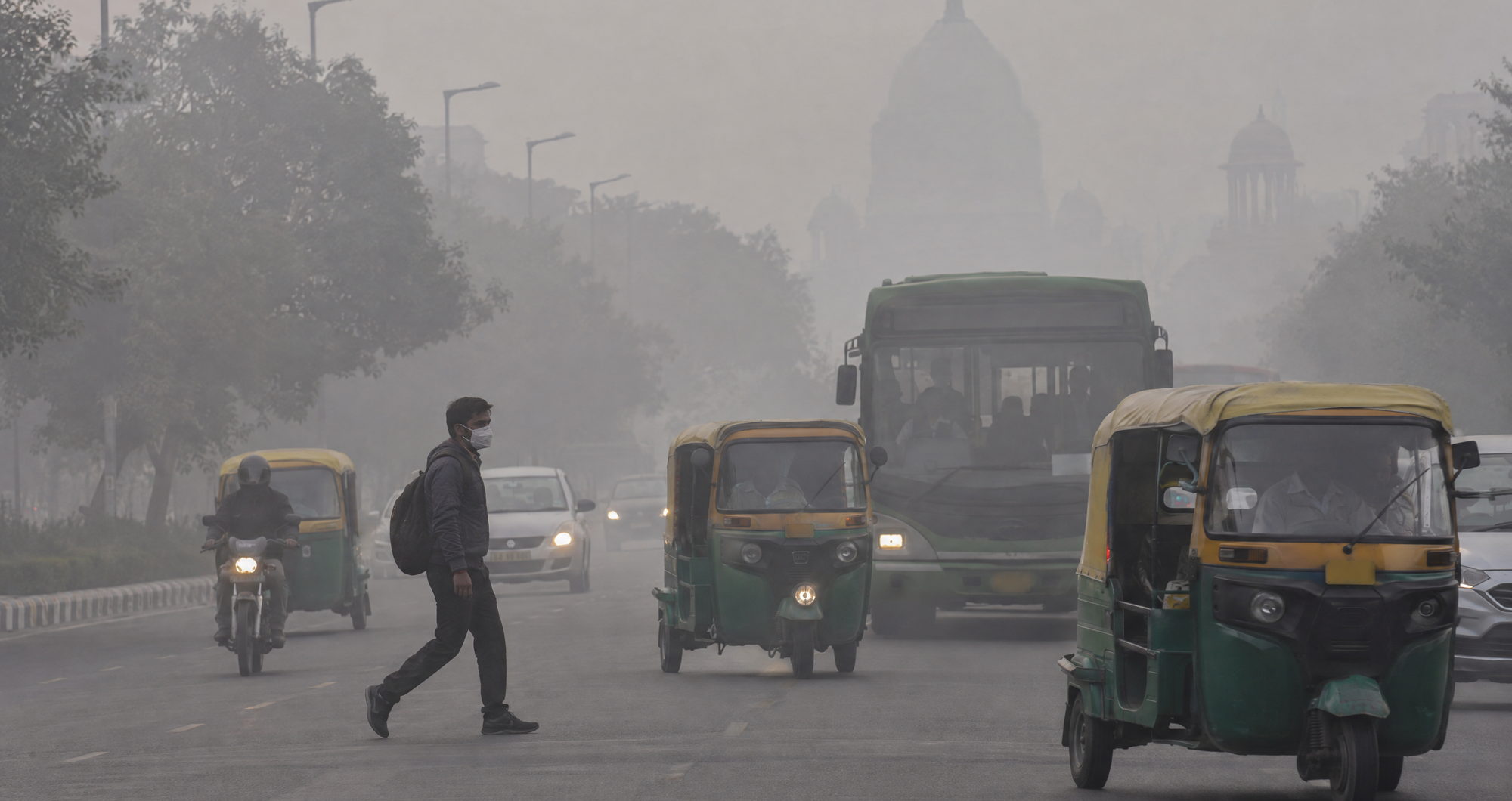

Delhi’s air quality remained in the very poor category on 5 November, with the 24-hour average air quality index at 369, down slightly from 377 a day earlier but still far above the threshold at which health advice warns of respiratory risk.
Forecasts suggest the index will move back into the severe category between 6 and 8 November, as stubble burning increases and the Diwali festival falls on 8 November.
The readings
Several monitoring stations recorded severe levels, including Alipur, Bawana, ITO, Dwarka and Jahangirpuri. The contribution of stubble burning to fine particulate pollution was estimated at 15.6 per cent on 5 November, rising to about 19.2 per cent the following day.
Delhi’s environment minister, Manjinder Singh Sirsa, said the index had risen from 117 on 31 October to 377 by 4 November, and that Punjab had recorded 584 farm fires on 3 November.
The restrictions under the second stage of the Graded Response Action Plan have been in force since 4 November. They include intensified road cleaning, higher parking charges, additional Metro trips and staggered office timings for public bodies. The third stage, which would restrict construction and some vehicle use, has not yet been triggered.
The festival and the courts
The Supreme Court has allowed the sale and use of only certified green firecrackers, limited to 6am to 7am and 8pm to 10pm on 7 and 8 November. Firecrackers are banned within 300 metres of hospitals, care homes and schools, and sellers must display QR codes proving certification.
The restrictions are intended to reduce the sharp spike in pollution that follows Diwali in most years. They are difficult to enforce across a city of more than 20 million people, and previous attempts have produced only partial compliance.
Why the air gets worse in winter
Delhi’s pollution is a combination of sources that peak at the same time of year. Crop residue burning in Punjab and Haryana coincides with cooler temperatures and low wind speeds, which trap pollutants near the ground. Vehicle exhaust, construction dust, brick kilns and waste burning add to the load.
The geography makes it worse. The city sits in a basin where air becomes stagnant, and temperature inversions in December and January can hold pollution in place for days. When the index reaches severe levels, schools close, construction stops and outdoor work is restricted.
Public health researchers have documented increases in emergency department visits for asthma and chronic obstructive pulmonary disease during these episodes, with the largest effects on children and older people. The economic cost includes lost working days and reduced productivity.
The sporting and civic effects
An international one-day cricket match between India and Sri Lanka was moved from Delhi to Visakhapatnam because of the air quality, a decision that drew attention to the city’s conditions ahead of other scheduled events.
Officials have pointed to the measures taken in recent weeks, including the early activation of pollution controls, as evidence that the response is faster than in previous years. Critics argue that the underlying sources remain unaddressed and that the plan manages episodes rather than reducing emissions.
The next few days will test both the forecast and the enforcement. If the index moves into severe territory as predicted, the third stage of restrictions becomes likely, bringing construction bans and further limits on vehicle movement in a city already managing the effects of a difficult winter.







