
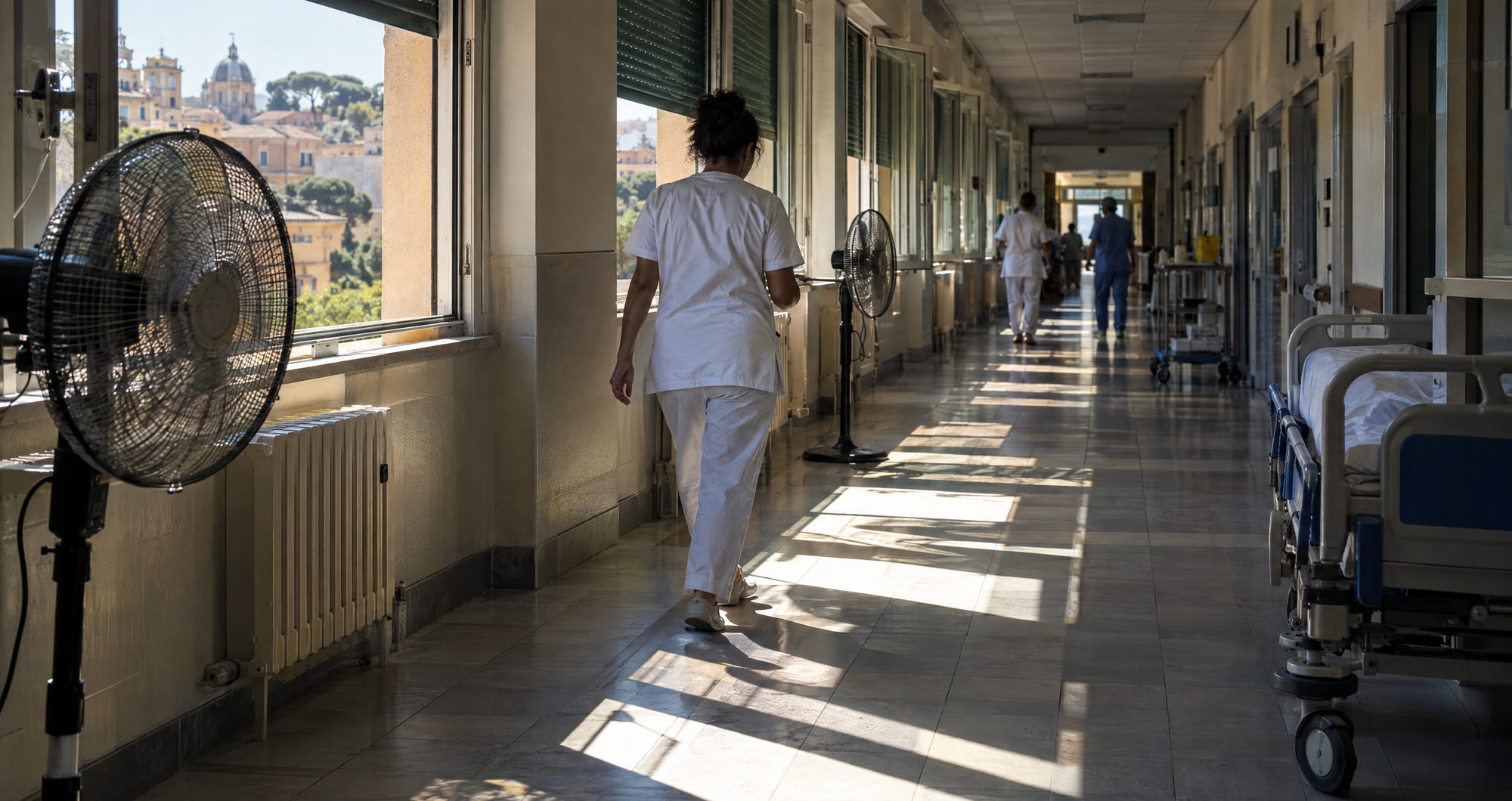

More than 1,200 doctors, nurses and health researchers from 27 countries have signed an open letter calling for binding European rules on heat protection, warning that the measures currently proposed will not be enough to prevent deaths in future summers.
The letter, published on 5 November and titled Another deadly summer in Europe: a radical change is needed in ambition and resources, will be delivered to EU institutions on 10 December, the day before environment ministers adopt their first position on the European Climate Resilience Law.
What the signatories want
The letter sets out six demands. The first is binding adaptation obligations with measurable health outcome targets, rather than the voluntary frameworks that currently guide national planning.
The second is an EU heat-health action plan supported by an emergency adaptation fund, so that countries facing extreme events can draw on resources without negotiating new budgets in the middle of a crisis. The third is a directive on occupational heat with binding temperature thresholds and automatic work restrictions, covering outdoor workers, kitchens, warehouses and public transport.
The fourth calls for passive cooling in existing housing, such as shading, insulation and ventilation, rather than relying on air conditioning that increases energy demand. The fifth is a phase-out of fossil fuel subsidies, which the signatories estimate exceed €400bn a year. The sixth is a commitment to fund the health surveillance and research needed to measure whether any of it works.
The evidence behind the warning
The letter follows a summer in which Western Europe recorded its hottest season on record. Heatwaves and wildfires are estimated to have cut EU economic output by close to 1 per cent this year, around €180bn, through lost productivity, damaged infrastructure and emergency spending.
The initiative was led by the Planetary Health Alliance Europe Regional Hub, with its European secretariat coordinated by the Barcelona Institute for Global Health. It builds on the European Declaration on Heat and Health, signed by 129 organisations in August, which set out principles but no enforceable obligations.
Josep Maria Antó, of the Barcelona Institute, said the existing initiatives are insufficient for the scale of the risk, and that the gap between what is known about heat mortality and what is being done about it has widened rather than closed.
Why heat is a health issue rather than a weather story
Excess deaths during heatwaves are concentrated among older people, people with cardiovascular and respiratory conditions, outdoor workers and those living in poorly insulated homes. The deaths are often recorded as heart attacks, strokes or respiratory failure rather than as heat deaths, which makes the scale of the problem easy to underestimate.
Hospitals and ambulance services face surges that they are not staffed to absorb, and the effects persist for days after temperatures fall. Cities are worse affected than surrounding countryside because concrete and asphalt retain heat overnight, denying residents the recovery period that the body needs.
The policy response has focused on warning systems, which save lives but do not change the underlying exposure. The signatories argue that the next step is to change buildings, working conditions and public spaces so that heat becomes less dangerous in the first place.
The politics
The Climate Resilience Law, proposed on 27 October, is the vehicle for most of what the letter asks for. Its scope and legal force are being negotiated, with member states reluctant to accept binding targets that would require spending commitments.
Health ministers have been more receptive than environment ministers in several countries, because the costs of heat fall on health systems that are already under strain. Whether that translates into enforceable obligations will become clear when the Council adopts its position in December.
For the signatories, the test is straightforward. A law that sets targets without funding, monitoring or consequences will not protect anyone, and the doctors who signed the letter will be treating the same patients next summer.







