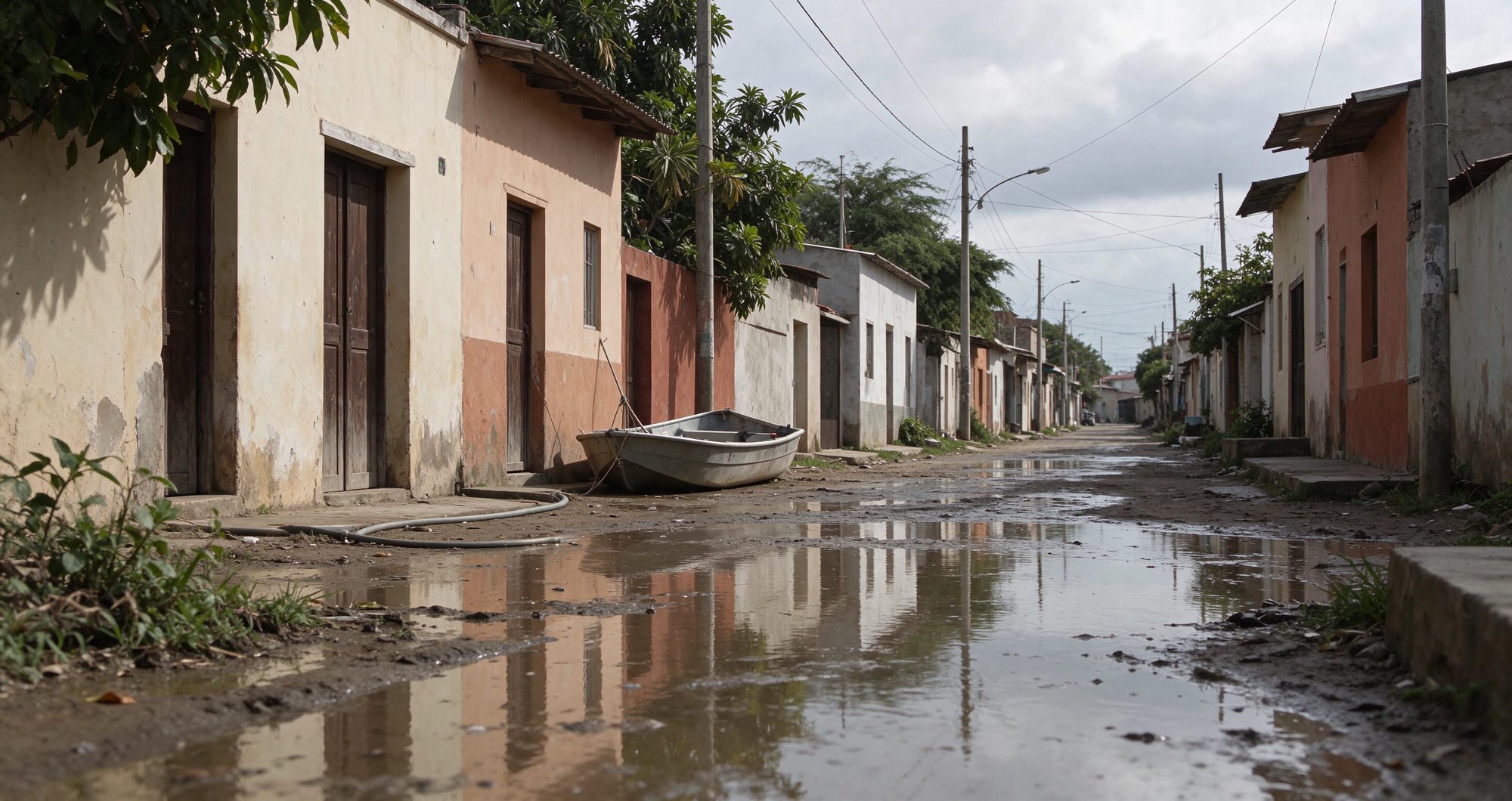

Heavy rain linked to El Niño has flooded streets and homes in Peru and Ecuador, prompting boat rescues in the Peruvian city of Piura and leaving residents of the Ecuadorian city of Manta moving through deep water after rivers overflowed.
In Piura, northern Peru, streets filled with waist-high water following 12 hours of heavy rainfall that began on Thursday, 26 November. A preliminary assessment put the number of affected families in the city’s urban areas at approximately 2,000. That estimate concerns families whose homes were flooded, not a confirmed count of people evacuated.
The disruption continued into Friday, with emergency teams working to remove trapped residents and drain accumulated water. In neighbouring Ecuador, the national rainfall-emergency toll had reached 34 deaths. That is a cumulative figure for the emergency period beginning on 29 August, rather than the number killed in Friday’s flooding or in Manta alone.
Boat rescues and drainage repairs in Piura
Peruvian army personnel used boats to reach people isolated inside their homes in Piura’s Ignacio Merino neighbourhood. Evacuations were coordinated with police rescue teams, with priority given to older people, those with reduced mobility, patients, women and children.
Soldiers also carried possessions out of flooded properties, including bicycles, backpacks and pushchairs. More than 350 people were rescued and evacuated using boats and kayaks during the response in Ignacio Merino.
A rainwater collection and evacuation system serving the neighbourhood temporarily stopped working after floodwater rose above the height of its electrical control panel. A water-transfer unit was installed to lower the flooding and allow the system to resume operation, moving accumulated water towards the Piura River.
The drainage system has been restored to working order. The installation of a second water-transfer unit was also ordered to speed up the removal of water from the affected area. Restoration of the system does not mean that all flooded homes have been drained or that residents can yet return to them.
Pumping and drainage work was also taking place in the districts of Castilla and Veintiséis de Octubre. Elsewhere, army personnel worked to remove rainwater from properties near the La Tina road in Bellavista district, in Sullana province.
Shelter, water and medical assistance
A shelter in Los Algarrobos was available to receive affected families. Further shelter spaces were being coordinated in Castilla and Veintiséis de Octubre, where the response included plans to provide food, water and clothing.
In Ignacio Merino, 1,500 litres of water and 700 humanitarian aid baskets were delivered to families. The baskets contained food including rice, pasta, sugar, oil, tuna, milk and oats, alongside cleaning soap and insect repellent.
Emergency medical personnel were deployed to provide care to affected residents. Response teams were due to remain in the neighbourhood until the accumulated water had been removed.
Ecuador faces widespread rainfall damage
In Manta, on Ecuador’s Pacific coast, two rivers broke their banks. Residents moved through water reaching chest height in some streets, while others floated on mattresses. Firefighters used canoes to reach flooded areas.
The flooding formed part of a wider emergency affecting coastal provinces, including Esmeraldas, Guayas, Los Ríos and El Oro. Tens of thousands of people have been affected during the emergency period, with damage extending to homes and transport infrastructure. The national death toll includes rainfall-related disasters across Ecuador, not just river flooding in the coastal city.
El Niño involves rising surface temperatures in the central and eastern equatorial Pacific Ocean, with changes to wind and rainfall patterns extending beyond the ocean. Both Peru and Ecuador have declared emergencies over the phenomenon. The latest flooding has brought immediate rescue, drainage and shelter needs as the countries contend with its effects.