

Mary-Brenda Akoda, 28-year-old Founder of GenScan AI, was awarded The Nigeria Prize for Science and Innovation 2026, one of Africa’s most prestigious prizes, receiving the US$100,000 award at The Grand Award Night held in Lagos, Nigeria, on 9th October.
Akoda has made history as the first female and youngest winner of the Nigeria Prize for Science and Innovation (NPSI) as an individual recipient, marking a significant milestone in the Prize’s 22-year history. No one from the Gen Z or Millennial generation has won the prize before — a remarkable achievement for a young Nigerian woman in science and technology for a prize many believed was reserved for professors.
The recognition is particularly significant given that no winner was declared in 2025, when none of the 112 entries met the Prize’s rigorous standards. Open to scientists and innovators worldwide, regardless of nationality, the competition retained its theme of Artificial Intelligence, ICT and Digital Technologies for 2026, attracting a record 237 entries. Akoda’s innovation was unanimously recommended by the independent Panel of Judges and endorsed by the Advisory Board, underscoring the Prize’s commitment to scientific excellence, innovation and real-world impact.
An Imperial College-trained AI research scientist, Google DeepMind Scholar, and former Microsoft software engineer, Akoda founded GenScan AI after witnessing first-hand the devastating impact that delayed diagnosis has on patients and families facing time-critical conditions such as stroke and cancer.
GenScan AI’s software, GenMRI, uses advanced AI to reduce Magnetic Resonance Imaging (MRI) scan times by up to 90% — for example, from 20 minutes to as little as 2 minutes – without requiring new hardware. By enabling faster, safer and more accessible imaging, the technology has the potential to improve healthcare outcomes for patients globally.
The innovation originated from her postgraduate artificial intelligence research at Imperial College London, and since its incorporation in January this year, GenScan AI has received recognition from Innovate UK’s Women in Innovation, the NHS Clinical Entrepreneur Programme and the Entrepreneurs’ Award in Social Innovation.
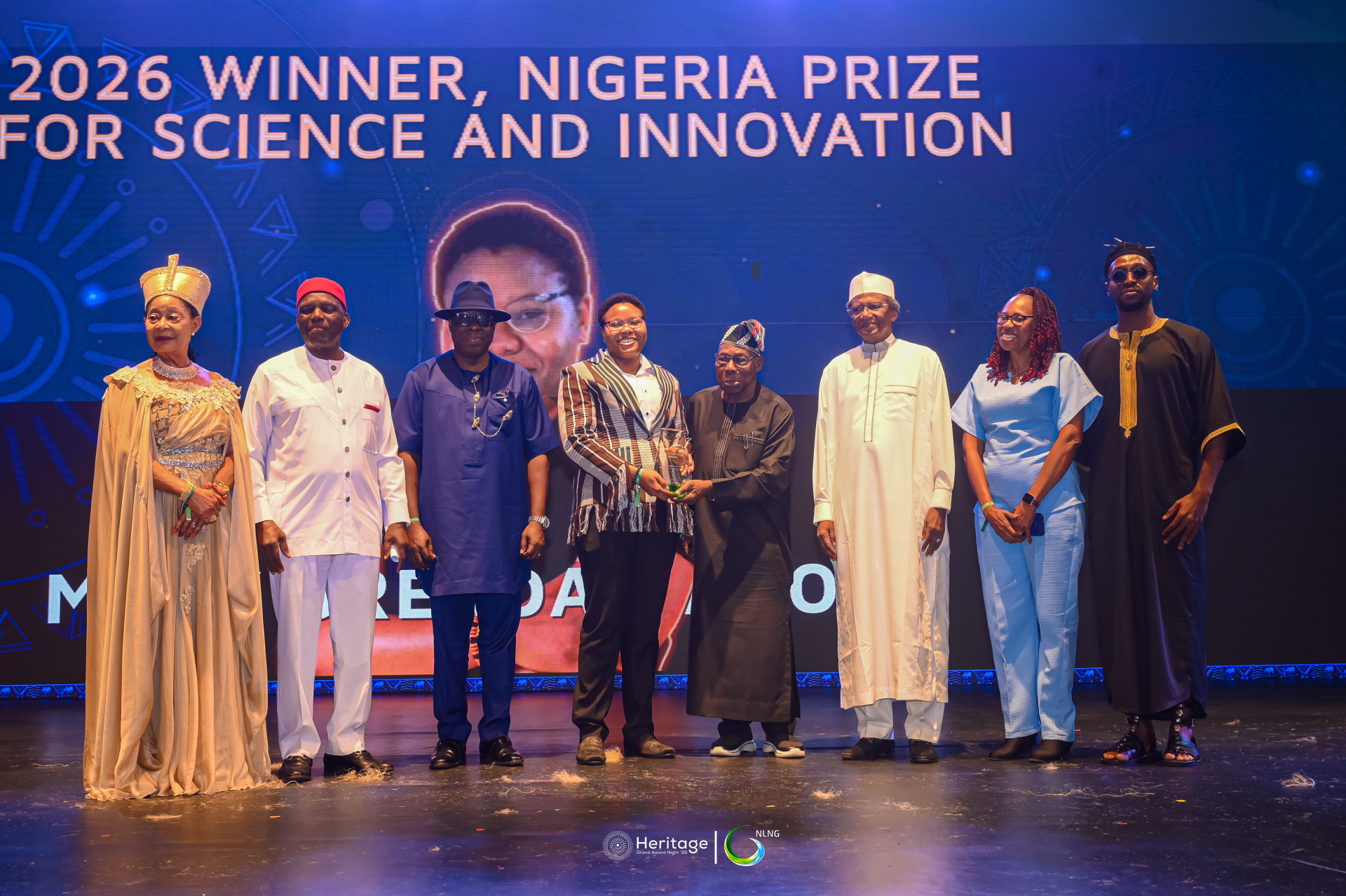
Mary-Brenda Akoda, Founder of GenScan AI, said:
“GenScan was founded on a simple belief that no one should suffer or die because of a delayed diagnosis. I’ve been fortunate to receive international awards and recognition, but there is something incredibly special about being recognised by your home country.
“It’s a tremendous validation of the mission we are building towards: making medical imaging and diagnostic workflows faster, safer, and more accessible, starting with MRI.
“The prize money will contribute to our next steps towards clinical pilots and regulatory approval. We are also seeking additional funding partners as we work towards our first commercial deployments in the second half of 2027.
“Ultimately, success for us means helping millions of patients, and eventually billions, receive life-saving diagnoses sooner. It means enabling healthcare providers to dramatically increase their imaging capacity using existing scanners, and potentially save millions of pounds that would otherwise be spent on additional scanners.”
GenScan AI’s GenMRI has been retrospectively validated on over 8,000 MRI images and achieved up to 99.7 per cent similarity to conventional MRI scans. A more important test has involved an early blinded assessment by a consultant radiologist at Buckinghamshire NHS Hospital, who was presented with conventional and GenMRI-accelerated images without knowing the difference. The GenMRI images were scored diagnostically equivalent to the conventional MRI images in all the cases that were assessed, despite the potential 90 per cent reduction in scan time.
The judges considered GenScan AI to have the strongest combination of scientific innovation, technical soundness, developmental impact and commercial scalability potential among the three shortlisted entries. They noted that its ability to improve scanner utilisation, reduce patient waiting time and potentially expand access to MRI services makes it particularly relevant to healthcare systems in resource-constrained environments such as Nigeria.
Chairman of the NPSI Advisory Board, Professor Barth Nnaji, said the unanimous decision to recognise GenScan AI reflects the quality of the innovation and its potential to address important healthcare challenges.
A First-Class graduate of Computer Science (Artificial Intelligence and Machine Learning) from Goldsmiths, University of London, Akoda holds a Master of Research with Distinction in Artificial Intelligence and Machine Learning from Imperial College London, where she was the first and only Google DeepMind Scholar in the programme’s history. She has also worked as a software engineer and AI research scientist at Microsoft, including with the Microsoft Mixed Reality and AI Research Lab in Cambridge.