
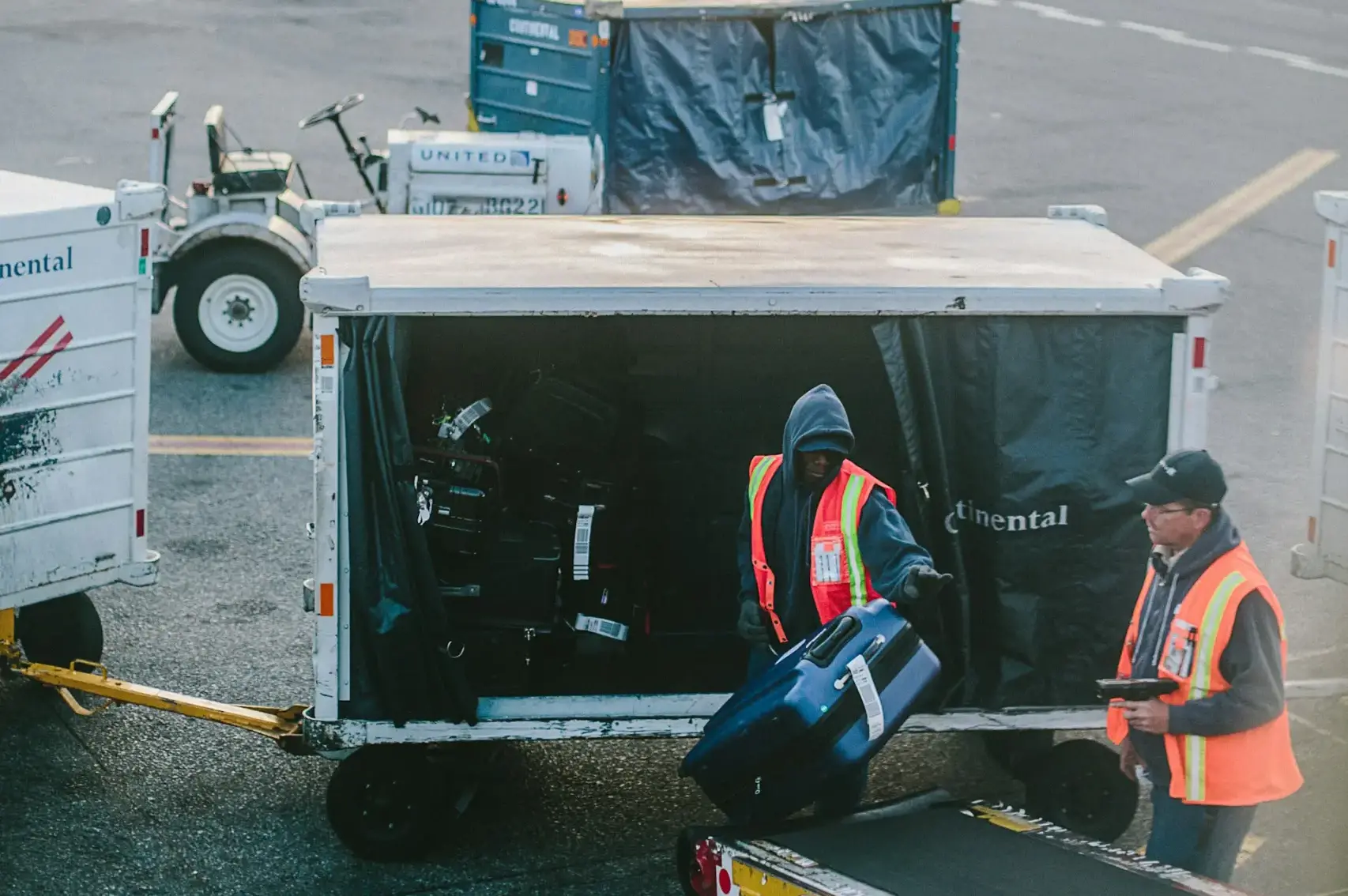

Ground handling is vital for all airports and aircraft. Many individual jobs are included within ‘ground handling’ and they all have their own set of requirements. Each job plays its own part in ensuring aircraft are ready for their next flight promptly, and that flights are as safe as can be.
From fuelling agents and maintenance technicians to cargo handlers and aircraft marshals, this guide covers the 13 main types of ground handling jobs and the role they play.
1. Ramp Agents
Ramp agents, also known as baggage handlers, are responsible for loading and unloading luggage, cargo, and mail from an aircraft. They operate baggage tugs and belt loaders, ensuring that baggage is properly labelled and directed to the correct aircraft. They handle special items like oversized luggage, pets, and hazardous materials as well, some of which may require extra training. Ramp agents also assist in aircraft pushback from the gate using tug vehicles, making sure the aircraft is correctly positioned for taxiing.
2. Aircraft Cleaners
Aircraft cleaners make sure the interior of the aircraft is clean and presentable for passengers. Their tasks involve cleaning and sanitising the seats, tray tables, and toilets. They remove any rubbish and top-up supplies such as magazines, safety cards, earphones, and any other complimentary items.
3. Fueling Agents
Fueling agents are responsible for refuelling aircraft, a role that requires strict adherence to safety protocols to prevent accidents. They operate fuel trucks and hydrant systems, monitor fuel levels, and ensure the correct amount of fuel is delivered. Additionally, they inspect fuel for contaminants and maintain their fueling equipment to make sure everything runs smoothly.
4. Maintenance Technicians
Maintenance technicians, also known as ground mechanics, handle routine maintenance and minor repairs on aeroplanes. They conduct pre-flight and post-flight inspections and perform routine maintenance tasks such as checking tyre pressure and oil levels. Coordinating with the flight crew and ground staff to address any technical issues is a crucial part of their job, as this allows them to make sure the aircraft is safe and ready for operation.
5. Ground Support Equipment Operators
These operators handle various equipment necessary for servicing aircraft on the ground. They operate air conditioning units, ground power units, and air start units, ensuring the aircraft’s systems are functioning properly while on the ground. During winter months, they manage de-icing equipment, making sure aircraft are free of ice and snow. They also maintain all of the ground support equipment which is important for smooth operations at busy airports.
6. Passenger Service Agents
Passenger service agents are the frontline staff who assist passengers during their time at the airport. They check in passengers and issue boarding passes, assist with baggage check-in, and handle special requests. They also provide information and resolve passenger issues, which helps promote a better customer experience. Coordinating boarding and deplaning processes is another important aspect of their role, helping to manage the flow of passengers efficiently both into and out of airports.
7. Aircraft Marshals
Aircraft marshals, or ramp marshals, guide aircraft in and out of parking positions. They use hand signals and wands to direct pilots during taxiing which helps aircraft get properly positioned before using the runway. They also keep the ramp area clear of obstacles which is important for safety. Communicating with the flight crew and control tower to coordinate aircraft movements is also a key part of their responsibilities.
8. Catering Coordinators
Catering coordinators are responsible for the delivery and storage of food and beverages on aircraft. They make sure food and drink items meet safety and quality standards before loading and unloading catering trucks. Coordinating with flight attendants to confirm catering requirements is another important part of their job and this helps passengers have the best in-flight experience possible.
9. Cargo Handlers
Cargo handlers manage freight and mail by loading and unloading cargo from aircraft holds. When they do this, cargo must be properly secured and balanced to maintain aircraft stability. Handling special cargo such as perishable items or hazardous materials requires careful attention and adherence to regulations. This allows goods and cargo to be transported safely and promptly.
10. Dispatchers
Dispatchers play an important role in coordinating various ground-handling activities. They plan and manage aircraft turnaround schedules by coordinating with other ground-handling departments. Communicating with the flight crew to relay important information regarding ground operations is essential for maintaining efficient workflows and ensuring flights depart on time.
11. Security Personnel
Security personnel are essential for maintaining safety and compliance with regulations. They conduct security screenings of passengers, luggage, and cargo to prevent unauthorised items from being transported. Monitoring airport premises to prevent unauthorised access and ensuring compliance with aviation security protocols are critical aspects of their job, protecting passengers, staff, and aircraft.
12. De-Icing Operators
For airports in colder climates, de-icing operators must apply de-icing and anti-icing fluids to aircraft surfaces to avoid potential build-up. This requires communication and coordination with the flight crew and air traffic control to allow enough time for timely de-icing operations to take place. Doing this successfully helps prevent delays and ensures departures happen safely.
13. Operations Coordinators
Operations coordinators oversee the overall ground handling process to ensure efficiency and safety. They monitor ground handling activities and make real-time adjustments as needed. Liaising between airlines, ground handling teams and airport authorities is a significant part of their role, allowing for smooth operations and adherence to regulatory and safety standards.
Ground handling encompasses a broad range of jobs, all of which help aircraft meet high levels of customer satisfaction and run as efficiently and safely as possible. The ground handling team have a lot of responsibilities, from ramp agents and aircraft cleaners to fuelling agents and dispatchers. Each job has its own set of challenges but they all require a high level of communication and cooperation with other ground handlers, cabin crew, and air traffic control. As air travel continues to grow, the importance of skilled ground-handling professionals remains as important as ever.
Feature image by Calle Macarone on Unsplash







