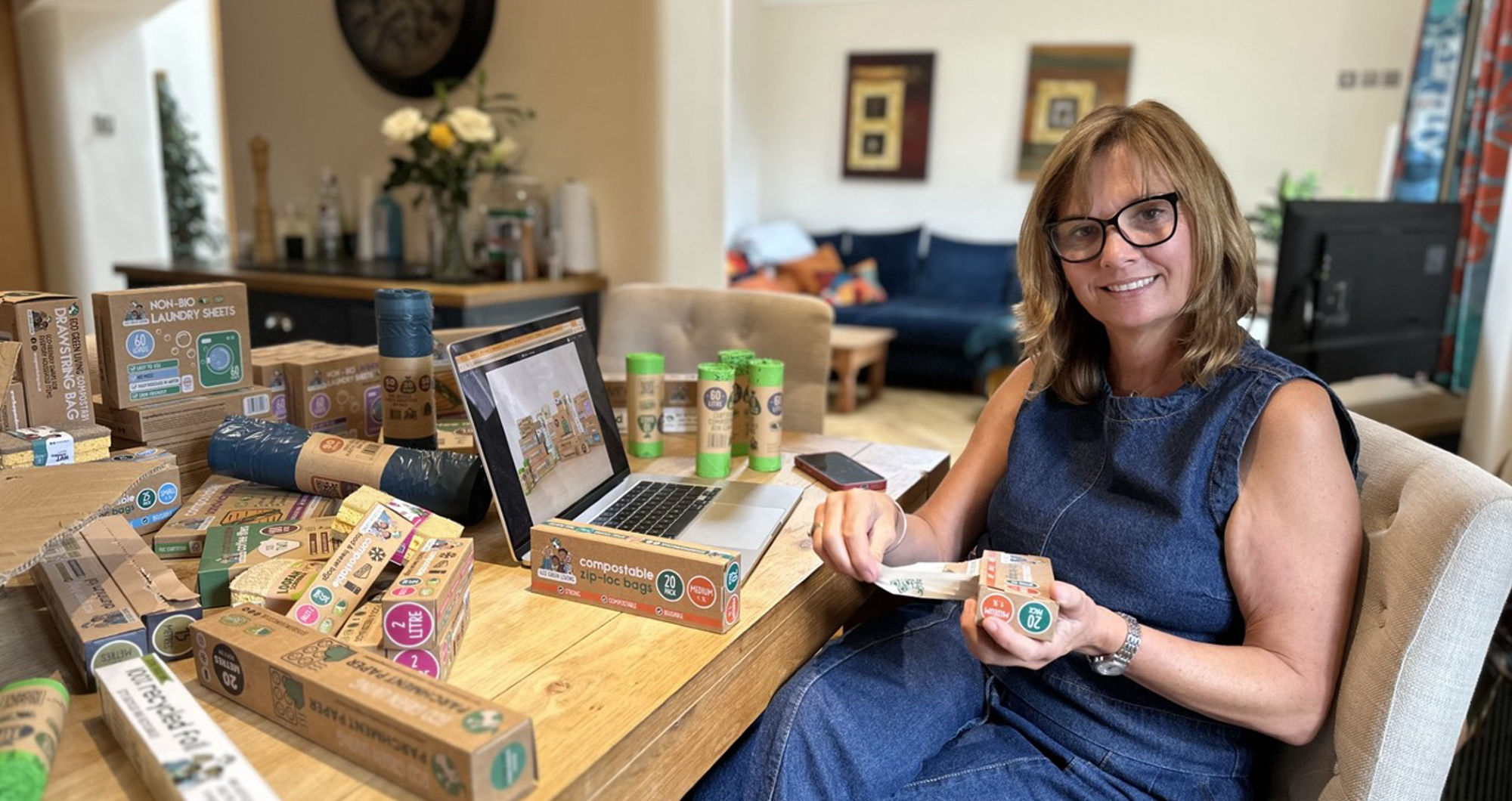

Julie Cook, founder of Eco Green Living, is on a mission to make sustainable living simpler, more practical and more accessible. For many people, living more sustainably can feel like another thing to add to an already overflowing to-do list.
Change everything you buy. Avoid plastic. Understand complicated labels. Spend more money on supposedly greener alternatives.
But entrepreneur Julie Cook believes it doesn’t have to be that complicated.
As the woman behind Eco Green Living, Julie is building a business around a much simpler idea: helping people make more sustainable everyday choices without completely changing the way they live.
From compostable waste bags to alternatives to everyday kitchen and household essentials, Julie’s focus is on the small, practical swaps that can become part of normal life.
And behind the products is an entrepreneur with a much bigger ambition.
Building a business with purpose
Eco Green Living operates in a rapidly changing marketplace.
Consumers are increasingly conscious of the environmental impact of what they buy, while businesses and households alike are looking more closely at waste, packaging and their reliance on traditional plastics.
For Julie Cook, this presents both an opportunity and a responsibility.
Rather than sustainability being something reserved for people with specialist knowledge, large budgets or perfectly zero-waste homes, she wants greener choices to become easier to understand and easier to make.
It’s an approach that has shaped the development of Eco Green Living and the products the company brings to market.
The range includes everyday items such as compostable waste bags alongside alternatives to familiar kitchen products including cling film, parchment paper and foil.
These aren’t dramatic lifestyle changes. They’re products people already use, reconsidered through a more environmentally conscious lens.
And that, Julie believes, is where meaningful change can begin.
Making sustainability feel achievable
One of the biggest barriers facing the environmental movement isn’t necessarily a lack of interest.
It’s overwhelm.
People are constantly being told what they shouldn’t buy, shouldn’t use and shouldn’t throw away. Add the pressures of household budgets and busy lives, and even those who genuinely want to make better choices can struggle to know where to begin.
Julie’s approach is deliberately more practical.
Instead of expecting people to transform their entire lifestyle overnight, Eco Green Living focuses on providing alternatives that can slot into existing routines.
A household will still need rubbish bags. A family will still prepare and store food. Businesses will still need everyday consumables.
Changing the product rather than demanding a completely new behaviour can make sustainability significantly more approachable.
It also reflects Julie’s wider belief that environmental responsibility needs to work in the real world if it is going to achieve widespread adoption.
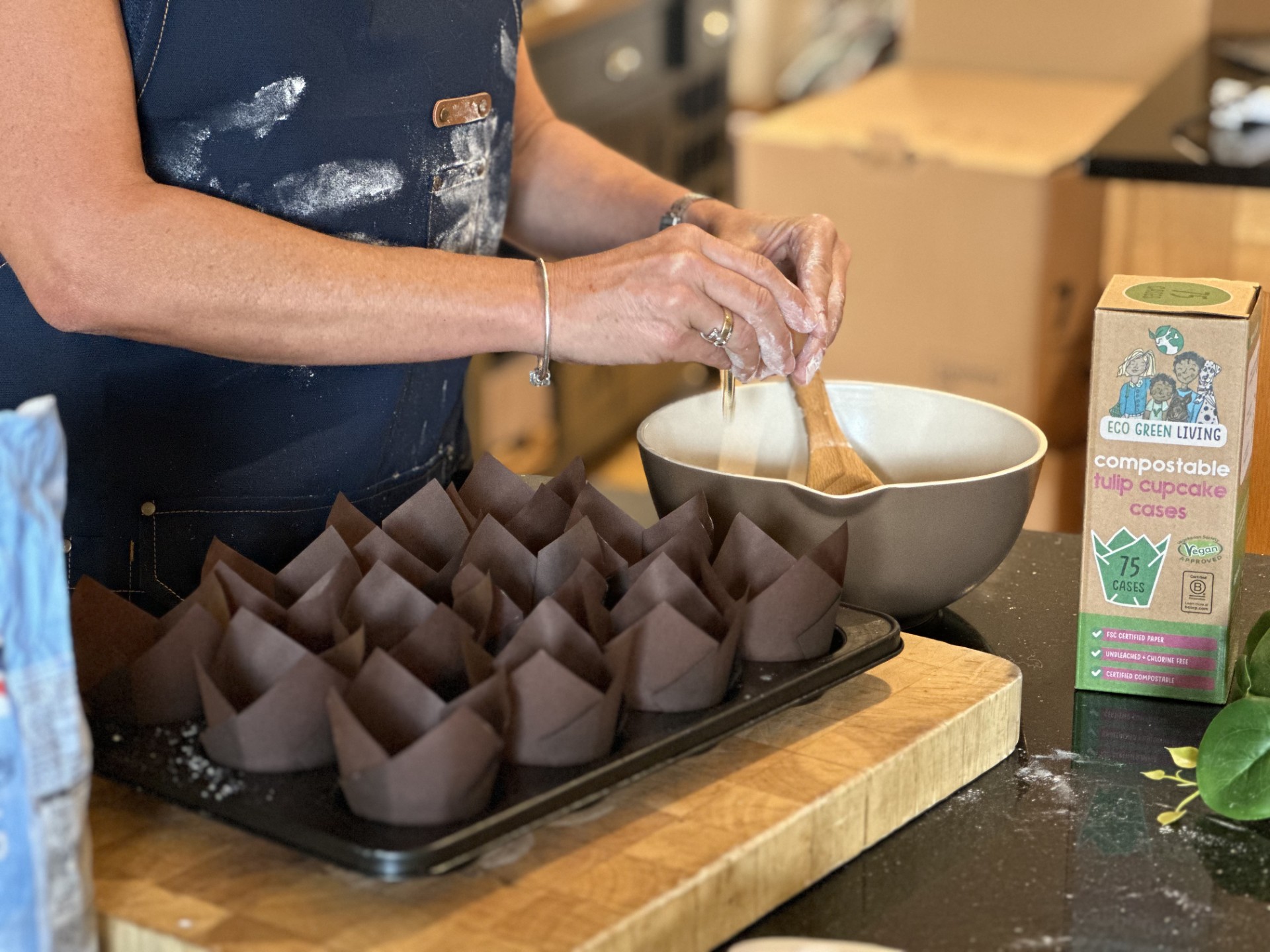
Julie Cook is using Eco Green Living’s compostable cupcake cases as part of the brand’s range of more sustainable everyday alternatives.
Entrepreneurship in a changing market
Building a purpose-led company brings its own challenges.
Eco-conscious consumers are asking increasingly sophisticated questions about the products they purchase, while businesses operating within the sustainability sector must navigate changing expectations, innovation and an increasingly crowded marketplace.
For Julie, education has therefore become an important part of the company’s wider mission.
It’s not simply about selling an alternative product. It’s about encouraging people to think differently about everyday consumption and showing that seemingly insignificant purchasing decisions, multiplied across thousands of homes and businesses, have the potential to create a much larger impact.
That philosophy has also seen Julie increasingly step forward as the voice behind the company.
Rather than allowing Eco Green Living to exist simply as a product brand, she is using her experience to contribute to wider conversations around sustainability, consumer behaviour, reducing waste and making environmentally conscious choices more accessible.
Recognition for a growing green business
That work is beginning to gain wider recognition.
In 2026, Julie was named a finalist in the Enterprise Vision Awards (EVAs) in the Sustainable Business category.
The recognition marks another milestone for both Julie and Eco Green Living as the business continues to grow its profile within the sustainability sector.
But awards and recognition are only part of the bigger picture.
The real ambition is to help shift sustainable products away from being viewed as specialist alternatives and towards becoming completely normal everyday choices.
Because the environmental challenge isn’t going to be solved by a small number of people living perfectly sustainable lives.
Progress is far more likely to come from millions of people making better choices where they realistically can.
Small changes can create a much bigger impact
It’s an idea that runs throughout Julie’s work.
Sustainability doesn’t always need to begin with dramatic gestures.
Sometimes it starts underneath the kitchen sink.
It can be the rubbish bag you choose, the products you use when preparing dinner, or simply stopping for a moment before automatically buying the same household item you’ve purchased for years.
One swap might feel insignificant.
Thousands of people making those swaps repeatedly is something very different.
For entrepreneurs like Julie, this is also where business and environmental impact can work alongside one another.
Companies have an opportunity not simply to respond to changing consumer behaviour but to help shape it, making better alternatives easier to find and simpler to understand.
The entrepreneur behind the mission
As Eco Green Living continues to develop, Julie’s role is evolving too.
She isn’t simply building a company that sells sustainable products. She is becoming part of a much broader conversation about what realistic environmental responsibility looks like for modern households and businesses.
Her journey is a reminder that entrepreneurship doesn’t always have to begin with creating something consumers have never seen before.
Sometimes innovation comes from looking at the things we use every single day and asking a much simpler question:
Could we do this better?
For Julie Cook and Eco Green Living, the answer is yes — one everyday swap at a time.
To find out more about Julie Cook and Eco Green Living, visit the Eco Green Living website.