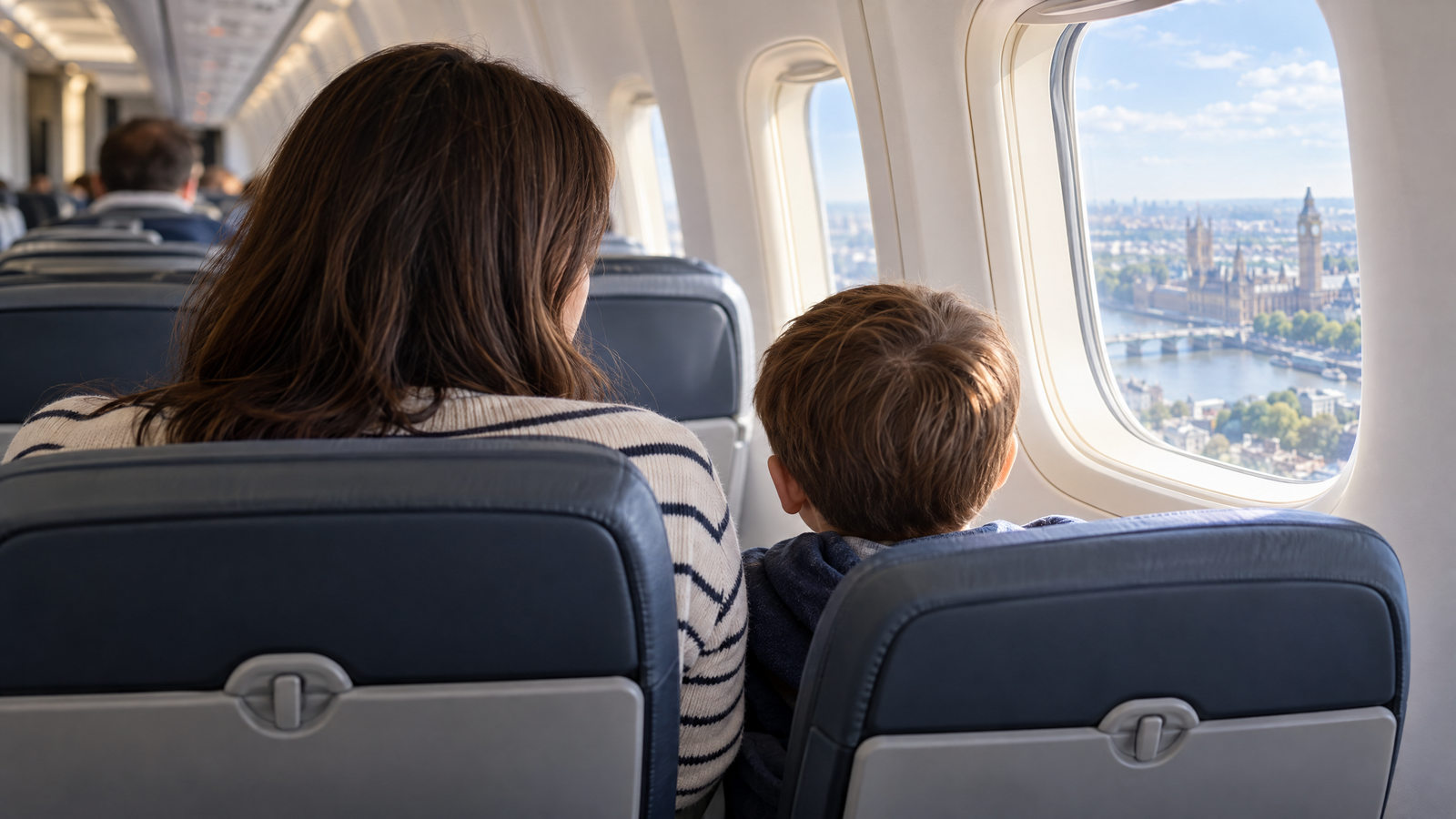
Families flying in the UK could gain new protections against extra charges for sitting together under a government aviation-consumer package that would require airlines to seat children under 14 next to a parent or accompanying adult without an additional fee. The proposed measures would also allow passengers to correct simple booking-name errors free of charge.
The reforms are not yet in force. The government says the changes are set to be delivered following Royal Assent of the Civil Aviation Bill, and ministers intend to consult before implementation. The aim is to have the new standards in place before next summer’s holiday season, but no firm commencement date has been set.
What the proposals would change
The Department for Transport says a parent and child can currently be charged up to £104 on a return journey to sit together. Under the proposed standard, airlines operating in the UK would have to seat a child under 14 with a parent or accompanying adult without charging a seating fee for that arrangement.
The package also covers booking-name errors. The department says passengers can face charges as high as £40 for minor mistakes or administrative tweaks. The government’s plan would make simple corrections available without charge, reducing the risk that a typing error or small amendment adds to the cost of a journey.
Ministers are presenting the measures as a way to make aviation charges more consistent and easier for passengers to understand. The government says most UK airlines already offer some protection against hidden costs, but argues that the new reforms would create greater consistency across all airlines operating in the UK.
Legal status and timing
The package depends on the Civil Aviation Bill completing its passage and receiving Royal Assent. Until the necessary legal and implementation steps are complete, existing airline policies and terms continue to apply.
The Department for Transport is expected to consult on scrapping charges for seating children under 14 next to an accompanying adult and for correcting minor booking errors. Final detail on how the rules will be framed will depend on the legislative process and subsequent implementation work.
The government has linked the timing of the package to next year’s summer holiday period, but passengers should not treat the changes as an immediate entitlement. For now, travellers booking flights still need to check the seating and name-correction policies of the airline they use.
Current industry practice
Airlines UK has said UK airlines already follow regulator guidance on seating children under 12 with their accompanying adult and already allow minor name corrections free of charge. That position means the proposed change should be understood as a move towards a statutory and more consistent standard, rather than proof that every family is currently being charged for these services.
The proposed age threshold is also different from the existing guidance described by the industry body. The government’s plan refers to children under 14, while the current practice highlighted by Airlines UK relates to children under 12 being seated with their accompanying adult.
The government’s announcement does not mean passengers would necessarily be able to choose any particular seat for free. The central proposal is that a child under 14 should be seated next to a parent or accompanying adult without charge. Paid seat selection for passengers who want specific seats is a separate issue and final operational detail will depend on the rules that are ultimately brought forward.
Disruptive-passenger measures
The same aviation package includes work on disruptive passenger behaviour. The government says it will work with airlines and trade unions to develop a system for sharing information on persistently disruptive passengers.
According to departmental figures, airlines logged more than 1,000 serious disruptive passenger incidents in 2025. The government has cited an example of a mid-air brawl that resulted in a flight being diverted, causing disruption for passengers and crew as well as costs for the airline.
The proposed information-sharing system is intended to make it easier to identify persistent disruptors and help airlines decide whether to extend a ban on their airline. The government is presenting this element of the package as a safety measure for staff and passengers, alongside the consumer protections aimed at reducing avoidable charges for families and other travellers.