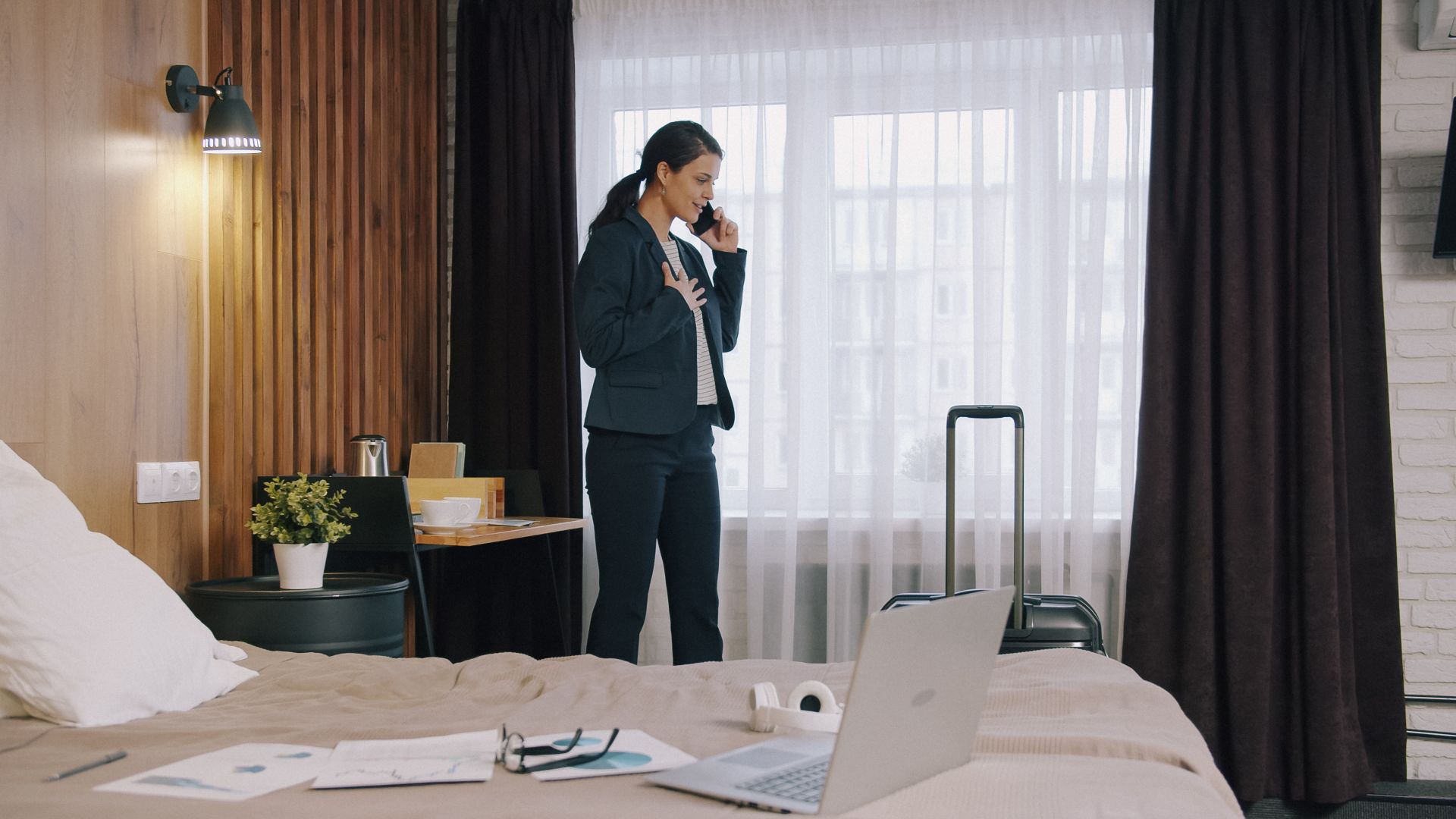

Business travellers are calling for greater choice over where they stay, as new research reveals that work trips are disrupting sleep, eating habits and exercise for millions of people who regularly travel for work.
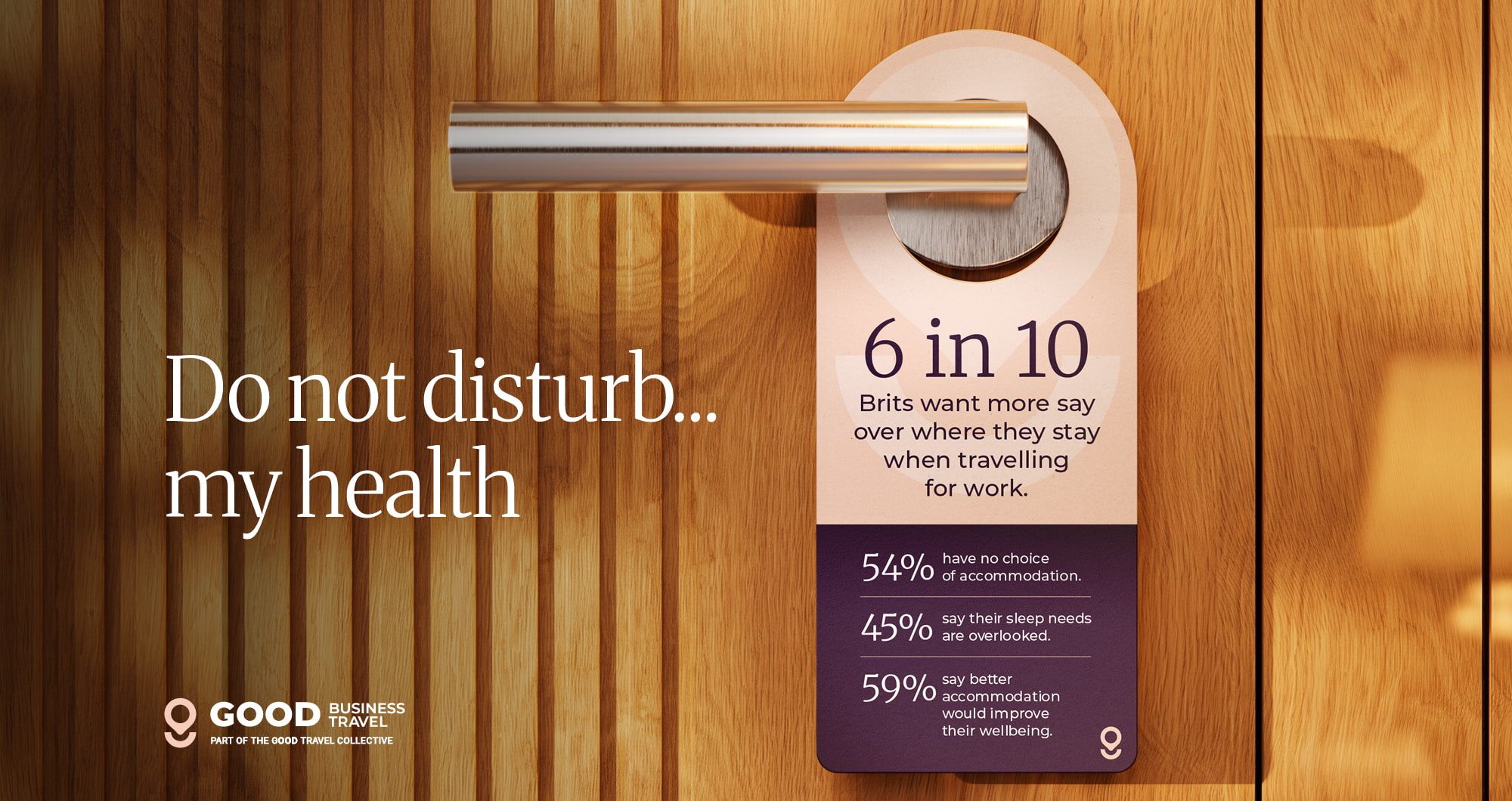
Consumer research* from human-led corporate travel management company Good Business Travel, found that over half (54%) of British business travellers have no choice over the accommodation booked on their behalf.
As a result, 51% say travelling disrupts their normal healthy eating habits, while 38% say they find it harder to stay physically active when out of office.
More than half (54%) say poor sleep during business trips affects their ability to perform at their best and another five in ten (51%) say they feel anxious or stressed when they are away from home for work.
Perhaps unsurprisingly, three in five (60%) therefore say they want more choice over where they stay in order to reclaim healthy habits.
Some workers take a week to get back to normal after a business trip
The impact of business travel doesn’t necessarily end when employees arrive home. More than half (53%) of 25-34 year olds say they need at least a week to recover and get back to their usual routines after travelling for work – the highest proportion of any age group surveyed.
Those aged 45-54 are the most likely to want greater choice over their accommodation when travelling, followed closely by 35-44 year olds .
The European cities where business travellers can stay on track
With employees often having limited influence over their accommodation, Good Business Travel analysed its internal data on the 20 most-booked business travel destinations and scored them out of 60 based on factors designed to assess how well they support healthy routines.
Munich came out on top with a score of 47.8, followed by Berlin with 45.8 and Istanbul with 45.1.
Germany featured three times in the top 10, with Hamburg also making the list alongside Paris, Brussels, Madrid, Prague, Dublin and Manchester.
The hotel chains that could make business travel easier on your health
Good Business Travel also analysed hotel chains across Europe, looking at factors including comfort, facilities and cleanliness to identify those that could best support rest and recovery for workers.
Sofitel scored highest at 45.2 out of 60, followed by NH Hotels (44) and Holiday Inn Hotels (43.8).
Other hotel chains featuring in the top 10 include Hampton by Hilton, Mercure, Hilton Hotels, Crowne Plaza and Marriott.
Natasha Inglis, Client Experience Director, said: “Business travel can be a great part of working life, but it can also make it much harder to maintain the routines that help us feel our best.
“Our research shows that more than half of business travellers have little or no say over where they stay, despite 60% wanting more choice. When you’re travelling regularly, the hotel isn’t just somewhere to sleep – it can have an impact on how easy it is to maintain your usual routine.
“For travel managers and employers, giving people more choice doesn’t necessarily mean giving them an unlimited budget. It’s about understanding what makes a hotel work for the individual and considering wellbeing alongside cost and convenience when making those decisions.”
Expert tips on how to regain control
For those who don’t have control over their travel schedule or accommodation, Independent health expert Thorrun Govind shares three simple ways to prioritise wellbeing while working away:
- Make your room work for you.
“You might not be able to choose the hotel, but you can control your environment. An eye mask and earplugs can help. Keep the room cool and as dark as possible. Try to stick to your normal bedtime routine.”
- Think about what you are eating and drinking.
“It can be tempting to rely on coffee when you are tired. Try not to have caffeine too close to bedtime. Alcohol can also disrupt sleep, even if it initially makes you feel sleepy. Keep hydrated and try to eat regular meals.”
- Get outside and keep moving.
“Natural daylight can help your body clock, especially when you are travelling across time zones. A walk between meetings is a simple way to get some movement and fresh air.
“You don’t need to completely overhaul your routine. A few simple habits can make travelling much easier on your sleep and your health.”
For more information on Good Business Travel’s Do Not Disturb research, visit: https://good-travel.co.uk/do-not-disturb/
Feature image by Vitaly Gariev on Pexels