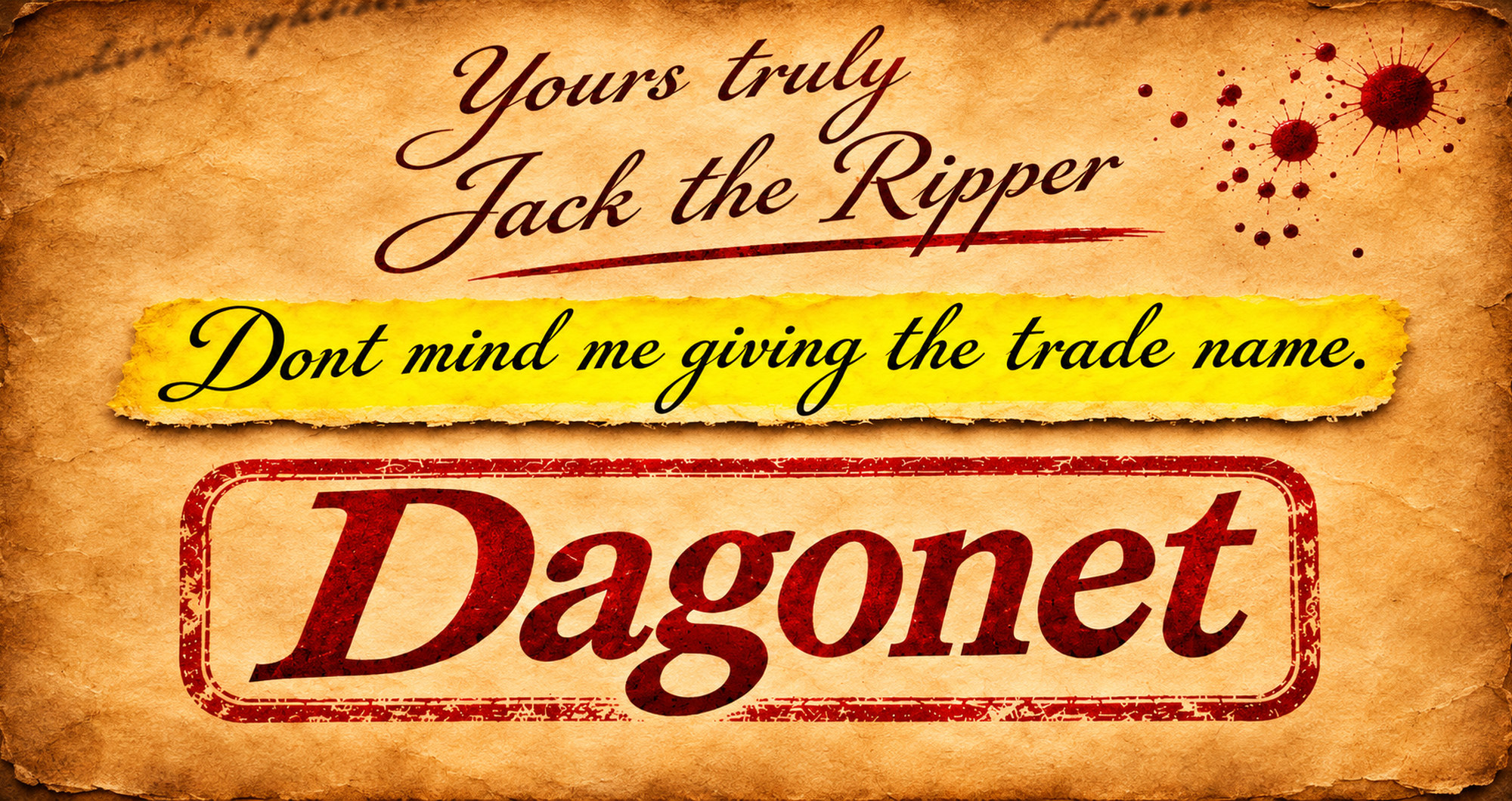

Nearly 140 years after the Whitechapel murders, a possible cryptogram identified in one of the most famous letters in British criminal history has opened a new line of enquiry into the origins of the name Jack the Ripper.
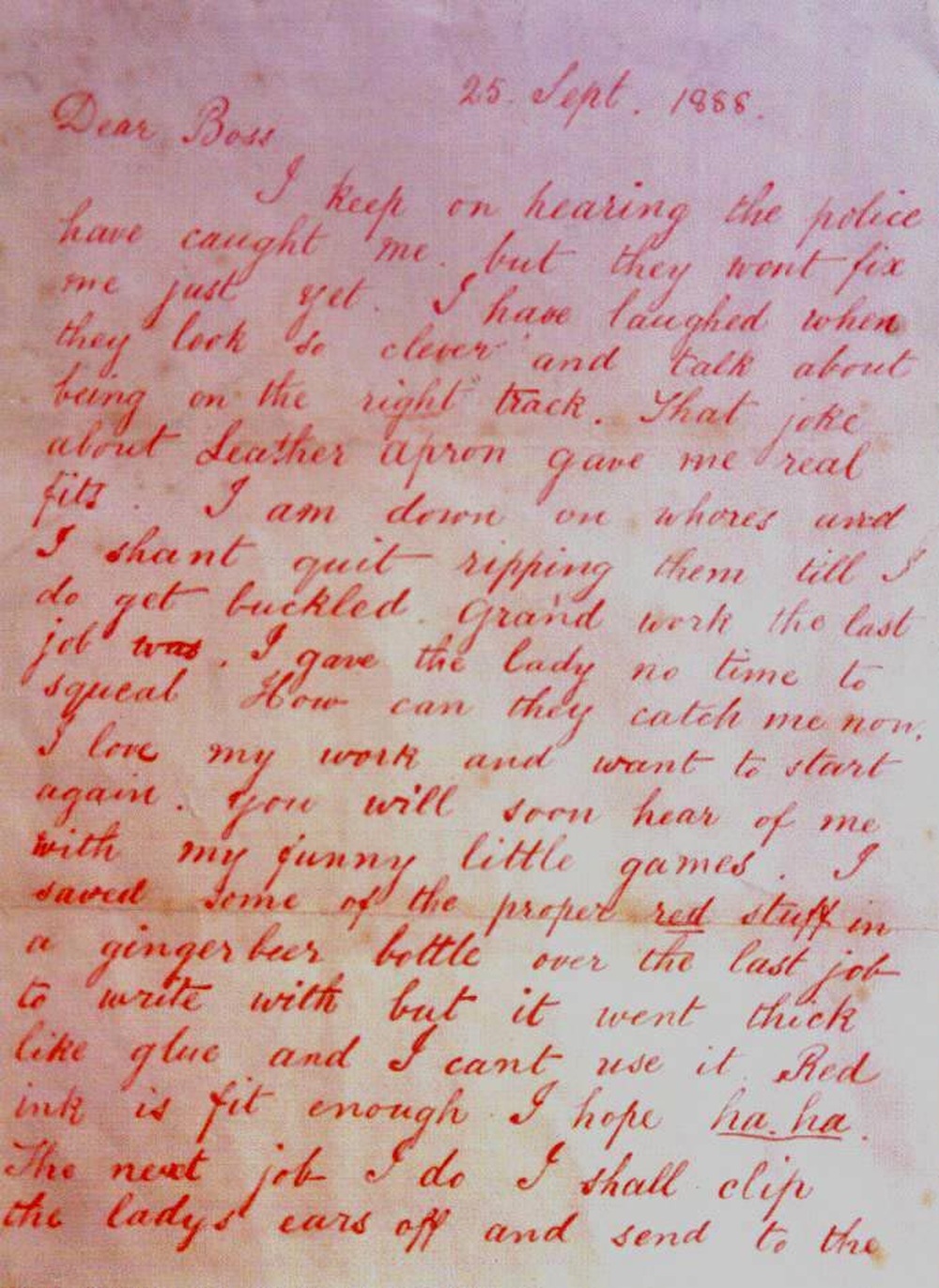
Jean Romain Cally, a French statistician with a doctorate in management sciences, a specialist in consumer psychology and an author, has identified what may be a concealed signature in the famous Dear Boss letter, dated 25 September 1888.
The name reconstructed from the letter is DAGONET, the well-known pen name of George Robert Sims, a prominent journalist and writer in Victorian London.
Seven words that may conceal a historical secret
In September 1888, the Central News Agency received a letter signed “Jack the Ripper”. The correspondence would contribute to the creation of one of the most enduring figures in criminal history.
Several senior Scotland Yard officers later expressed the view that the letter might have been a journalistic hoax. Yet the identity of the person who wrote it remains unknown.
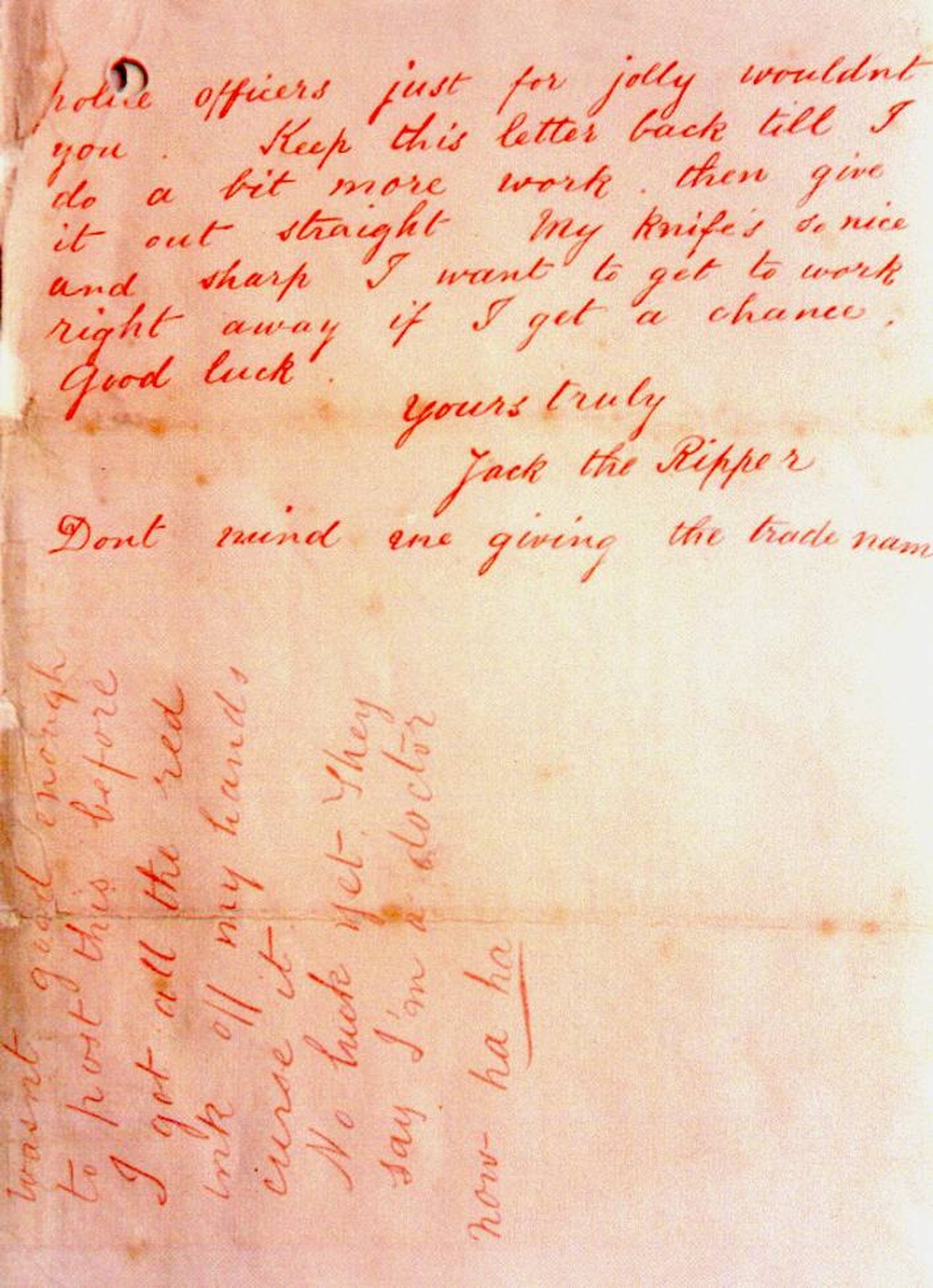
During his investigation, Cally focused on seven words written immediately beneath the famous signature:
“Dont mind me giving the trade name”
Although the sentence appears unremarkable, its structure allows the reconstruction of a particular seven-letter name.
Using a decoding procedure based on symmetrical word pairing, letter alignment and a one-column shift, the researcher obtained the name DAGONET.
The result is particularly intriguing because DAGONET was a recognised literary pseudonym. Moreover, it emerges from a sentence referring specifically to the use of a professional name, described by the writer as a “trade name”.
Could these seven words contain a deliberately concealed signature, or is the correspondence simply a coincidence?
George Robert Sims and the Victorian London press
Born in London in 1847, George Robert Sims was a celebrated journalist, novelist, playwright and columnist. He became widely known through his contributions to the weekly newspaper The Referee, where he regularly published under the pen name Dagonet.
One aspect of his work particularly attracted Cally’s attention. Before the Dear Boss letter was written, Sims had already devoted several columns to the Whitechapel murders, their treatment in the newspapers and the role of journalism in shaping public perceptions of the murderer.
Further examination of his literary works and newspaper columns revealed a number of linguistic and thematic parallels with the contents of the Dear Boss letter.
Taken individually, these observations might appear insignificant. Considered alongside the possible cryptogram, however, they provide grounds for examining whether Sims could have played a role in the conception of the famous correspondence.
Who actually invented Jack the Ripper?
Cally’s investigation deliberately distinguishes between two historical questions: the identity of the Whitechapel murderer and the identity of the person who invented the name Jack the Ripper.
The two individuals were not necessarily the same person.
If the Dear Boss letter was indeed a journalistic invention, its creator helped transform an unidentified criminal into a character whose name would become recognised throughout the world.
The reconstruction of DAGONET does not establish that the name was deliberately concealed, nor does it prove that George Robert Sims wrote the letter. Another writer could have referred to Sims, and the possibility of coincidence cannot be excluded.
Nevertheless, the discovery offers a specific, reproducible line of enquiry that historians and cryptographers can now examine.
A discovery freely available to the public
Rather than seeking to promote his book commercially, Jean Romain Cally has made his entire historical investigation, The Man Who Invented Jack the Ripper, freely available online in English, French and Spanish.
The decoding procedure, methodological controls and historical findings are also presented in research papers available on the scientific repository Zenodo.
The author’s principal objective is to encourage independent examination of his findings and open a discussion among historians, cryptographers and Jack the Ripper researchers.
Nearly 140 years after the Dear Boss letter was written, could a clue to the identity of the person who invented Jack the Ripper have remained hidden beneath the very signature he created?
The complete historical investigation, The Man Who Invented Jack the Ripper, is freely available online. Supporting research papers and methodological documentation are also available through the Zenodo research repository.
Disclosure: Jean Romain Cally is the author of the research and the book discussed in this article.