

New research from Lightspeed reveals a growing disconnect between how Londoners tip and pay service charge, compared to how they really feel.
Even though 76% of the city understands that a tip is a voluntary reward for good service and a service charge is a way for a venue to cover its costs, more than a quarter (28%) feel annoyed or pressured when seeing service charge on a bill. Despite this, 46% say they always pay it, highlighting the contradiction between what London says and what it does.
Overall, 49% of Londoners don’t think a service charge should be paid every time they dine out, with 27% stating that their experience needs to have been good enough for them to part with the extra cash.
While most diners pay service charge albeit sometimes unwillingly, there are times when they will speak their mind if they deem their experience unworthy. Many will remove the service charge if the waiter is rude (52%), the food is bad (49%), or if service is slow (43%). As the cost of living crisis continues to bite, 38% also ask to remove a service charge if it’s above 10% of the total bill.
This money-savvy approach is seen throughout the whole dining experience, with 53% of the capital looking through the bill to make sure they are being charged the correct amount for each item as it appears on the menu.
Jo Hemmings, Behavioural Psychologist, explains why our actions don’t always match our feelings when it comes to paying extra at the dinner table: “Dining out is a very social and personal occasion, whether you’re interacting with the people you’re with or the restaurant staff. Research has shown that certain groups of people, often women or younger generations, can feel uncomfortable at the idea of appearing ‘stingy’ in front of others if they were to not pay a service charge or leave a tip. This is because we come to internalise these types of charges as a moral obligation instead of something transactional, leaving us feeling as though paying is the right thing to do even if our experience wasn’t up to standard.”
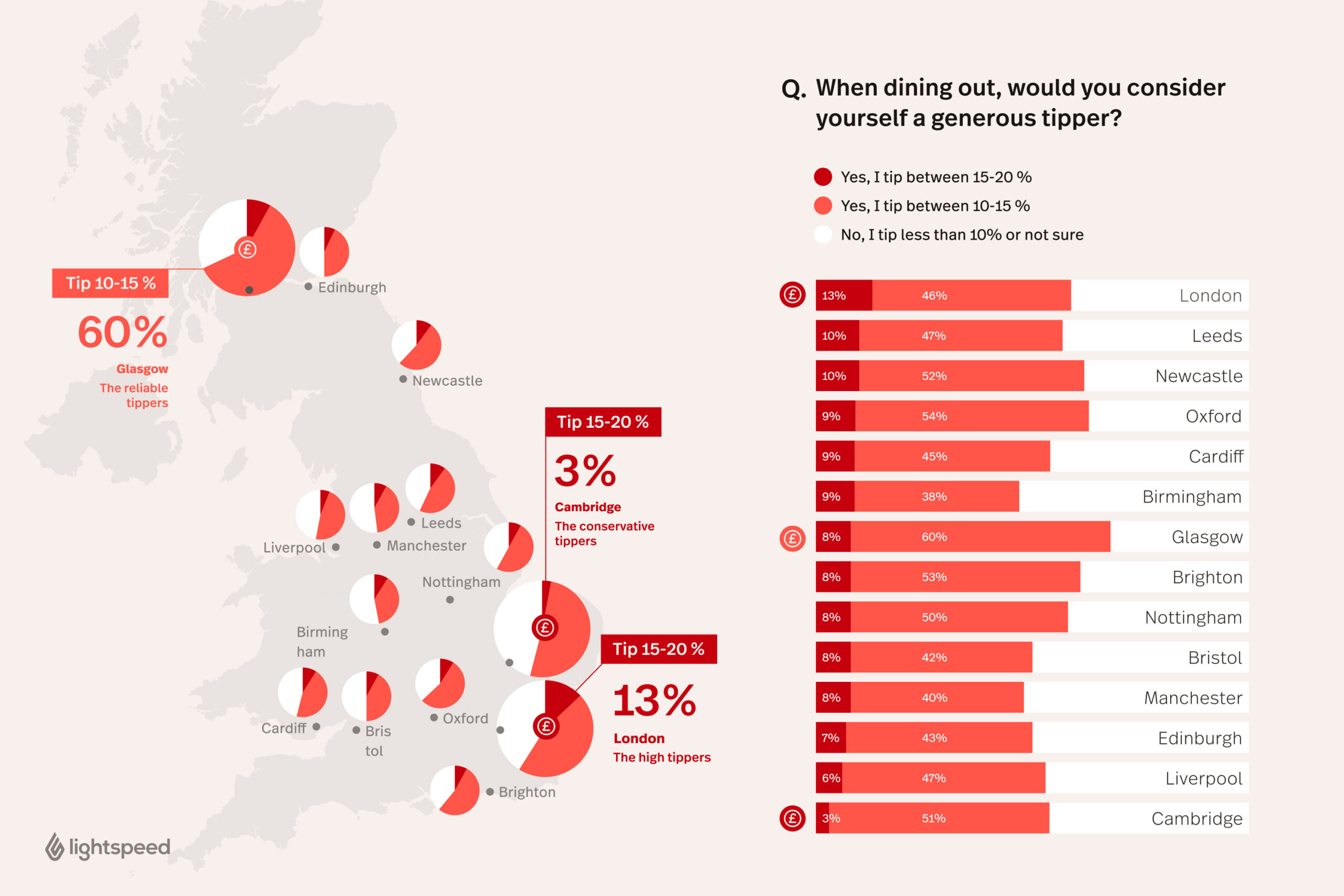
Generosity with conditions
When it comes to tipping, 49% say they’re unhappy with restaurants deciding the tip amount for them, describing it as manipulative and a loss of choice.
It’s clear that London wants to tip on its own terms, with 77% believing tipping should be optional. A large part of the capital (61%) also thinks that tipping has evolved to be more expected like in the US – but 36% don’t mind this new standard, making Londoners the most lenient in the country.
But across the UK, it’s not all silent sighing and fake smiling – Britain does see itself as a generous nation, and is happy to reward good service when it’s deserved. Over half (55%) of Brits say they are generous tippers as they give anything between 20% and 10% at the end of a meal. In fact, additional tipping on top of service charge has increased by 22% since 2023, signifying how appreciation is still shown often. When Brits do leave a tip, 69% say it’s as a genuine thank you for their experience, and 54% would even tip more if they were certain all the money went to their server.
Liam Crooks, Managing Director of EMEA Hospitality at Lightspeed, said :“Paying service charge or tipping continues to be very much up for debate amongst London’s diners, yet there’s a clear difference between how we feel and what we pay. While there’s never going to be one standard approach that works for everyone, this research shows just how important transparency, choice and trust are if hospitality businesses want customers to feel comfortable when the bill arrives.”
To help the nation find out more about their tipping habits, Jo helped Lightspeed create the five personas most Brits fall into when dining out:
The Goodwill Giver: Tips empathetically and generously.
The Silent Sigher: Tips to avoid awkwardness – even if they don’t like it.
The Tip Traditionalist: Tips modestly and occasionally.
The Service Skeptic: Tips cautiously and rationally.
The Social Performer: Tips generously and conspicuously.