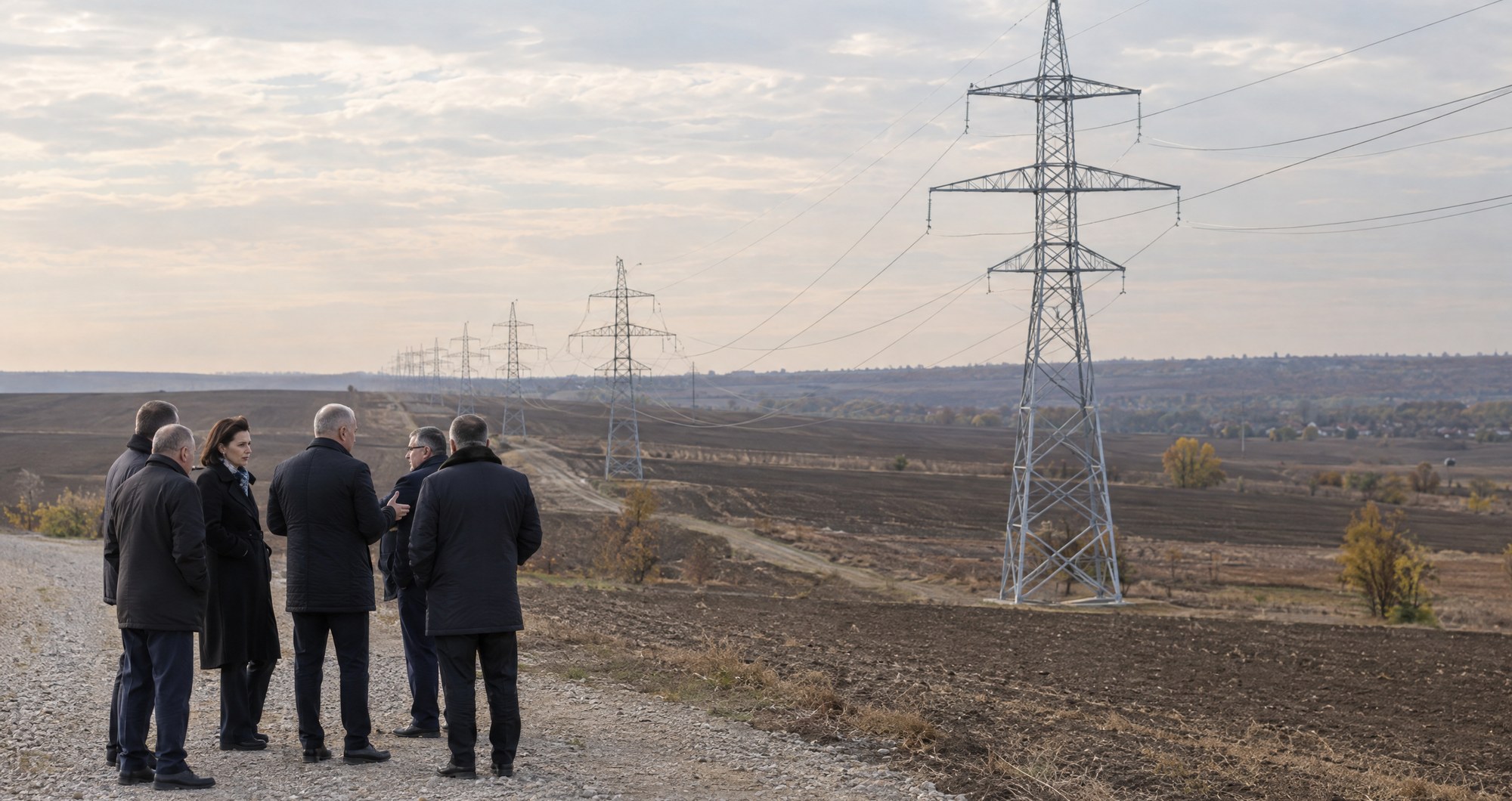

Moldova inaugurated a new electricity line on 8 November, opening a direct route to Romanian and wider European power that bypasses the Cuciurgan hub on the separatist-controlled left bank of the Dniester. The 157-kilometre connection from Vulcănești to Chișinău gives the country an alternative to a route that has left its electricity supply dependent on infrastructure controlled from Transnistria.
The 400-kilovolt line has a capacity of up to 630 megavolt-amperes and can carry more than half of Moldova’s peak electricity consumption. Its opening marks a substantial change in the country’s supply options, although European enlargement commissioner Marta Kos acknowledged at the ceremony that energy bills remain a heavy burden for households.
President Maia Sandu said nobody could blackmail Moldova any more by cutting off its electricity or heating. She also said Moldova now buys no Russian gas and that two further electricity interconnections with Romania are on the way.
A route that bypasses Cuciurgan
The new line runs from Vulcănești in southern Moldova to the capital, Chișinău. Its significance lies not just in the volume of electricity it can carry, but in the route it provides: access to Romanian and wider European electricity without passing through the Cuciurgan power hub.
That hub is controlled from Transnistria, on the separatist-controlled left bank of the Dniester. By bypassing it, the new connection reduces Moldova’s reliance on infrastructure outside the control of the authorities in Chișinău. Energy minister Dorin Junghietu said the line both reduces dependence on Cuciurgan and strengthens regional security.
The connection’s capacity is large relative to Moldova’s electricity needs, with the ability to carry more than half of peak consumption. That does not mean it can supply all of the country’s electricity on its own. It does, however, provide a substantial alternative route at times when demand is at its highest.
The inauguration also brings together two changes in Moldova’s energy position: the opening of the electricity route and the end of Russian gas purchases described by Sandu. The electricity line addresses dependence on Cuciurgan, while the absence of Russian gas purchases concerns a separate part of the country’s energy supply.
A €61 million project delivered after delays
The total cost of the project was about €61 million, including roughly €27 million for the line itself. The wider project therefore involved more than the construction of the 157-kilometre transmission route, with substation upgrades and testing also forming part of the work before its inauguration.
The line had originally been due to enter service in August 2024. It opened more than two years after that target, following war-related equipment delays. Construction finished in November 2025, but testing and substation upgrades followed before the ceremony on 8 November 2026.
Those dates distinguish the completion of construction from the opening of the connection. Finishing the physical line in November 2025 did not bring the project immediately into service. The subsequent testing and work at substations extended the timetable into the following year.
For Moldova, the result is a new supply route after a prolonged delivery period. The project’s strategic purpose remained the same through that delay: to give electricity a path from Romania towards Chișinău that does not depend on the Cuciurgan hub.
Further connections planned with Romania
Kos attended the inauguration and said Moldova’s dependence on Russian energy had truly come to an end. Her assessment echoed Sandu’s message about ending vulnerability to supply cut-offs, but Kos also recognised the continuing pressure of energy costs on households.
That distinction matters to the claims made at the ceremony. A more independent supply route and an end to Russian gas purchases do not themselves establish that household bills have become affordable. No reduction in bills was announced in the supplied details of the inauguration.
Two further interconnections with Romania are planned. The Bălți to Suceava project is expected to cost about €77 million. The Strășeni to Gutinaș connection is backed by $130 million from the United States. Sandu referred to both additional links as part of the next stage of Moldova’s energy connections with Romania.
Moldova’s parliament granted the new lines public-utility status on 5 November, three days before the Vulcănești to Chișinău inauguration. The next steps therefore concern extending the network beyond the newly opened route, rather than relying on a single connection. For now, the operational change is the direct alternative to Cuciurgan, with further links still planned.