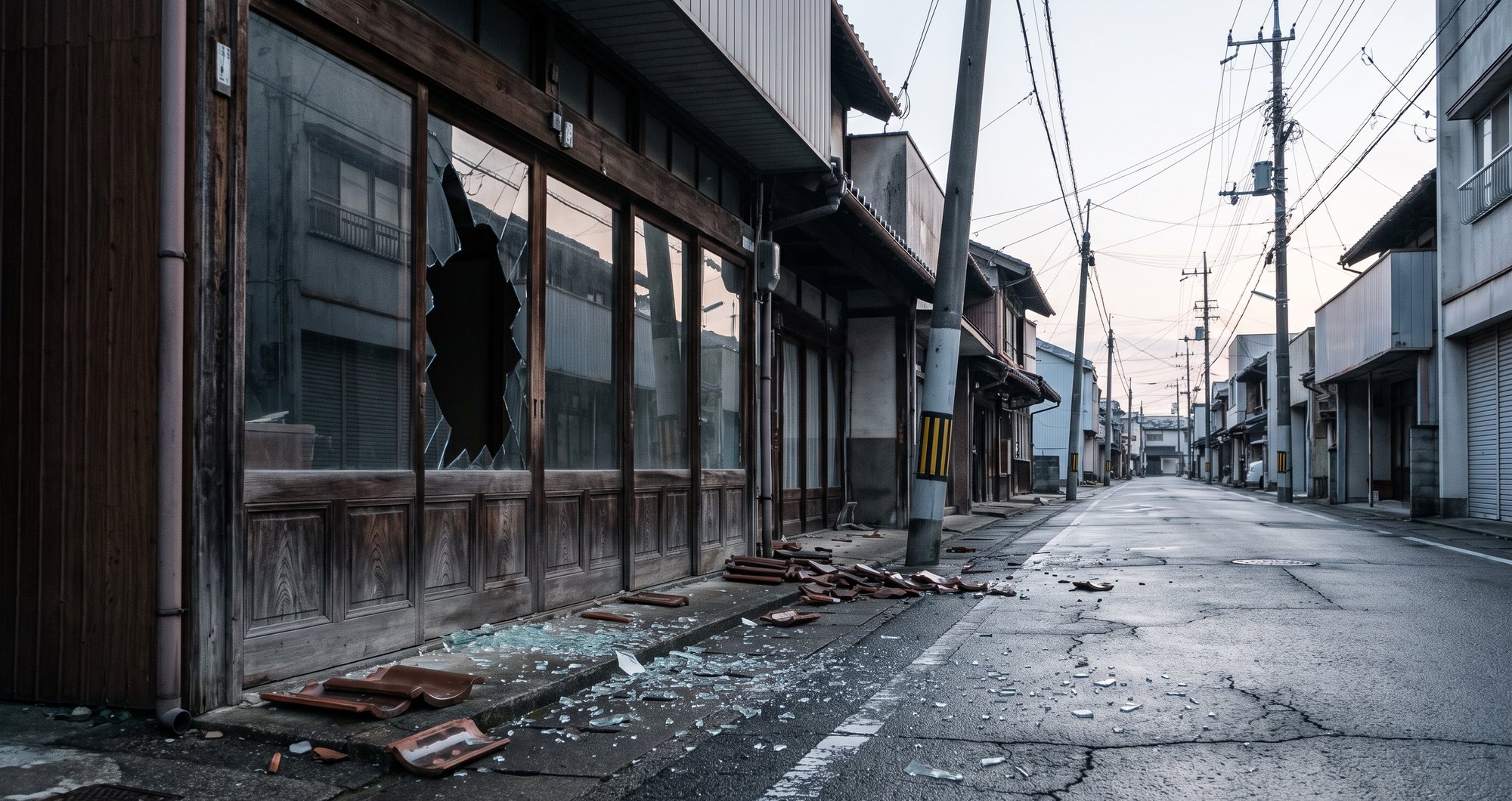

A shallow magnitude 5.7 earthquake struck western Shizuoka Prefecture at 1:04am on Sunday 8 November 2026, injuring more than 20 people and disrupting high speed rail services, officials said.
The Japan Meteorological Agency said the quake occurred at a depth of about 40km, and that its initial readings had been revised as the agency refined its measurements. The JMA gave a magnitude of 5.7, while noting earlier assessments had varied between 5.5 and 5.7.
The agency recorded upper 5 on its seven point seismic intensity scale in Chita, Aichi Prefecture, and lower 5 in parts of Aichi, Nagano and Gifu prefectures. An intensity of upper 5, the JMA said, typically leaves many people unable to move without holding on and can topple unsecured furniture.
Local authorities reported at least 20 people injured in Aichi Prefecture, and other local officials said the total was above 20 across Aichi and Shizuoka. Injury figures are preliminary and may rise, the authorities warned. No deaths were reported and no tsunami warning was issued.
Shaking was felt across a wide area of central and western Japan, including Hamamatsu, Kyoto, Nara, Yamanashi and Gifu. The JMA said the tremors were not felt in Tokyo. Television footage showed shattered shop windows and glass strewn across streets, and a bookstore with mounds of books fallen from shelves. Some injuries occurred when people fell on stairs while fleeing buildings, local officials said.
Transport and emergency response
Central Japan Railway Company said it delayed Tokaido Shinkansen services between Shizuoka and Gifu Hashima stations while safety inspections were carried out. The company said services resumed after checks, but some local train services were suspended for inspections and safety reasons.
The central government set up a liaison office at the prime minister’s office to coordinate the response, the government said. Emergency services and municipal authorities were dispatched to affected areas to check buildings, treat the injured and clear debris from roads.
Authorities urged people in mountainous and hilly areas to beware of landslides, falling rocks and the secondary effects of heavy rainfall. The JMA warned that strong aftershocks were possible, and said people should be prepared for significant seismic activity in the coming week, especially in the next two to three days.
Warnings and scientific context
Ayataka Ebita, an official at the Japan Meteorological Agency, told reporters that there was no apparent change so far in the Nankai Trough, a region where scientists have long warned a large earthquake could occur. He urged residents to follow guidance from local authorities and to pay attention to weather and landslide advisories.
The JMA continues to monitor seismic activity closely and will issue updates if conditions change. The agency also advised people to prepare for strong aftershocks by securing furniture, checking emergency supplies and avoiding damaged buildings until they have been inspected.
Local government offices began surveys of buildings and infrastructure overnight. Early reports from municipal inspections indicated damage to shops and offices in affected towns and cities, but comprehensive assessments of structural damage were still under way. Utilities companies were checking networks for gas and water leaks and making repairs where necessary.
Rail operators and road authorities said they would continue inspections through Sunday to ensure routes are safe for travel. The government liaison office will coordinate the distribution of information and resources from central ministries to local authorities, the government said.
Officials stressed that details remain provisional, including the precise number and location of injuries. They asked residents to remain cautious, heed official safety instructions and report new damage to emergency services so that responders can prioritise urgent needs.