
New Zealand’s preliminary election result left the incumbent National led coalition with 67 of 131 seats, a two seat margin over the 66 required for a majority, the Electoral Commission said on Monday. The commission warned that about 399,365 special votes, roughly 14 per cent of the total, remain to be counted and could alter the outcome when official results are released on 27 November.
Preliminary count and the outstanding special votes
The Electoral Commission’s preliminary count, based on 2,432,403 ordinary votes, put National on 29.21 per cent and 42 seats, and Labour on 29.36 per cent and 36 seats, in a 131 seat parliament. The Greens were shown on 13.30 per cent and 16 seats, ACT on 10.92 per cent and 13 seats, New Zealand First on 9.78 per cent and 12 seats, the Opportunity Party on 5.96 per cent and seven seats, and Te Pati Maori on 0.57 per cent and five seats, the commission said.
The commission estimated that about 399,365 special votes remain to be counted, including 96,947 overseas and dictation votes, and said those votes will be released with the official results on Friday 27 November. The special votes account for roughly 14 per cent of the total, the commission added.
Turnout and voting patterns
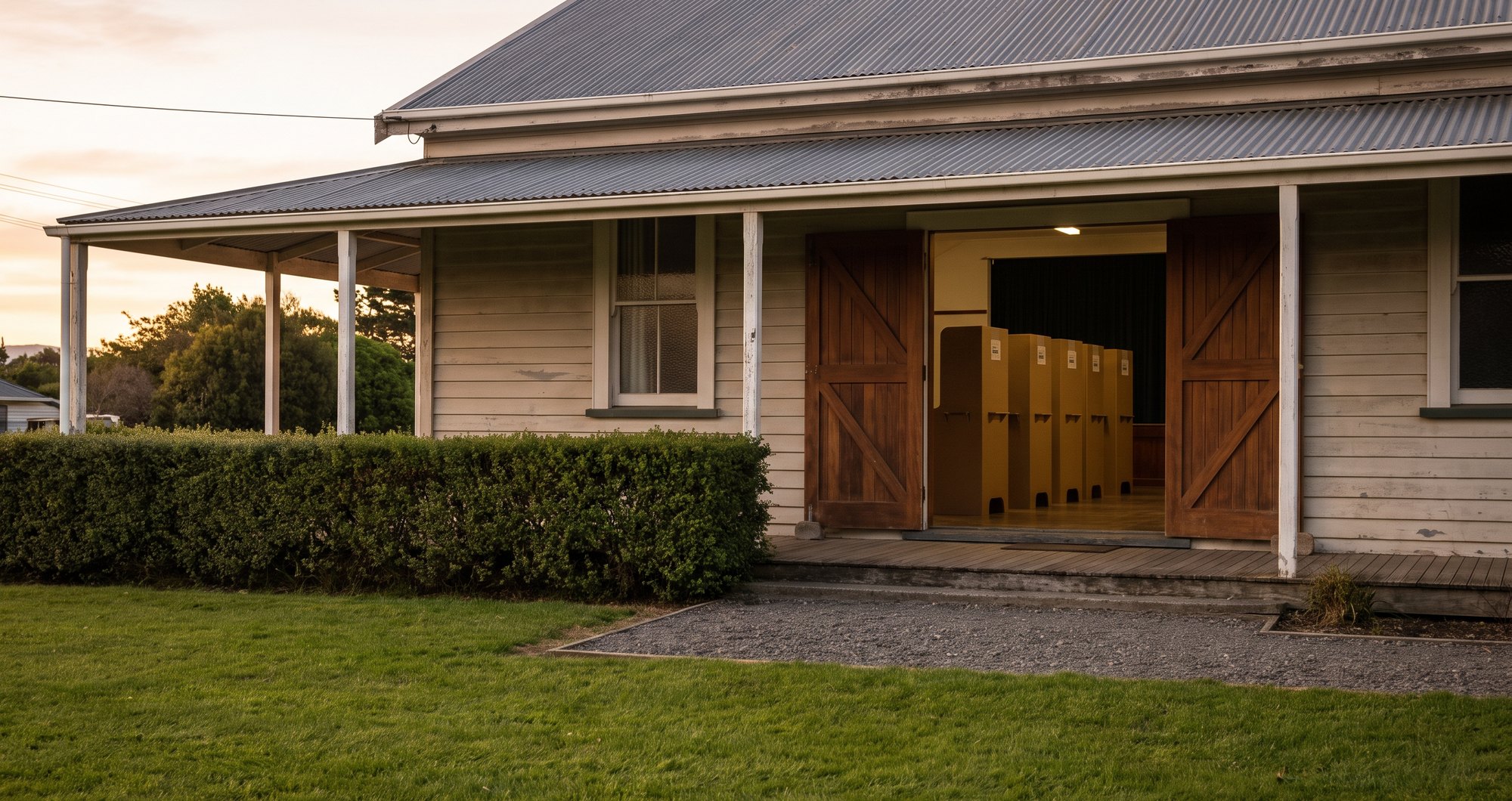
New Zealand held the general election on Saturday 7 November under the mixed member proportional voting system, the commission said. At 1pm on polling day there were 3,796,891 people enrolled to vote, representing 93.7 per cent of eligible electors, according to the commission’s figures.
Turnout was estimated at 74.6 per cent of those enrolled, down from 78.2 per cent at the 2023 election, the commission said. The commission also reported that 67.3 per cent of ordinary votes were cast in advance.
The commission began the official count on Sunday 8 November, and said the process is expected to take about 20 days, allowing for recounts and checks for multiple voting.
Political standing and reactions
The preliminary distribution of seats gives the incumbent National ACT New Zealand First coalition 67 seats, two more than the 66 needed for a majority in the 131 seat chamber, the Electoral Commission said. Neither Prime Minister Christopher Luxon nor Labour leader Chris Hipkins claimed victory on election night, and the commission noted the incumbent coalition continues in caretaker mode.
National’s campaign chair Simeon Brown said the party was in a strong position and did not rule out speaking with the centrist Opportunity Party. The commission’s figures showed the Opportunity Party on 5.96 per cent and seven seats, a result that could make it a potential partner if the arithmetic of final results required new arrangements.
Mr Luxon had repeatedly ruled out working with the Opportunity Party during the campaign, the commission’s summary of the post election situation noted. The question of whether Opportunity will enter government remains unresolved until special votes are counted and final seat allocations are confirmed.
The preliminary outcome also appears likely to cost National a number of senior lawmakers their seats, with the party set to lose senior figures including Finance Minister Nicola Willis, according to the electoral analysis in the fact pack.
Commentators and academics highlighted structural features of the voting system. Mona Krewel, a lecturer at Victoria University of Wellington, said the Opportunity Party was very centrist and pragmatic and could make an arrangement with National work. Commentator Ben Thomas said the outcome looked like the least proportional parliament New Zealand has had, because of the way electorate seats interact with the party vote.
All seat numbers at this stage are preliminary and will change once special votes are counted, the commission said. Historically special votes have tended to favour parties of the left, a factor that could alter the balance of power when the official results are declared on 27 November.
There is no legal deadline to form a government, but the commission noted that parliament must sit by early January. For now the coalition remains in caretaker mode while the official count proceeds and final outcomes are resolved.