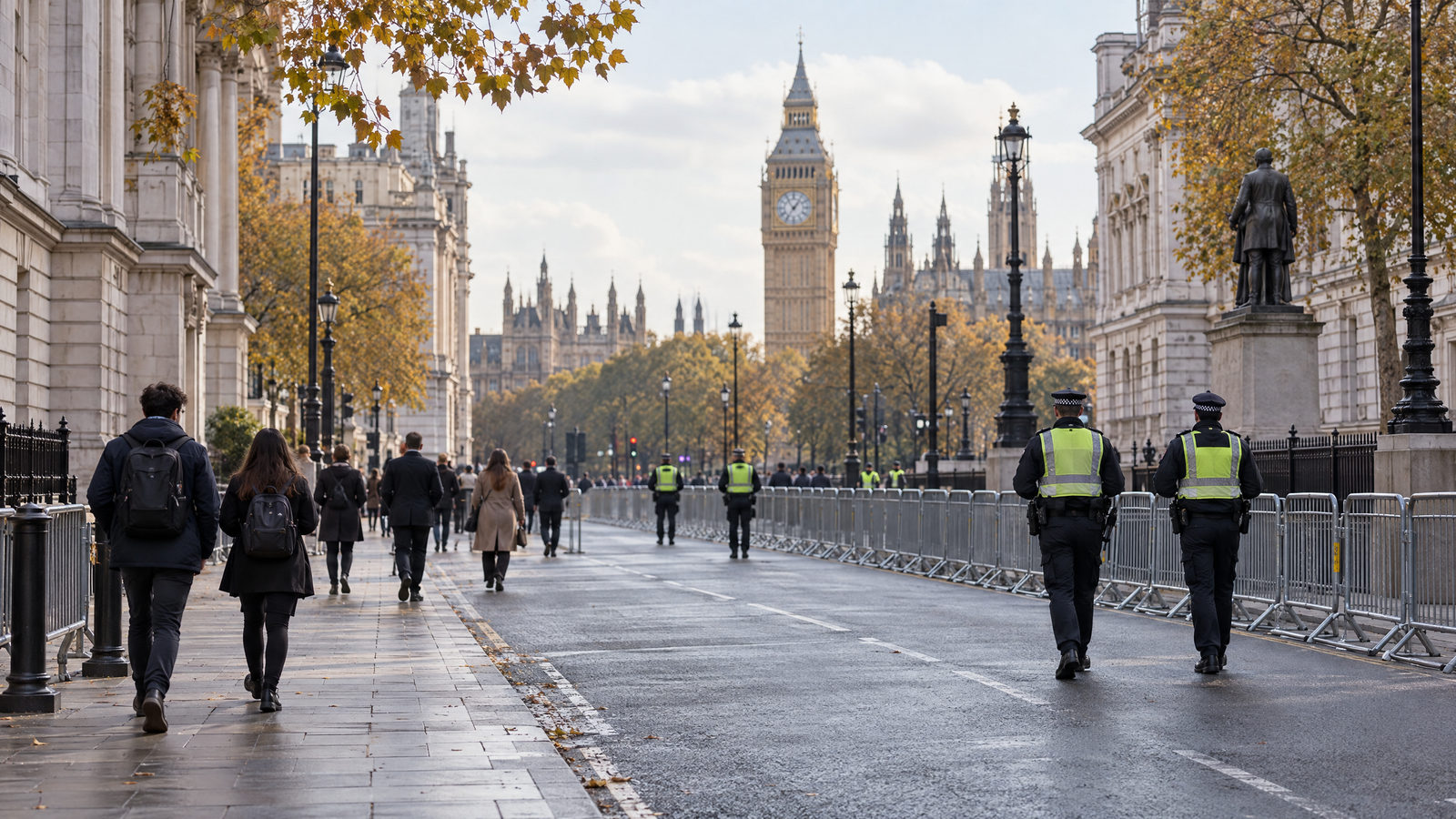

The Metropolitan Police has asked organisers of a planned student march on 7 October to reconsider its date, as it prepares for a cluster of demonstrations, commemorative events and a parliamentary by-election in central London.
Deputy Assistant Commissioner James Harman said the force expects to deploy more than 600 officers across the coming week. The operation will run alongside routine demand, which the force puts at about 4,000 calls a day.
March planned for anniversary
A group calling itself the University of London Coalition is expected to march at midday from King’s College London on the Strand to University College London in Holborn. Police said they expected about 300 students. The date is the third anniversary of the 7 October 2023 attack on Israel and falls amid planned vigils and other events in London.
The proposed march has prompted concerns about its effect on students and staff, particularly Jewish members of university communities. Police said they had tried to find and contact those organising it so they could discuss moving the event, but had not yet been able to identify them. The force has also written to four universities, asking them to engage with staff and students and to help ensure people are not excluded, targeted or made to feel unsafe on their premises.
Conditions rather than a prohibition
The force stressed that it does not grant permission for a march to take place and cannot simply refuse one. Under the Public Order Act, officers can impose conditions to prevent serious disorder, serious disruption or disruption to community life. A request for a ban on a march would require an exceptionally high threshold and a decision by the Home Secretary; it would not apply to a static assembly.
Police said their final plan for 7 October remains in development. If the march proceeds, they intend to set conditions on matters including route and timing. They said anyone who breaches conditions, or encourages others to do so, may be arrested. The force also said it would take action where officers identify alleged hate crime or other criminal conduct. No final route conditions had been announced at the time of the briefing.
Several events in a short period
The student march is one part of a wider policing picture. On Sunday 4 October, about 5,000 people are expected for a Whitechapel march marking 90 years since the Battle of Cable Street. Officers are not anticipating disorder, but say they will be present because of the potential for disagreement between groups and because road closures are expected.
On Thursday 8 October, the Holborn and St Pancras by-election is due to take place. The force said there had been arrests after reported conflict between campaigners and protesters during recent canvassing, including reports of intimidating and obstructive conduct. It said its intervention was directed at preventing crime or disorder, not at favouring any political side.
A further central London march is anticipated for Saturday 10 October. Police expect up to 10,000 people to attend the Palestine Coalition’s national call-out, with a counter-protest also anticipated. The force said it would set strict timing and route conditions and expects a substantial police presence.
Advice for people affected
The statement is a warning of a demanding week rather than a confirmation that disorder will occur. Police said most people at previous large marches have attended peacefully and lawfully. Those planning to travel through the affected areas should check the final arrangements before setting out, while prospective participants should await the published conditions for their particular event.
For universities, campaign teams and communities attending vigils or marches, the immediate issue is preparation: police are asking organisers to engage early, respect any conditions that are issued and allow others to take part in lawful activity without intimidation.