
In today’s digital world, being found online can make or break a local business. Think about it, when you search for a coffee shop or a plumber near you, Google is often the first place you turn. But what happens when Google changes the rules? That’s exactly what’s happening with the latest updates to Google’s search algorithms, and it’s shaking up the local SEO game in a big way.
For local businesses and SEO agencies alike, keeping up with Google’s algorithm changes is crucial. These updates can determine how visible a business is on the search results page, which ultimately impacts customer foot traffic, website visits, and even sales. Let’s break down how Google’s latest updates are affecting local SEO strategies and what businesses need to do to stay ahead of the curve.
The Major Google Updates You Need to Know About
Google’s search algorithm is constantly evolving to better serve its users. The goal is to provide search results that are as relevant and useful as possible.
Here are some of the key changes that are shaking up local SEO:
1. Core Algorithm Updates
Google frequently rolls out broad core algorithm updates. These updates aim to refine how Google determines the relevance and quality of search results. While core updates affect all search results, they often have a big impact on local searches as well. One of the most recent updates brought significant changes to how Google ranks local businesses. Factors like website authority, backlinks, and quality content are even more important than before.
This means businesses that haven’t updated their website in a while or neglected SEO best practices might see a dip in rankings, while those who focus on providing valuable, up-to-date content are likely to see improvement.
2. The Google Map Pack Gets a Makeover
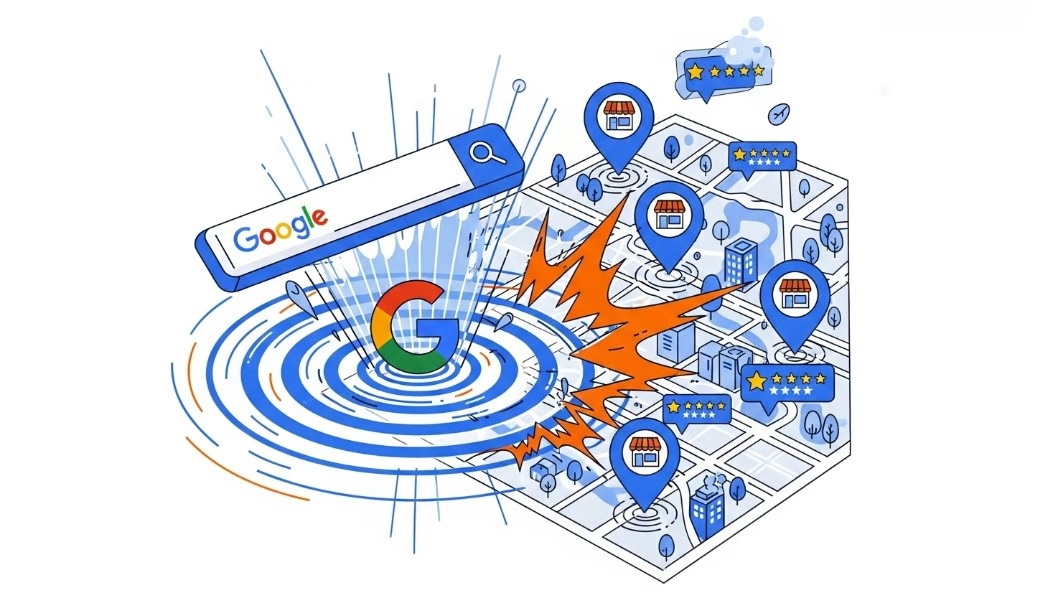
The “Google Map Pack” refers to the three local businesses that appear at the top of the search results when you search for something location-based (like “restaurants near me”). These results are highly coveted because they appear right on the search results page, making it easy for users to click and get directions, visit the website, or call the business directly.
Google recently updated the criteria for appearing in the Map Pack, making it more competitive than ever. Now, more businesses are focusing on optimising their Google My Business (GMB) profiles, ensuring that their hours, contact info, and customer reviews are up-to-date. These updates are designed to ensure users see the most relevant, trustworthy businesses when they search for local services.
3. Reviews and Ratings Matter More Than Ever
Google’s algorithm has always considered customer reviews as a ranking factor, but with recent updates, they’ve become even more important. Google looks at the quantity, quality, and freshness of reviews. That means businesses that consistently get positive reviews, respond to them quickly, and maintain an active online presence are more likely to show up higher in local search results.
Not only do positive reviews boost rankings, but they also help build trust with potential customers. After all, we all trust reviews more than anything else when deciding where to eat or shop, right?
4. Mobile-First Indexing is Here to Stay
In case you missed it, Google made mobile-first indexing the default for all websites. This means that Google now predominantly uses the mobile version of a website to determine rankings. Given that most people search on their phones, this update isn’t surprising. But what does it mean for local businesses? For businesses that don’t have a mobile-friendly website, this update could be a big problem. Sites that aren’t optimised for mobile devices could lose visibility in search results.
Local SEO agencies are now stressing the importance of responsive web design, ensuring that businesses’ websites work seamlessly across all devices. Mobile optimisation is no longer a luxury, it’s a necessity.
5. AI and Natural Language Processing (NLP) are Changing the Game
Artificial intelligence (AI) and natural language processing (NLP) are at the core of many recent Google updates, including those impacting local search results. With Google’s advancements in AI, searches are becoming more focused on user intent rather than just keywords. This means Google is getting better at understanding how people phrase searches and what they’re really looking for.
For local businesses, this means that keyword-heavy content isn’t as effective as it used to be. Now, businesses need to think about providing content that answers specific questions and addresses user needs. For example, if someone searches for “best pizza near me,” Google now looks for content that’s more likely to answer that query based on the person’s location, recent searches, and context.
How Local SEO Agencies Are Adapting?
Local SEO agencies have their work cut out for them with these constant updates. But they’re not shying away from the challenge. Here’s how they’re adapting to keep their clients ahead of the competition:
1. Hyperlocal SEO is Becoming a Priority
As more businesses compete for local visibility, SEO agencies are diving deeper into hyperlocal SEO. This means focusing on very specific areas, such as particular neighbourhoods, districts, or even streets. Hyperlocal SEO targets customers who are very close by and are likely to convert quickly. Agencies are refining their strategies to target these niche markets by optimising websites for local keywords and incorporating location-specific content.
2. Google My Business (GMB) Optimisation
With Google’s updates making GMB even more important, agencies are putting a lot of emphasis on keeping GMB profiles up-to-date.This includes ensuring that business details like address, hours, and contact info are accurate, as well as posting regular updates and photos to engage customers. The goal is to keep businesses visible and relevant on the platform.
3. Focusing on Content That Matches User Intent
Content is still king in local SEO, but now it’s about more than just cramming in a bunch of keywords. SEO agencies are now focusing on creating content that matches user intent. This means producing blog posts, FAQs, and landing pages that specifically answer the questions users are asking about the business, products, or services.
The Future of Local SEO
Looking ahead, it’s clear that local SEO is going to keep evolving. Here’s what businesses should expect:
- AI-Powered Personalisation: Google’s AI will continue to personalise search results based on user behaviours and preferences, making it even more important for businesses to adapt their content to meet these needs.
- Voice Search Optimisation: As voice assistants like Siri and Google Assistant grow in popularity, optimising for voice search will become increasingly important for local SEO.
- Visual Search and Shopping: Google’s integration of visual search could mean more opportunities for businesses to showcase their products directly in search results.
Frequently Asked Questions (FAQs)
- What is the Local SEO Map Pack, and why is it important?
The Local SEO Map Pack shows the top 3 local businesses in search results. It’s crucial because it boosts visibility, driving more traffic and potential customers to your business.
- How do Google reviews affect local SEO?
Positive and recent Google reviews improve your local search ranking. More reviews signal trust to Google, helping your business rank higher in search results.
- What does mobile-first indexing mean for my local business website?
Mobile-first indexing means Google ranks your mobile site for search results. A mobile-friendly website is essential to stay visible in local searches.
- How do I optimize my Google My Business (GMB) profile for better local SEO?
Keep your business info accurate, add photos, post updates, and respond to reviews. Include relevant keywords in your business description for better ranking.
- What is hyperlocal SEO, and how can I benefit from it?
Hyperlocal SEO targets specific areas (like neighbourhoods). It helps small businesses attract nearby customers and increases visibility in highly local searches.
- How can I keep up with Google’s constant algorithm changes?
Regularly update your content, stay informed on SEO blogs, and ensure your site is mobile-friendly. Working with an SEO agency can also help you stay ahead.
- Will AI and voice search impact my local SEO rankings?
Yes, as AI improves, Google focuses more on user intent. Optimising for voice search and natural language will become key for ranking locally.
- Can I handle local SEO on my own, or should I hire an agency?
While possible to manage on your own, hiring an agency can yield better results. Agencies are up-to-date with the latest changes and can save you time.
Conclusion:
Google’s updates may feel like a moving target, but for businesses that stay on top of the changes, there are plenty of opportunities to boost visibility, build customer trust, and drive sales. Whether it’s optimising for the Google Map Pack, focusing on reviews, or ensuring your website is mobile-friendly, local SEO is essential for businesses that want to succeed in the digital age.
If you’re a local business owner, partnering with an SEO agency that understands these updates is more important than ever. Don’t let your competitors get ahead, take action now and stay visible in the local search results. The future of local SEO is bright, but only for those who are ready to evolve with it.