
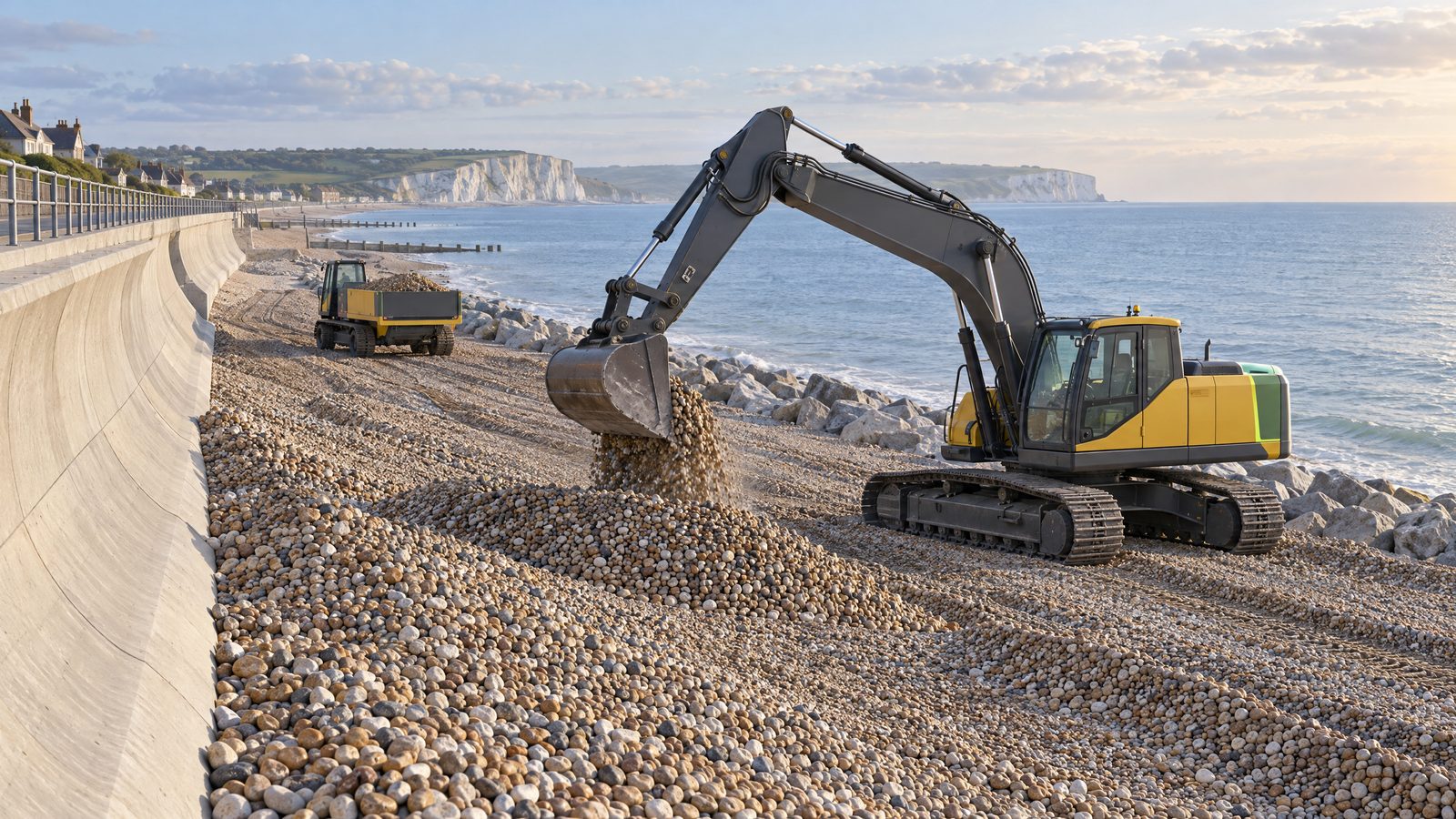

Electric and hybrid construction machinery has completed a five-day operational trial moving shingle along the Eastbourne coast, giving the Environment Agency field experience to inform future equipment choices. The work ran from 12 to 16 October, moving material from White Point to North-east Beach at Sovereign Harbour.
The operation formed part of annual beach management intended to help protect the coast from flooding and erosion. The fleet included a 22-tonne electric excavator, tipper trucks, hybrid bulldozers and four-wheel-drive vehicles. This was live coastal-defence work rather than a demonstration on a prepared site: the machinery was used to carry out the shingle movement required by the beach team.
Operational evidence, not a performance league table
During the week, the project team gathered information on productivity, reliability, battery performance, energy consumption, charging requirements and operators’ experience. The Environment Agency says the equipment was able to keep pace with the team and that the trial showed electric machinery could undertake this kind of work in a real operational setting.
Those findings are encouraging, but the published account does not give comparative figures for the amount of shingle moved, working hours, energy used, charging interruptions, cost or productivity against conventional diesel equipment. Nor does it provide measured air-pollution or noise results. The trial therefore offers practical operating experience, not a quantified demonstration of savings or proof that every machine type will suit every beach task.
The mix of vehicles also matters. The fleet included both electric and hybrid machinery, so it would be inaccurate to describe the whole operation as entirely electric or emission-free. The Agency presents reduced emissions and lower air and noise pollution as benefits of the technology, but has not published measurements from this particular trial to establish the size of any reduction.
Why shingle management matters
Shingle is part of the coast’s flood defence. Moving material along the frontage helps maintain the beach, which contributes to protection for homes, businesses and infrastructure. The work at Eastbourne took place within the wider Pevensey Bay to Eastbourne Coastal Management Scheme, a programme covering 15 kilometres between Cooden Beach and Holywell.
The scheme’s current short-term phase focuses on managing the existing beach defences and monitoring conditions. Its longer medium-term programme is planned for 2027 to 2037. Separately, the Environment Agency says it expects to take over management of the Eastbourne frontage from Eastbourne Borough Council in June 2027. These are wider plans and administrative changes; they are not outcomes of the machinery trial.
For now, the trial’s significance is that lower-emission machinery has been used on an actual coastal maintenance task, and that operational data has been collected for future decisions. The Agency says the results will help inform consideration of lower-emission equipment for beach management, coastal construction and flood and erosion-risk work elsewhere. It has not announced a national rollout, procurement commitment or timetable.
Further trials and published comparative data would help show where electric and hybrid equipment can reliably fit into routine coastal operations, and what trade-offs apply to charging, energy use and cost. In Eastbourne, the completed exercise provides an initial real-world evidence base while leaving those comparisons open.







