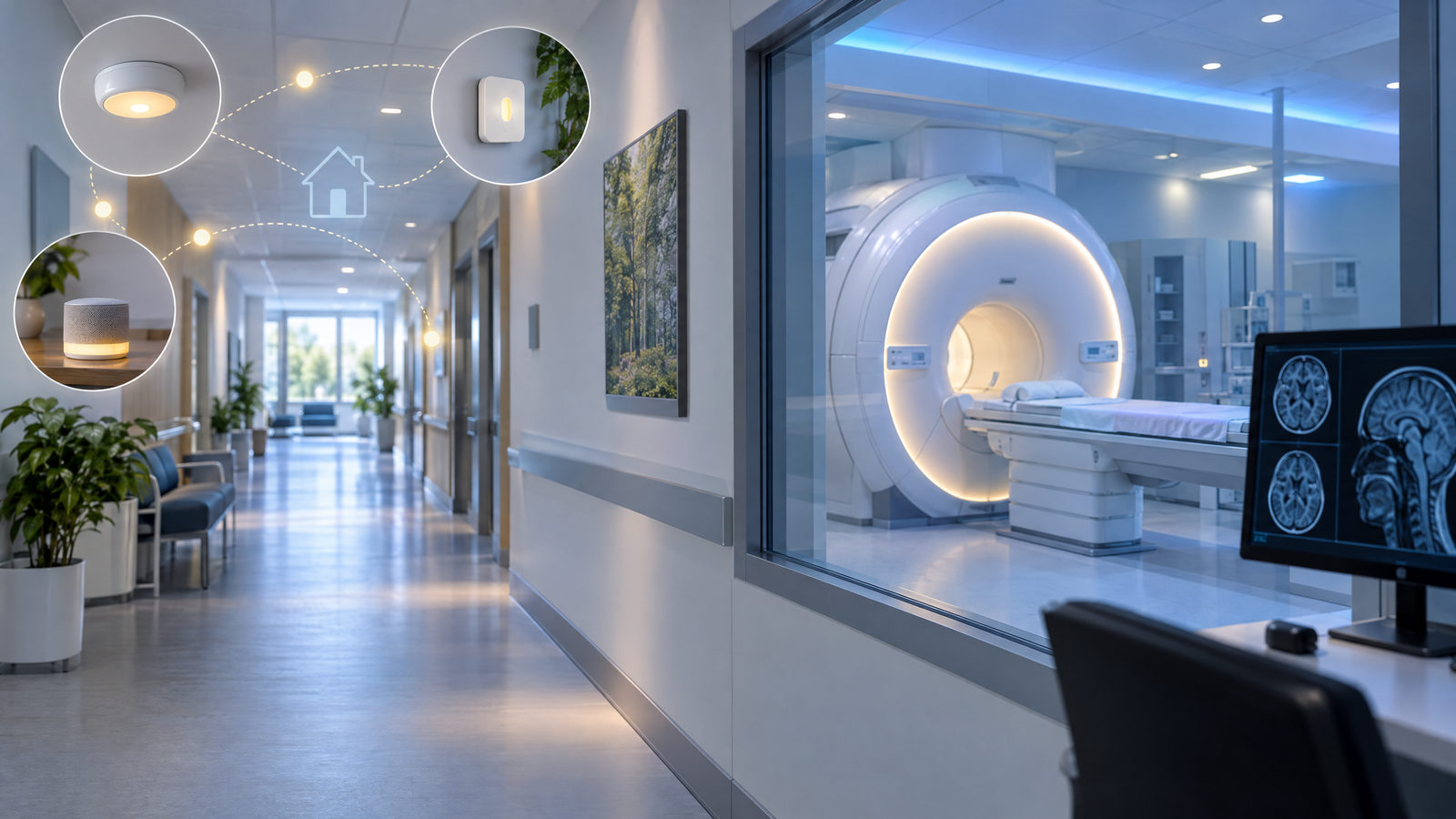

Nine technologies designed to improve dementia diagnosis and support have been selected for real-world testing in the NHS through a challenge backed by up to £80 million. The programme brings together faster brain imaging, digital assessments, blood-based testing, home monitoring and clinical decision-support tools, with several London research teams involved.
The challenge is intended to shorten a process that can leave people and families waiting a year or more for answers. Its stated ambition is for 92% of people referred for a dementia assessment to receive a diagnosis within 18 weeks, compared with roughly 60% at present. Selection for testing is not the same as approval for routine use: each project must produce evidence and meet milestones before it can receive further support.
Testing tools in real NHS settings
The programme moves nine projects beyond development work and into evaluation in NHS services. Rather than awarding an unconditional long-term grant, it uses a staged model in which continued funding depends on results. That approach is intended to direct later investment towards interventions that are practical as well as clinically useful.
The selected work spans different points in the dementia pathway. Some projects focus on recognising possible cognitive change or improving the accuracy of assessment. Others are intended to help services predict progression, monitor people at home or redesign the route from referral to diagnosis and treatment. The challenge also involves NHS, academic, regulatory, industry and third-sector partners.
Faster MRI scans are a London-led strand
One project, RADIANCE, will evaluate an artificial-intelligence-powered MRI protocol developed by teams at University College London and the UK Dementia Research Institute. The researchers aim to reduce scan time from about 20 to 30 minutes to around seven minutes while retaining information needed in dementia assessment.
Long MRI appointments can be particularly difficult for people who struggle to remain still or lie flat. The study will examine whether ultra-fast imaging can be used in hospitals beyond the setting where it was developed, and whether the economic and operational case supports wider adoption. It is an evaluation of a protocol, not an indication that a shorter scan is already available everywhere or that it will suit every patient.
Home monitoring and hearing assessment
Imperial College London’s Minder platform is another selected project. It uses small, unobtrusive sensors in a person’s home and linked analysis to identify potential warning signs that may allow support to be offered before a problem becomes a crisis. The team plans to extend its evaluation into additional NHS regions, including rural and coastal communities, and compare outcomes with standard care.
A second London-linked project, DIADEM, is led by Queen Mary University of London with UCL researchers. It examines how the brain processes sound through four short computer-based listening tests. Difficulties with complex hearing can emerge early in some forms of dementia, sometimes before memory problems are apparent. The tool is being tested as a way of giving clinicians useful information in memory-clinic assessment; it is not a diagnosis by itself.
A wider group of projects
The remaining projects include a remote 15-minute cognitive assessment, a digital platform for monitoring changes in cognitive health, blood-biomarker work in memory services, sleep-apnoea screening for people referred for assessment and an AI-enabled tool using routinely collected clinical information. A Scottish project will examine service redesign alongside “living labs” for biomarkers and treatments.
For patients and carers, the significance lies in whether these technologies can reduce delay without sacrificing accuracy or fairness. Earlier assessment may help people access appropriate treatment and support, and make decisions about work, care and finances. But the selected tools now face the central test: evidence from everyday NHS use. Only those that demonstrate a meaningful benefit are expected to progress further.