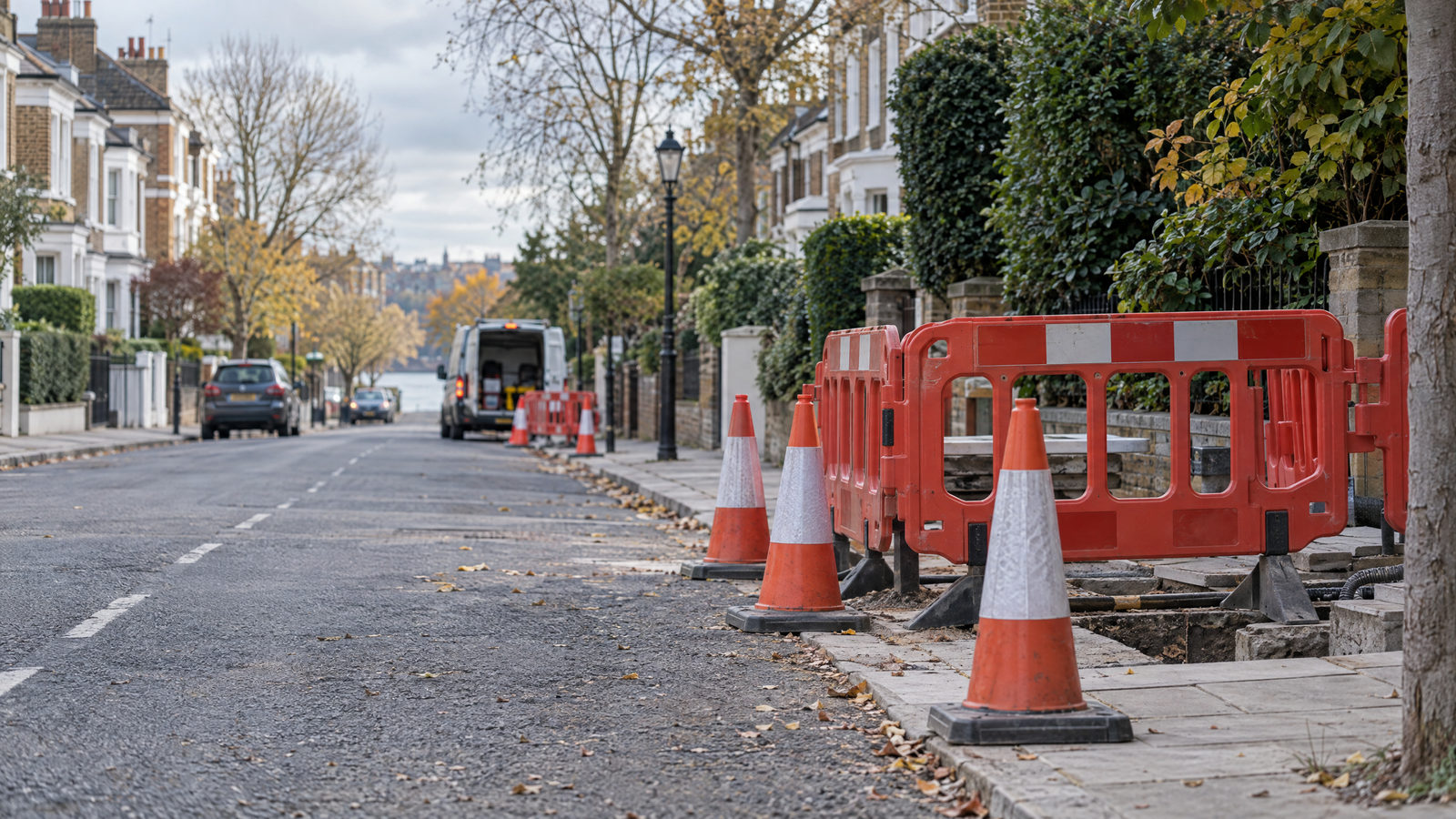

BT Limited, which trades as Openreach, has been ordered to pay £4,315 after magistrates dealt with a street-works case connected to Biggs Row in Putney. The case concerned works carried out earlier this year without the valid permit required under the local traffic-management scheme.
The company appeared before magistrates on 8 September following a prosecution by Wandsworth Council and entered an early guilty plea. The reported order combines a reduced fine, a victim surcharge and prosecution costs, with payment due within 28 days.
What the financial order includes
Magistrates initially set the fine at £3,000, reducing it to £2,000 in recognition of the early guilty plea. BT Limited must also pay an £800 victim surcharge and £1,515 towards the council’s prosecution costs. Together, those elements produce the £4,315 total.
The result is an enforcement outcome about the absence of the required authorisation for street works. It is not simply an administrative reminder: proceeding without a permit is an offence under the scheme’s rules. The guilty plea means the case did not proceed to a contested trial.
Why Biggs Row required a permit
Street works can affect access, traffic movement and the practical use of a road even where they are short-lived. Wandsworth’s permit scheme is intended to give the highway authority advance control over works on specified streets, allowing activity to be coordinated and conditions to be set where needed.
That framework has a statutory basis. The Wandsworth permit scheme was brought into effect in 2010 and requires a permit before relevant works begin. Its published schedule states that an undertaker, or someone acting on an undertaker’s behalf, commits a criminal offence by undertaking works without a permit under Regulation 19 of the 2007 regulations.
For residents and businesses near the location, the practical purpose is to reduce clashes between separate jobs, help manage road space and support safety arrangements. A permit does not determine whether broadband work is needed; it governs how and when activity can take place on the highway.
A local enforcement case with wider relevance
The prosecution gives the rule practical force for companies that carry out utility work in the borough. Large network projects can involve repeated visits to streets, and the permit process is the mechanism through which the authority can see proposed activity before it begins.
In this instance, the court order relates specifically to the Biggs Row works and should not be read as a finding about unrelated Openreach activity. Nor does the reported outcome set out a separate allegation of damage, injury or wider service failure. Its central issue was whether the company had the valid permission required for this particular street-works operation.
The payment order will be due 28 days after the hearing. For the council, the result underlines that permit requirements apply to utility companies and contractors as well as to smaller works promoters. For road users, it is a reminder that much of the planning behind temporary works happens before cones or barriers arrive on a street.
What happens next
No further court hearing or operational change was announced with the outcome. The immediate consequence is the financial order against BT Limited. The longer-term importance lies in compliance: companies planning work on Wandsworth’s roads must secure the relevant permission before work starts, so that the borough can coordinate activity and seek to limit avoidable disruption.