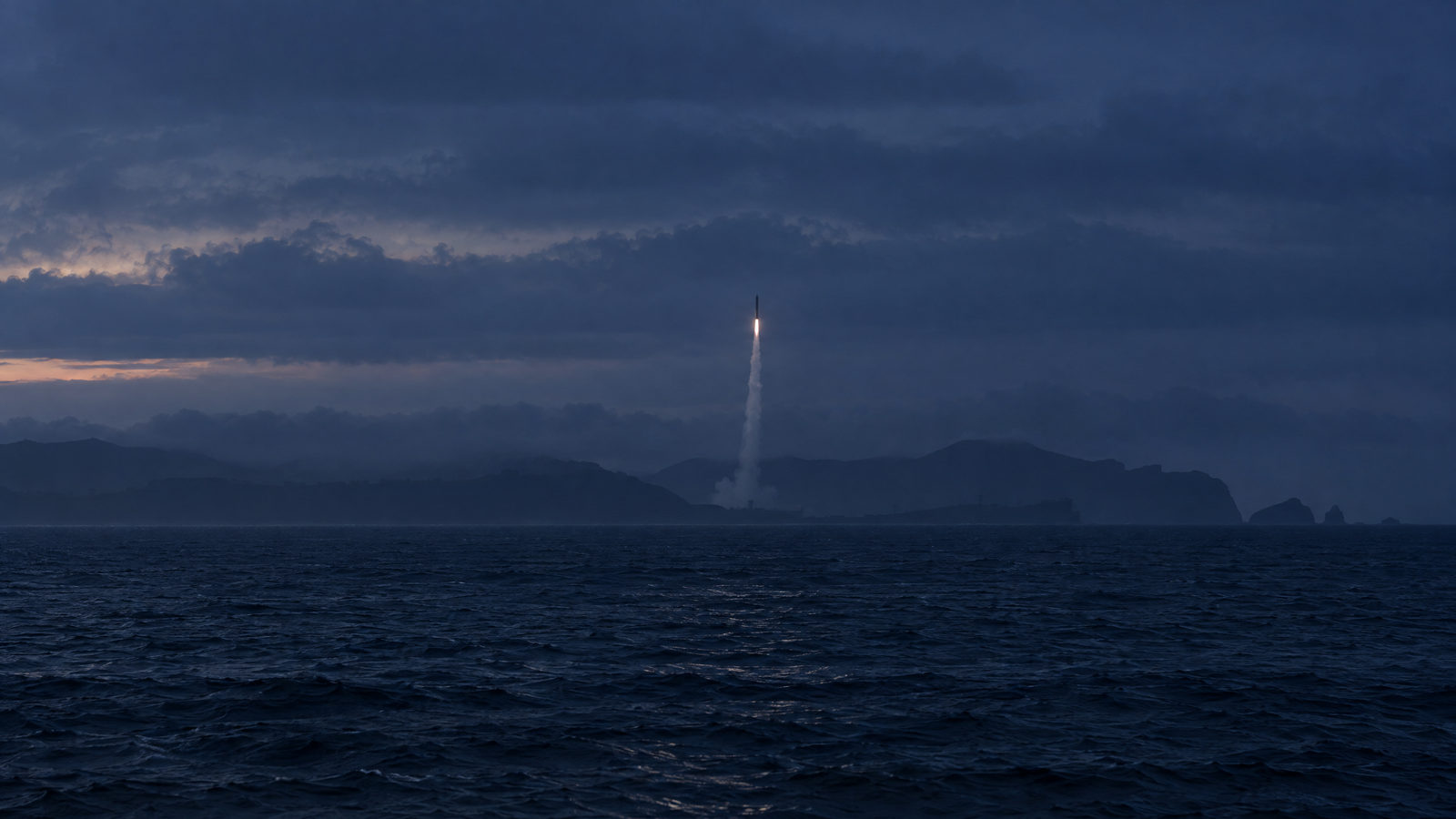

South Korea says North Korea fired a ballistic missile from the Wonsan area towards waters off its east coast early on Saturday, 3 October local time. Its military said the missile travelled more than 700 kilometres. North Korea later described the launch as a test of an intermediate-range strategic missile, while making additional claims about its flight that have not been independently verified.
The South Korean Joint Chiefs of Staff said it detected one launch at about 6.30am local time. Officials said South Korean and United States authorities were carrying out a detailed analysis to establish the missile’s exact specifications. The public account from Seoul confirmed the direction and distance of the flight, but did not independently set out the weapon’s type, payload, full trajectory or accuracy.
Separate accounts of the same launch
Kim Yo Jong, a senior North Korean official and sister of the country’s leader, said later that an intermediate-range strategic missile had been used in a drill towards the East Sea. North Korea uses that name for the waters commonly called the Sea of Japan. She said the drill was overseen by Kim Jong Un and involved a unit assigned a special mission. Those statements are North Korea’s description of the event, rather than an independent assessment of the weapon or the exercise.
North Korea subsequently claimed the missile was launched from the east of the country and hit a target 1,000 kilometres away at sea. It said the drill was intended to train troops operating what it called a hypersonic strategic weapon system and to assess the reliability, efficiency and mobility of the country’s deterrent. The claimed target distance and the description of the system have not been independently verified.
Claims about tracking and artificial intelligence remain unverified
Kim Yo Jong also said South Korea and Japan had failed to track the missile because of limitations in their tracking capabilities. She attributed that assertion to what she called a wave-like trajectory mode. She further claimed the missile could alter its flight path at low altitude using artificial intelligence. No evidence was provided with the statement, and the available South Korean account does not confirm those claimed characteristics.
The distinction is important. A military detection of a missile launch and a reported flight of more than 700 kilometres are observable claims made by South Korea’s military. They do not by themselves prove North Korea’s description of the missile as intermediate-range, hypersonic or AI-enabled. Nor do they establish that regional tracking systems failed, or that the weapon could evade defences. Those are separate capability assertions that would require corroboration.
What the launch changes now
The launch adds a new confirmed missile event to a year in which North Korea has conducted repeated weapons tests. Seoul said it had maintained information-sharing with the United States from the early stages of this launch, and that it was monitoring North Korean activity while keeping its combined defence posture in place. Japan was also named by North Korea in its claims about tracking, but neither the South Korean account nor the later North Korean statement provided a common technical record of the flight.
For the immediate picture, the most solid public facts are limited: South Korea detected a single ballistic missile launched near Wonsan at about 6.30am local time; it said the missile travelled more than 700 kilometres towards the East Sea; and North Korea subsequently said it had conducted an intermediate-range missile drill. No interception, casualties or damage had been confirmed in the available public information. Further official analysis may clarify the missile’s characteristics, but it should not be assumed from North Korea’s assertions alone.